




How Telematics Data Overload Multiplies in Fleets With Several OEMs
Fleet managers will find it exponentially more difficult to interpret and utilize telematics data the more variety of vehicle brands they add to their fleet, according to new data and analysis from WEX Inc.

Graph courtesy of WEX.
Graph courtesy of WEX.
Fleet managers will find it exponentially more difficult to interpret and utilize telematics data the more variety of vehicle brands they add to their fleet, according to new data and analysis from WEX Inc.
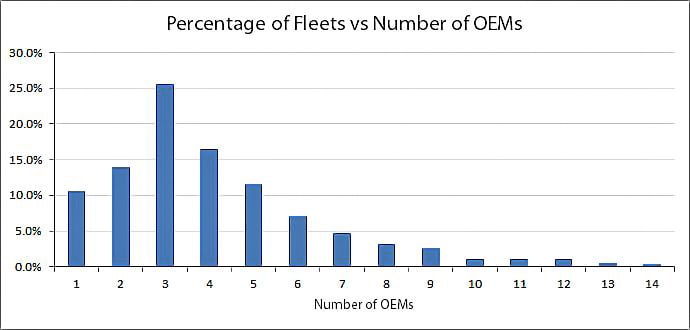
Data overload has become a persistent challenge for public and commercial managers of larger, mixed fleets, while smaller fleets are more likely to stay with a single OEM, said Kurt Thearling, vice president of analytics for WEX Inc. Most fleets in the data sample of 1,000 fleets (about 55%) have two to four different vehicle brands.
Comparing telematics data pulled from models of various vehicle brands such as Ford, General Motors, Fiat-Chrysler, Toyota, or Nissan presents headaches, and can be nearly impossible because fleet managers must log in to different systems, Thearling said.
"If you want to do any comparisons, an OEM focused telematics offering is not going to give you a single view of your overall fleet," Thearling said. "A fleet manager could export data from multiple OEMs into a set of CSV files and use Excel to do data analysis themselves, but there will be challenges. The basic analysis is probably not all that difficult, but once you move beyond the simple stuff it turns into a data science project, and will necessitate some data science expertise."
Thearling added, "In addition, working with telematics data requires domain expertise involving vehicle and device manufacturers. Not all telematics systems operate in the same way, and it gets even more complicated when you need to span OEMs, vehicle makes, and even model years. Variation in the data can complicate how it is combined across OEMs, so experience with both telematics systems as well as data science is important."
Thearling found that among the 1,000 current WEX clients in the sample, more than 25% have three different vehicle brands in their fleet. Roughly 16% have four, and about 14% have two. About 10% have a single vehicle brand. Several fleets, mostly larger truck-based fleets, have more than 10 brands with one fleet counting 14.
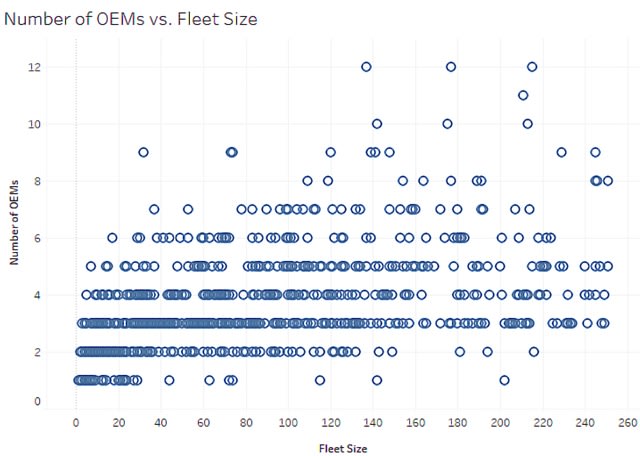
The data visualization below shows how the three-brand fleets dominate, from the smallest to the largest fleets. When you consider fleets larger than approximately 30 vehicles, there are very few fleets with only a single OEM.
Graph courtesy of WEX.
Fleets typically take vehicle- and event-level telematics data and convert it into driver scorecards that rate the risk levels of various drivers. This can then be used to implement additional driver training programs.
"Driver behavior and behavior management often carries opportunity for spend and safety improvements," said Brad Jacobs, director of strategic consulting for Merchants Fleet Management. "Translating telematics event level information effectively into driver behavior scorecards and management processes is key in realizing cost and safety benefits."
Fleet managers can rely on their fleet management companies, WEX, or other service providers to synthesize and interpret telematics data that can touch on fuel management, safety, training, and other aspects of fleet management.
One anonymous fleet manager for a food and beverage company said one of his biggest challenges was trying to assess and compare large quantities of telematics data.
"You might see a scorecard on driving behavior, and that is important," he said. "But how does that relate to fuel spend? They’re both related. Obviously the most important piece of that relationship is the safety of the driver, and scorecards have done a good job with that, but the challenge is they both have to be in the same conversation."
Another challenge of evaluating vehicle-level data comes when considering the age of vehicles. With each model year, vehicles add more and more sensors, which increases the number of data points under consideration, Thearling said. A fleet with two Ford F-150 trucks, for example, may receive varying information if one truck is three to four years older than the other one.
"That older F-150 may not generate as rich a data stream as the new F-150," Thearling said. "You're going to see all the vehicles, but you may not have the same data."
Editor's note: Assistant editor Andy Lundin contributed to this article.
More Telematics
GM Launches OnStar Fleet Intelligence Platform With AI Assistant
The new platform brings vehicle data, order tracking, connected services and fleet analytics into one system, with an AI assistant that can answer fleet questions using natural-language prompts.
Read More →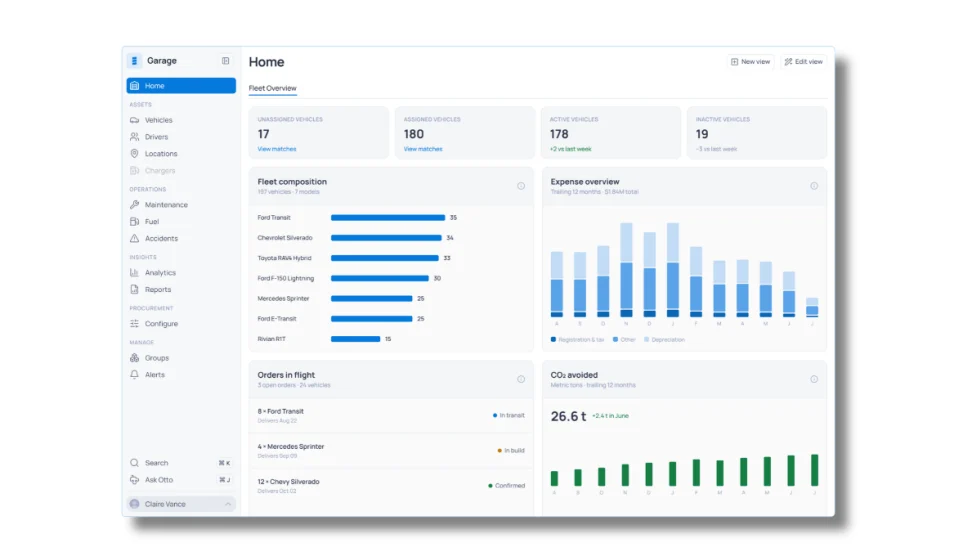
Inspiration Fleet Introduces Garage 2.0 Fleet Intelligence Platform
Fleet managers increasingly have access to data from vehicles, telematics, fuel, charging, and other systems, but those sources don't always communicate with one another. Inspiration Fleet's Garage 2.0 platform brings that information together while letting fleets keep working with different technology and service providers.
Read More →
Inside Inspiration Fleet’s New Platform for Connecting Fleet Data
Inspiration Fleet CTO Chris Getner explains how the new Garage 2.0 platform is designed to connect disparate fleet data and what that could mean for fleet managers in practice.
Read More →
Fleet Manager’s Ultimate Playbook: Navigating the New Standard in OEM Connectivity
Rising operating costs, driver safety concerns, and unplanned downtime are putting unprecedented pressure on modern fleets. Discover how fleet managers use embedded OEM connectivity and real-time vehicle data to cut TCO, prevent downtime, and protect drivers without aftermarket telematics hardware.
Read More →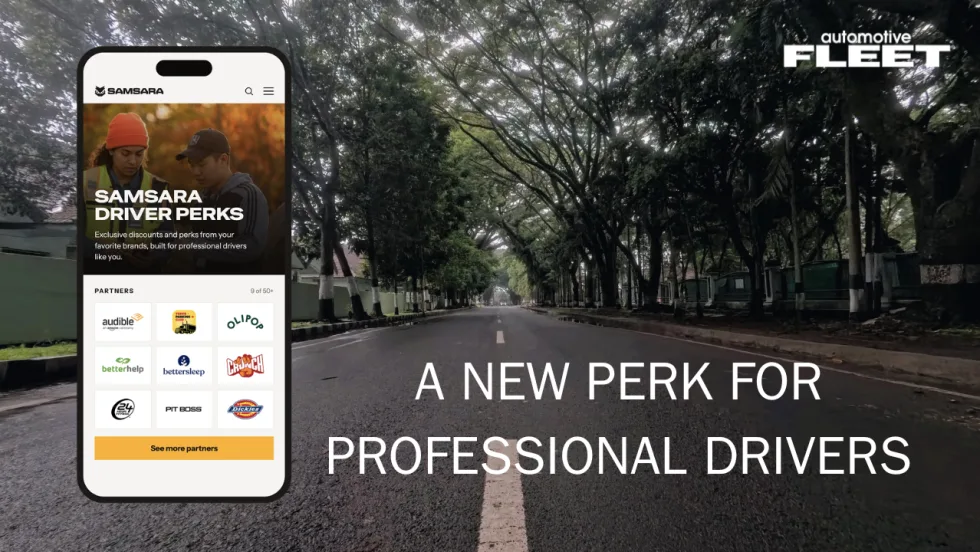
Samsara Driver Perks Adds New Benefit for Corporate Fleet Drivers
The rewards program gives eligible professional drivers access to discounts from more than 50 brands while giving fleets another way to support recruitment, retention, and the driver experience.
Read More →
Inside the Church of Jesus Christ of Latter-day Saints’ Two-Track Telematics Strategy
With 20,000 vehicles and two fundamentally different driver populations, the Church faced a fleet management problem that a single telematics program couldn't solve. How it responded offers a replicable framework for any fleet where one size doesn't fit every driver.
Read More →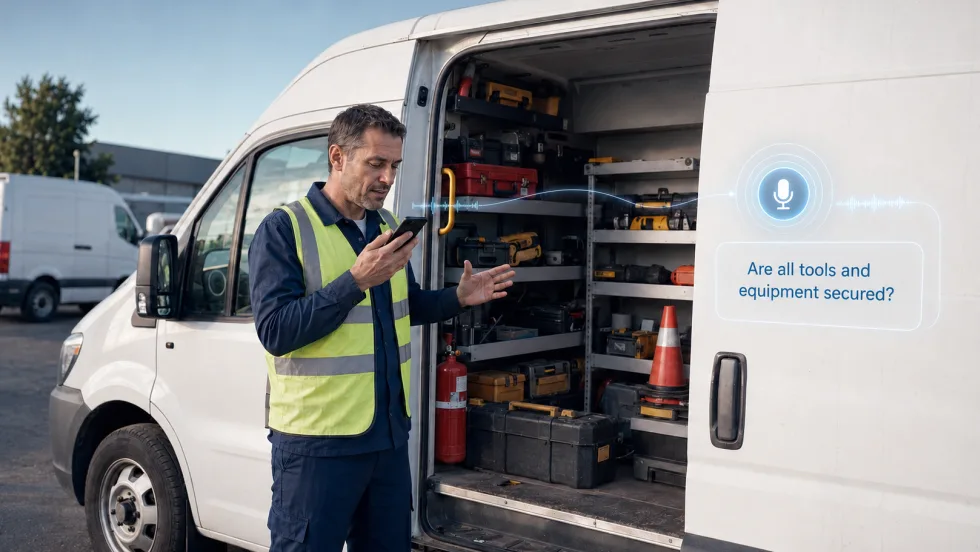
How Conversational AI Can Make Fleet Tasks Easier for Drivers
While most generative AI tools help fleet managers interpret data at their desks, Connex2X is applying voice interaction to tasks behind the wheel.
Read More →
Why Fleets Are Creating Dedicated Fleet Analyst Positions
Are fleet analyst positions the new norm? Listen here to find out.
Read More →
Teletrac Navman Begins Next Chapter as Standalone Private Company
What's new with Teletrac Navman and its new owner?
Read More →
Why Fleets Are Creating Dedicated Fleet Analyst Positions
Telematics, AI, EVs, and connected technologies are generating more fleet data than traditional teams can effectively manage. Reed Jackson explains why dedicated fleet analytics roles are emerging to turn that information into better operational decisions.
Read More →