





More Event News: 2022 Fleet Safety Conference Announces Opening Keynote
How Can Fleet Drivers Navigate Distractions, Impairment, and Rage?
The agenda for the 2022 Fleet Safety Conference will include a comprehensive study on distracted driving from Virginia Tech Transportation Institute as well as on-the-ground strategies from fleet managers on keeping drivers safe on our increasingly dangerous roadways.
October 3, 2022
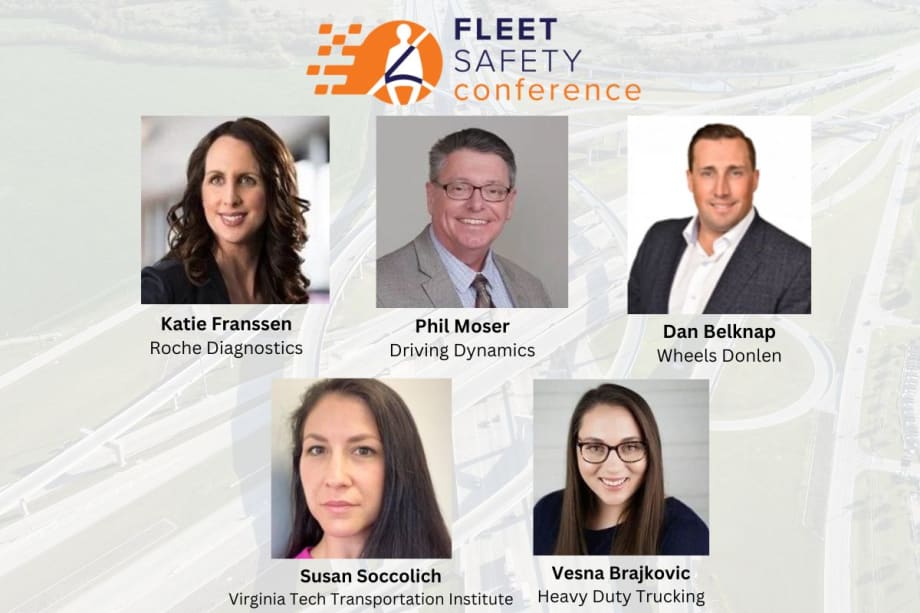
At the 2022 Fleet Safety Conference, subject matter experts from a fleet management company, fleet safety consultancy, trucking media brand, policy and research institute, and another running a large pharmaceutical fleet will examine roadway deaths, distracted driving, and what fleets can do about it.
Photos: Bobit/Canva
3 min to read
Safety experts say that ever since pandemic lockdowns risky driving behaviors have become the new normal. During the darkest days of COVID-19, open roads and ample frustration tempted drivers to engage in everything from speeding to aggressive, distracted, and impaired driving.
Crash deaths rose 7% in 2020 despite a dramatic decrease in the number of miles Americans drove. But as drivers logged more miles in 2021, the pattern continued with fatalities rising by more than 10%, according to the National Highway Traffic Safety Administration (NHTSA). Finally, more than 9,500 people died in roadway collisions in the first three months of this year — the highest number of first-quarter fatalities since 2002.
What’s behind this spike in fatalities? The data indicates its due to risky behaviors that appear to have stuck with drivers since the start of the pandemic. Fleet managers can learn how to best support their drivers to avoid distractions, road rage, and more at the following two thought-provoking sessions at the upcoming Fleet Safety Conference (FSC).
“Driving in a World of Distractions, Impairment, and Rage”
Nov. 11, 8 a.m. to 8:45 a.m.; Moderator: Dan Belknap, Wheels Donlen
Presenters Phil Moser of Driving Dynamics and Katie Franssen of Roche Diagnostics Operations will dig into the reasons for our current alarming crash and fatality statistics. The duo will then introduce their respective cutting-edge methods around driver engagement and behavioral improvement to achieve real and lasting change.
Both Moser and Franssen bring a depth of real-world experience to the session. With over 30 years in the field of driver safety, Moser has assisted numerous Fortune 500 companies with developing and successfully implementing robust driver safety initiatives. As a former police officer and a vehicle crash investigator, Moser has also investigated thousands of collisions. Since 2014, Franssen has directed the safety policies, strategies, training, and tools to support Roche’s fleet of 1400 drivers.
“Driver Distraction: What Does the Data Say?”
Nov. 11; 8:45 a.m. to 9:30 a.m.; Moderator: Vesna Brajkovic, Managing Editor, Heavy Duty Trucking
Researcher Susan Soccolich will present results from Virginia Tech Transportation Institute’s (VTTI) recent commercial motor vehicle driver distraction study. It explores type, time, and frequency of behaviors before near crashes and collisions including cell phone use, drowsiness, other in-cab distractions, and external events. The study also reveals how drivers responded to onboard monitoring systems (OMBs) and coaching after these triggered events.
Soccolich is a research associate with the Virginia Tech Transportation Institute’s Division of Freight, Transit, and Heavy Vehicle Safety. She brings to this seminar over a decade of research project experience that have focused on improving roadway user safety through studies of wide-ranging issues involving commercial motor vehicle drivers, vehicles and technology, roadways, and the environment. A sought-after expert on reducing driver distraction, attendees will walk away from Soccolich’s session with actionable insights to improve fleet safety.
Entering its 11th year, Fleet Safety Conference returns to an in-person format as part of the Fleet Forward Conference Nov. 9-11 in Santa Clara, California.

The 2022 Fleet Safety Conference, combined with the Fleet Forward Conference, convenes Nov. 9-11 at the Santa Clara Marriott.
Photo: Marriott Santa Clara
As part of a combined agenda, the in-person FSC will convene and opening and closing keynote as general sessions. Concurrent sessions will take place along with Fleet Forward Conference sessions. Attendees will pay one registration fee to access both events.
More Safety

Sponsored•October 1, 2026
Fleet Manager’s Ultimate Playbook: Navigating the New Standard in OEM Connectivity
Rising operating costs, driver safety concerns, and unplanned downtime are putting unprecedented pressure on modern fleets. Discover how fleet managers use embedded OEM connectivity and real-time vehicle data to cut TCO, prevent downtime, and protect drivers without aftermarket telematics hardware.
Read More →
From Driver Well-Being to EV Charging | AF News Recap
Mental health belongs in the fleet safety conversation. This week, we’re looking at five ways fleets can support employee well-being before a crisis, plus Holman’s expansion in Mexico, new one-day Fleet Forward passes, and why EV charging demand is outpacing infrastructure growth.
Read More →
Nexar-Nauto Merger Aims to Give Fleets Better Safety Intelligence Through Larger Driving Dataset
Stefan Heck tells Automotive Fleet that combining more than 10 billion miles of driving history with Nexar's AI models will give fleets deeper insights into driver risk and roadway conditions than either company could provide independently.
Read More →
Don't Wait for a Crisis: 5 Ways to Build Mental Health Into Your Fleet Safety Program
For Suicide Prevention Month, fleet and safety leaders have an opportunity to put mental health where it belongs: at the center of workplace safety.
Read More →
How Camera Data Can Strengthen a Fleet’s Insurance Renewal
Insights from a commercial insurance carrier and a broker show how fleets can turn video telematic data, driver coaching, and improved claims results into a stronger case at insurance renewal.
Read More →
The Safest Fleets Aren’t the Ones with the Most Technology
You’ve made the telematics investment. Here’s how to capture the other half of its value and build the safest fleet on the road.
Read More →
Sponsored•August 7, 2026
Hidden in Plain Sight: Fleet Compliance Risks
Fleet compliance isn't just about having policies — it's about consistently enforcing them. This practical guide reveals six hidden compliance risks common in public sector and shared fleet operations and outlines proven strategies to improve visibility, accountability, and audit readiness
Read More →
NETS Sets 2026 Fleet Safety Benchmark Conference for Indianapolis
The Sept. 15–17 program will feature fleet benchmarking data, case studies, emerging technologies, and implementation strategies while running alongside the NSC Safety Congress & Expo.
Read More →
Off-the-Job Crashes Account for 43% of Employers’ $61.7 Billion Crash Burden
NETS quantifies costs dispersed across fleet, risk, HR, and other departments while providing new per-crash benchmarks for employers.
Read More →
Ram Recalls More Than 1.27 Million 1500 Pickups for Seat Belt Anchor Issue
The recall affects certain 2019-2026 Ram 1500 pickups that may have improperly attached second-row seat belt buckle anchors.
Read More →