




Ford’s Atlas Concept Pickup Truck Shows Future Direction of Automaker’s Products
The Atlas Concept features a mix of technologies designed to enhance fuel economy and the vehicle’s overall functionality.
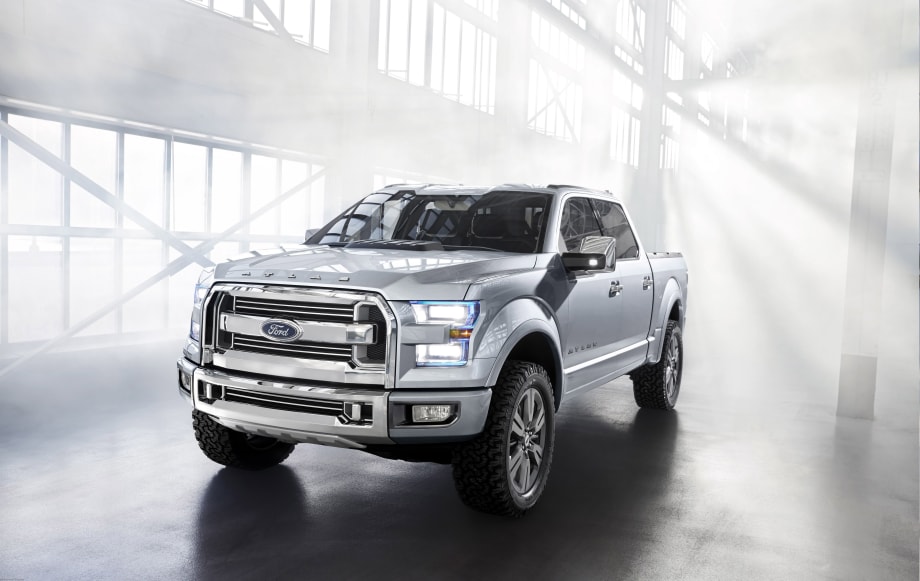
The Ford Atlas Concept is designed to show new technologies the automaker is developing for use in its pickup truck products.
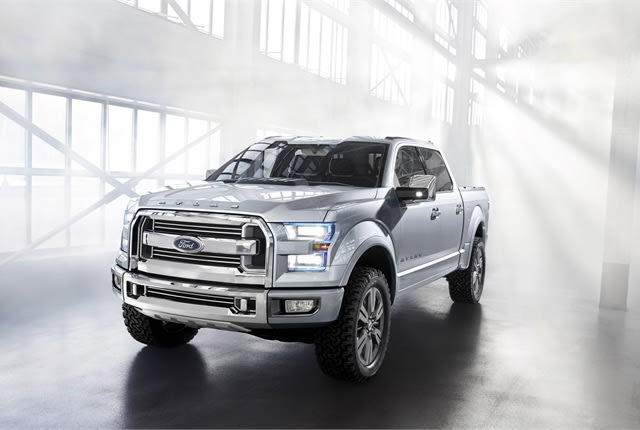
The Ford Atlas Concept is designed to show new technologies the automaker is developing for use in its pickup truck products.
Ford unveiled a new pickup truck concept, the Atlas, which the automaker says showcases design ideas and new technologies that “will define” Ford’s future pickups.
You can view a photo gallery of the Atlas Concept truck here.
“The Ford Atlas Concept previews the innovations that will transform what people expect from their pickup,” said Raj Nair, Ford group vice president, Global Product Development. “With 36 years as America’s best-selling pickup, we are absolutely committed to setting the agenda in the truck market.”
The Atlas Concept features a mix of technologies designed to enhance fuel economy and the vehicle’s overall functionality. Starting with fuel economy, the Atlas Concept features a next-generation EcoBoost powertrain that integrates auto-start-stop functionality designed to work in a pickup truck. The system in the Atlas Concept shuts off the engine when the truck is stopped on the road but can detect when the vehicle is towing so it can turn the feature off.
The next-generation EcoBoost engine uses gasoline direct injection and turbocharging to improve fuel efficiency by up to 20% and reduce CO2 emissions by up to 15% when compared with larger displacement engines, Ford said.
Beyond the next-gen EcoBoost engine, the Atlas features a number of other technologies designed to enhance fuel efficiency. They include Active Grille Shutters, which open and close depending on the vehicle’s speed in order to improve aerodynamics but provide cooling when needed; Active Wheel Shutters, which close at highway speeds to further improve aerodynamics; a Drop-Down Front Air Dam, which is a spoiler that lowers at highway speeds to improve airflow under the vehicle but raises at low speeds to provide extra ground clearance; and Power Running Boards, which auto deploy to help passengers get into the vehicle but retract when the vehicle is in motion to further improve aerodynamics and ground clearance. Ford said that when combined, these features can save more than 2 mpg on the highway without affecting towing or hauling capabilities.
The truck’s interior features lightweight seating in leather that provide added legroom for rear-seat passengers and storage for small items.
The Atlas Concept shows other features designed to improve a pickup’s functionality as a work truck. Ford added multiple tie-down points to the cargo box and load floor, and installed 110-volt electrical outlets in the cargo box for charging power tools. The truck also features an integrated roof carrying system and hidden extendable (and removable) ramps that stow below the cargo box.
For better visibility when working at night, the truck’s cargo box has integrated LED lights that don’t use as much energy as standard headlights or plug-in lights.
In the back of the truck, the tailgate can act as a cargo cradle by lifting and holding extra-long items above the truck, which frees up space in the bed. The truck also comes with what Ford calls a “Dynamic Hitch Assist,” which helps line up the truck’s hitch with a trailer coupling. For improved lighting, the truck comes with LED headlamps and taillamps.
To improve backing safety, Ford has created a new feature called Backup Assist, which allows a driver to back a trailer automatically. The truck also features a new 360-degree camera, which gives a driver a bird’s eye view of the truck in order to help him or her position the vehicle.
More Operations

Fleetio, ASE Launch Scholarship Program for Automotive Technicians
The second annual program will award 15 scholarships totaling $35,000 to support ASE certification, testing fees, and equipment costs.
Read More →
Reading the Global Signals: What AI and the Energy Transition Mean for Fleets Now
How can fleet managers navigate a never-ending, changing industry landscape?
Read More →
90% Use Telematics. Are Fleets Getting Safer? | AF News Recap
This week, we're breaking down which industries have the highest rates, how Jamie McKay manages 2,400 vehicles, what's happening with the 2027 fleet awards, and why software-defined vehicles could introduce new costs.
Read More →
What's Best Handled by an FMC, and What's Better Done Directly?
Fleet managers continue to rely on FMCs for essential services but are taking a closer look at where working directly with suppliers can improve efficiency and responsiveness.
Read More →
Fleet Meets: Erin Gilchrist
Meet Erin Gilchrist, the inaugural Mike Antich Spirit of Fleet Award winner, as she shares insights on leadership, mentorship, the power of industry connections, and why people remain at the heart of fleet's future.
Read More →
How 2026 Fleet Visionary Jamie McKay Manages 2,400 Vehicles Across 37 States
How do you keep 2,400 vehicles running across 37 states? Fleet Visionary Award winner Jamie McKay shares how collaboration, flexibility, and a few simple strategies help her tackle fleet management challenges at Aptive Pest Control.
Read More →
Managing Fleet Costs in an Era of Permanent Volatility
Fleet operating costs have risen more than 20% since 2020, raising a key question: When does extending a vehicle's service life stop making financial sense?
Read More →
The Next Evolution of Fleet Management: Autonomous Operations
This opening keynote session at the Fleet Forward Conference highlights the future of autonomous driving for fleets.
Read More →
How to Reduce the Total Cost of Risk From Catalytic Converter Theft
A stolen catalytic converter can cost fleets far more in downtime and lost productivity than in repairs. A total-cost-of-risk approach can help fleet managers quantify their exposure and prioritize theft prevention.
Read More →
Personal-Use Charges Rise as Vehicle Values Fall | AF News Recap
Personal-use charges are climbing, wholesale used-vehicle values are declining, and commercial fleet sales growth is slowing. This week, we're breaking down the latest fleet data, plus how Element Fleet Management is helping Waymo prepare for its first Canadian robotaxi market.
Read More →