




Ford's Active Safety Technology Turns Smarter Cars Into Safer Cars
DEARBORN, Mich. --- Ford Motor Co. engineers have introduced a host of in-vehicle intelligent active safety technologies that aim to help drivers avoid accidents.
DEARBORN, Mich. --- Ford Motor Co. engineers have introduced a host of in-vehicle intelligent active safety technologies that aim to help drivers avoid accidents. Globally, the emphasis has expanded from "passive" safety systems (seat belts, airbags and crumple zones), which look to minimize post-crash driver and passenger injury, to include "active" safety systems that focus on pre-collision accident avoidance. Among the first active safety technologies to be successfully shared globally is AdvanceTrac with Roll Stability Control (RSC), Ford's electronic stability control system. This system measures the roll motion of a vehicle and then takes corrective action to help reduce the risk of rollover. "It [Active Safety] certainly has been one of the most visible of the 'Big Bang' technology efforts," said Todd Mustaine, product portfolio manager for Ford Research & Advanced Engineering (R&A), referring to the ongoing technology partnership between Ford R&A and Product Development (PD) aimed at getting pre-collision technologies into vehicles. "These are products that we think have the best potential to make a difference with customers," said Mustaine. "The introduction of RSC began with the launch of the Volvo XC90 and was aggressively migrated onto the Ford Explorer and our entire North American SUV lineup rather quickly." Another Big Bang-related active safety technology, co-developed by Ford R&A and researchers at the Volvo Safety Center, is Collision Warning with Brake Support (CWBS). Launched on the 2007 Volvo S80, CWBS uses forward-looking radar to gauge an impending frontal crash. If a potential collision is detected, a warning is first given via an audio alert and a Head-Up Display light "bar" reflected off of the front windshield. Then, the system augments the driver's braking by automatically applying additional brake pressure to further reduce the vehicle's speed. "The driver will always be in control," said Priya Prasad, Ford Technical Fellow, Safety Research and Development. "If the driver is taking some type of evasive action, for instance if they want to accelerate, this system is not going to override. But if the driver is not taking sufficient braking action and the system detects an imminent threat of accident or collision, then it will begin decelerating the vehicle." The Mazda Pre-crash Safety System is another example of a radar sensor mounted toward the front of a car to monitor the vehicle ahead, oncoming vehicles or other obstacles. In addition to a collision warning, if the driver fails to take an evasive action in the event of an impending crash, the vehicle's brakes are applied automatically to help reduce speed ahead of a collision. In addition, the seatbelts are pre-tensioned in an effort to restrain the occupants even more effectively. "While drivers welcome the information and warnings provided by these types of systems, they remain very sensitive about not wanting to lose control of their vehicle," said Jeff Rupp, manager of Active Safety within Ford R&A. "We want to first warn them, but if a driver does not respond quickly enough and an accident appears unavoidable, these technologies have the capability to intervene." A host of Volvo vehicles are already available with another optional high-tech safety feature, the Blind Spot Information System (BLIS). This uses cameras mounted in the side-door mirrors to warn of vehicles in a car's blind spots. Each camera takes 25 pictures every second, while an onboard computer uses these images to determine when another vehicle is alongside. The system then illuminates orange warning lamps positioned near the front-door windshield pillars, providing a subtle warning of a nearby car. Mustaine says both R&A and PD at Ford will continue to support such co-sponsored projects through Big Bang. "These are projects of technical significance where we have common understanding on the objectives, deliverables and timing going in," Mustaine said. "But just because certain technologies are desirable doesn't mean that they're always feasible."
More Safety

Nexar-Nauto Merger Aims to Give Fleets Better Safety Intelligence Through Larger Driving Dataset
Stefan Heck tells Automotive Fleet that combining more than 10 billion miles of driving history with Nexar's AI models will give fleets deeper insights into driver risk and roadway conditions than either company could provide independently.
Read More →
Don't Wait for a Crisis: 5 Ways to Build Mental Health Into Your Fleet Safety Program
For Suicide Prevention Month, fleet and safety leaders have an opportunity to put mental health where it belongs: at the center of workplace safety.
Read More →
How Camera Data Can Strengthen a Fleet’s Insurance Renewal
Insights from a commercial insurance carrier and a broker show how fleets can turn video telematic data, driver coaching, and improved claims results into a stronger case at insurance renewal.
Read More →
The Safest Fleets Aren’t the Ones with the Most Technology
You’ve made the telematics investment. Here’s how to capture the other half of its value and build the safest fleet on the road.
Read More →
Hidden in Plain Sight: Fleet Compliance Risks
Fleet compliance isn't just about having policies — it's about consistently enforcing them. This practical guide reveals six hidden compliance risks common in public sector and shared fleet operations and outlines proven strategies to improve visibility, accountability, and audit readiness
Read More →
NETS Sets 2026 Fleet Safety Benchmark Conference for Indianapolis
The Sept. 15–17 program will feature fleet benchmarking data, case studies, emerging technologies, and implementation strategies while running alongside the NSC Safety Congress & Expo.
Read More →
Off-the-Job Crashes Account for 43% of Employers’ $61.7 Billion Crash Burden
NETS quantifies costs dispersed across fleet, risk, HR, and other departments while providing new per-crash benchmarks for employers.
Read More →
Ram Recalls More Than 1.27 Million 1500 Pickups for Seat Belt Anchor Issue
The recall affects certain 2019-2026 Ram 1500 pickups that may have improperly attached second-row seat belt buckle anchors.
Read More →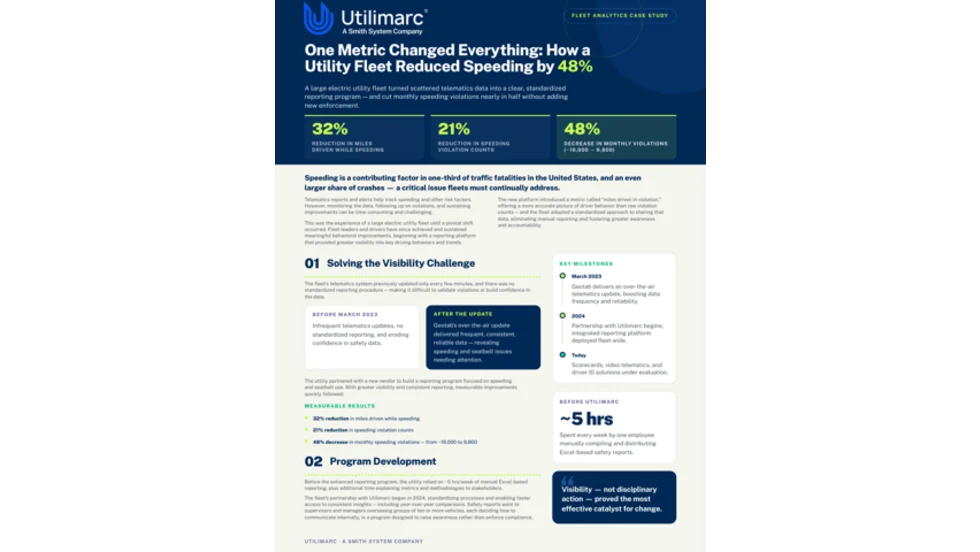
How Better Visibility Cut Speeding Violations by 48%
Fleet leaders don't need more data, they need clearer visibility into what the data is saying. This case study explores how one utility replaced speeding-event counts with a single metric — miles driven in violation — to strengthen safety and significantly reduce speeding violations.
Read More →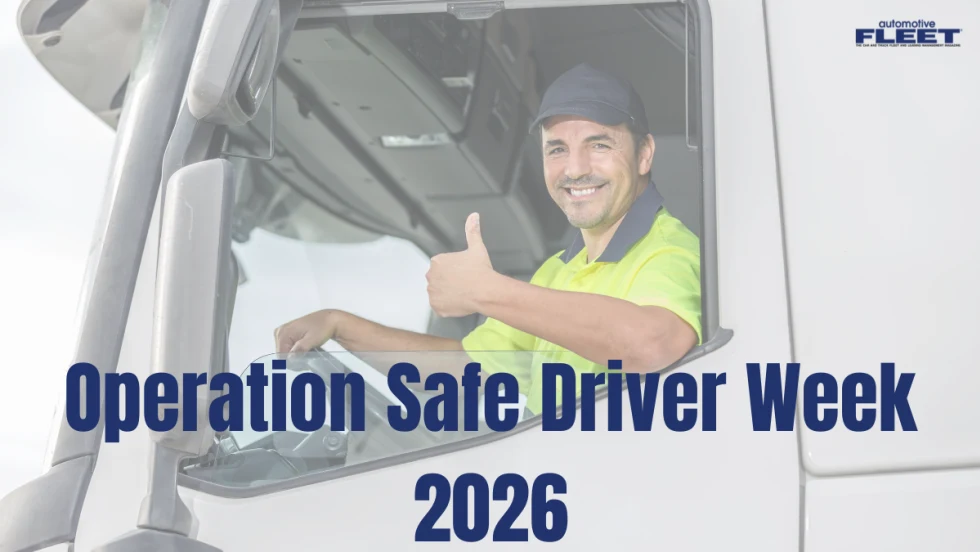
Operation Safe Driver Week: Why the Industry's Oldest Safety Campaign Still Matters to Fleets
A look at how a 2007 enforcement initiative became one of the most consequential weeks on the fleet safety calendar, and what it means for your drivers in 2026.
Read More →