




Ford Unveils 2012 Police Interceptor
LAS VEGAS - The Ford Motor Co. unveiled its new Taurus-based police interceptor in Las Vegas today and provided initial details about the patrol car that will replace the aging "Crown Vic" in late 2011.
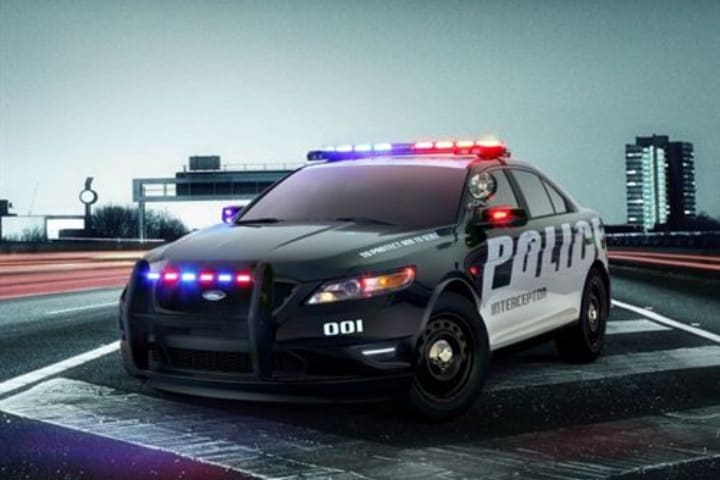
Ford Police Interceptor
LAS VEGAS - The Ford Motor Co. unveiled its new Taurus-based police interceptor in Las Vegas today and provided initial details about the patrol car that will replace the aging "Crown Vic" in late 2011.
Ford also confirmed it has begun production on a second new police interceptor that will be a utility vehicle and will share some parts to help agencies save on maintenance costs. Ford will release details about that vehicle later this year.
The automaker relied on input from the law enforcement fleet managers with purchasing influence on the automaker's police advisory board.
"We've created a new Police Interceptor built to do the job by those on the job," said Mark Fields, Ford's president of the Americas.
Like the civilian version of the 2010 Taurus, the new full-sized patrol car will arrive in all-wheel and front-wheel drive versions and a pair of powertrain configurations.
The V-6 engines will deliver better performance than many current V-8s, according to Ford.
The base model arrives with a 3.5-liter, V-6 that delivers 263 hp, E85 fuel compatibility, and is 25 percent more efficient than the 4.6-liter Single Overhead Cam (SOHC) V-8 offered in the current Crown Victoria Police Interceptor.
Ford will also offer the 3.5-liter EcoBoost, V-6 twin-turbocharged, direct-injection engine that will deliver 365 hp and 350 ft.-lb. of torque across a broad rpm range.
The vehicle also offers several new safety and ergonomic features for officers.
"Safety, space, comfort and functionality must seamlessly come together," said Scott Tobin, Ford's vehicle line director for cars and crossovers. "It's an ideal balance between mobile office and mobile jail."
Like its CVPI predecessor, the new Police Interceptor passed the 75-mph rear-end crash test. It will also feature Ford's Safety Canopy side-curtain air-bag system that slips between the occupant and the side window during a rollover or side-impact crash.
The cockpit includes a column shifter to free up the center console area, which now includes a "media bin" to charge cellphones and USB devices.
Seats have been redesigned; the lower bolster is removed to add room for an officer's duty belt. The driver- and passenger-side seats include anti-stab plates, and the rear doors hinge open an additional 10 degrees.
Additional features include a blind-spot detection system that uses radar sensors in the rear quarter panels to detect vehicles in surrounding lanes, a cross-traffic warning system for backing out of driveways, a rearview camera system for reversing, electronic stability control and the Ford SYNC hands-free telematics system with steering-wheel controls that can be re-mapped. The radar sensors and back-up camera are expected to be offered as options.
The patrol car arrives as Ford faces increasing competition from its rivals who are also offering new options to law enforcement agencies. Ford now maintains more than 70 percent of the patrol-car market, according to the company.
General Motors is re-introducing the Chevrolet Caprice patrol car in 2011, and Carbon Motors executives have said they've taken 12,000 pre-orders for the E7 clean-diesel patrol vehicle. Also, Chrysler executives say they'd like to see their Dodge Charger reach 40 percent of the patrol-car market.
The new Police Interceptor will be built at Ford's Chicago plant and will be submitted to the Michigan State Police and Los Angeles Sheriff's Department in the fall for evaluation.
More Operations

A buyer's guide to fleet management software in 2027
Buying fleet management software in 2027 means looking beyond features and price. As fleet operations, technology and expectations evolve, this guide explores what today’s fleet professionals should consider when choosing a system that can deliver value now and adapt to what comes next.
Read More →
What Will Shape the Next Era of Fleet Management?
EVs, AI, and autonomous vehicles are reshaping fleet management. Discover what’s ahead—and how fleet leaders can prepare for the next era.
Read More →
How Fleets Can Recruit and Train Veterans for Technician Roles
Here's how the technician shortage has affected uptime for fleets, and what to do about it.
Read More →

Avis Budget Group Deploys Neology Toll Management Technology Across Major Brands
Neology’s neoFleet platform will manage toll transactions and toll-authority operations for vehicles across Avis, Budget, Payless, Budget Truck and Zipcar.
Read More →
Fleet Personal-Use Charges Edge Higher in 2026
Nearly eight in 10 surveyed fleets allow personal use of company vehicles, while just over half of respondents report charging employees for the privilege.
Read More →
The Future of Fleet + What’s Changing Right Now | AF News Recap
Could developments overseas offer a preview of what’s coming for U.S. fleets? This week, we’re looking at the future of AI, autonomy, and electrification, plus Ford Pro’s new certified pre-owned program, smarter vehicle offboarding, and a new way for fleets to manage toll expenses.
Read More →
How to Handle Vehicle Offboarding
What do fleet managers need to do when a driver leaves?
Read More →
Fleet Manager’s Ultimate Playbook: Navigating the New Standard in OEM Connectivity
Rising operating costs, driver safety concerns, and unplanned downtime are putting unprecedented pressure on modern fleets. Discover how fleet managers use embedded OEM connectivity and real-time vehicle data to cut TCO, prevent downtime, and protect drivers without aftermarket telematics hardware.
Read More →
U.S. Bank Adds Verra Mobility Toll Management to Voyager Fleet Platform
The integration allows U.S. Bank Voyager fleet customers to manage toll payments and violations alongside fuel, EV charging and maintenance expenses.
Read More →
ADAS Prevents Crashes. But Repairs Cost More | AF News Recap
ADAS-equipped vehicles may crash less often, but they can cost more when they do. This week, we’re breaking down what that tradeoff means for fleets, plus Subaru’s first Forester Wilderness Hybrid, Nissan’s new e-POWER Rogue, and why Calstart has become Catalyst Mobility.
Read More →