




Ford Opens Silicon Valley Research Center
Ford Motor Co. has opened a research center in Silicon Valley to accelerate its development of technologies and experiments in connectivity, mobility, autonomous vehicles, customer experience and big data.

Photo courtesy of Ford.
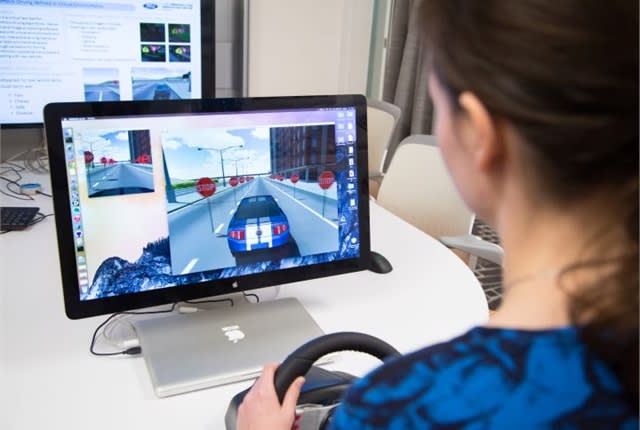
Photo courtesy of Ford.
Ford Motor Co. has opened a research center in Silicon Valley to accelerate its development of technologies and experiments in connectivity, mobility, autonomous vehicles, customer experience and big data.
The Research and Innovation Center Palo Alto will feature a partnership with Stanford that will help Ford move to the next phase of its testing of autonomous vehicle technology. Ford hopes to further work it began with the Fusion Hybrid Autonomous Research Vehicle.
Ford has also hired an experienced engineer from Apple, Dragos Maciuca, to serve as senior technical leader at the center. Ford's additional hiring plans would give it one of the largest automotive research teams in the nation's technology hub.
The new center joins Ford’s global network of research and innovation centers, including its location in Dearborn, Mich., which focuses on advanced electronics, human-machine interface, materials science, big data and analytics; and Aachen, Germany, which focuses on next-generation powertrain research, driver-assist technologies and active safety systems.
By the end of the year, Ford expects to have one of the largest automotive manufacturer research centers in Silicon Valley with 125 researchers, engineers and scientists. Located in Stanford Research Park, the facility also expands Ford's physical footprint and will allow further expansion in the near future. Ford opened its first Silicon Valley office in 2012.
In the area of connectivity, Ford is working on an interface that would allow a driver to control a Nest thermostat using an "Auto-Away" mode. In the mobility area, Ford is testing the ability to remotely operate golf garts from thousands of miles away. Ford began collaborating with Stanford in 2013 on automated driving, and plans to expand a partnership that led to the Ford Fusion Hybrid automated sedan.
In the the customer-service area, Ford is testing an advanced human-machine interface to understand how customers prefer to control systems with a significant amoung of functionality such as a high-tech multicontour seat.
In the big data and analytics area, Ford is studying how customers are using their vehicles, and is conducting analytics to detect patterns and learnings that could lead to product improvements or new mobility services.
More Global Fleet
Holman Takes Full Ownership of ARIZA in Mexico
Holman is bringing its Mexican fleet management operation fully under its own brand after more than 30 years as a joint venture. The change gives multinational fleet customers a single Holman operation across the U.S., Canada, and Mexico.
Read More →
Proven Ways to Reduce Work Truck Downtime
The age-old problem of downtime will always be a reality, but with new strategies at hand, fleets have more ways to keep trucks on the road longer.
Read More →
The Top 300 Commercial Fleets
The Top 300 Commercial Fleets: See the List
Read More →

Cameras, Safety and Insurance: From Reactive Claims to Real-Time Prevention (Part 2 of 2)
Part Two: Commercial auto remains one of the most challenging and costly lines of coverage for fleet operators and insurers alike. Continue learning more about how to effectively address these issues from Onur Aksan, Enterprise Business Development Executive, Geotab
Read More →
Cameras, Safety and Insurance: From Reactive Claims to Real-time Prevention
Commercial auto remains one of the most challenging and costly lines of coverage for fleet operators and insurers alike. Learn more about how to effectively address these issues from Onur Aksan, Enterprise Business Development Executive, Geotab.
Read More →
Fleet Costs Are Rising: Here’s How Leaders Are Responding
Fleet leaders are under pressure to reduce costs, adapt to economic uncertainty, and make smarter decisions. See how peers across North America are responding with real data, proven strategies, and forward-looking insights. Download the 2026 Market Pulse Report to benchmark your strategy and uncover where you can gain an edge.
Read More →
Enterprise Fleet Management Surpasses 900,000 Vehicles in U.S. & Canada
Enterprise Mobility connects with mobility solutions around the globe
Read More →
Automotive Fleet's Guide to Fleet Electrification
Unlock the secrets to a successful transition to electric fleets with Automotive Fleet's comprehensive Fleet Electrification Guide!
Read More →
Sumitomo Rubber Industries to Acquire Viaduct
Viaduct will join Sumitomo as an independent subsidiary. Partnership strengthens global reach and accelerates AI-driven innovation for fleets and manufacturing.
Read More →