




Related: Ford Driverless Cars Coming in 2021
Ford Names Autonomous Vehicle Executive
Silicon Valley veteran Laura Merling will service as vice president of autonomous vehicle solutions for subsidiary Ford Smart Mobility.
by Staff
October 31, 2016
Laura Merling, vice president of autonomous vehicle solutions for Ford Smart Mobility. Photo courtesy of Ford.
2 min to read

Laura Merling, vice president of autonomous vehicle solutions for Ford Smart Mobility. Photo courtesy of Ford.
Ford Motor Co. has appointed Laura Merling as vice president of autonomous vehicle solutions for Ford Smart Mobility, the automaker’s subsidiary focused on emerging mobility services.
Merling, who will report to Ford Smart Mobility Chairman Jim Hackett, will be based in Palo Alto, Calif. She is a 20-year veteran of Silicon Valley.
Merling will lead the company’s efforts to commercialize autonomous vehicles. Ford has announced its intent to have a high-volume SAE level 4 fully autonomous vehicle in commercial operation by 2021.
“While Ford’s technical teams invent and further develop the technology of autonomous vehicles, we need to invent and develop the commercialization strategy to connect this technology with the uses and users that will truly change the way the world moves,” Hackett said. “Laura has deep experience innovating strategy and platform development for both startup and corporate organizations. She also brings a significant external network through her Internet of Things consultancy and startup board advisory roles.”
In addition to her role with Ford Smart Mobility, Merling will continue to serve in an advisory role for several startups working on Internet of Things connectivity, machine learning, and digital manufacturing. These include Wivity, Thin Systems, Alluvium.au, and Authentise.
Merling comes to Ford after running her own consultancy focused on the intersection of hardware, firmware, and software in the Internet of Things. Prior to that, she was global general manager and executive vice president of Internet of Things for SAP. In this role, Merling led the go-to-market strategy for the Internet of Things business.
Prior to SAP, Merling served as vice president of enterprise digital transformation for AT&T. In this role, she led the enterprise customer innovation program, launching big data and Internet of Things solutions. In addition, Merling launched web services including the Mobile Identity Toolkit and the company’s cloud-based voice platform, while also developing business automation solutions and leading complex partnerships.
“I am excited by the opportunity to be part of the biggest change in transportation in more than a century,” Merling said. “The challenge of building the business models to commercialize autonomous vehicles perfectly aligns with the more than two decades I’ve spent working on the edge of innovation and business.”
Ford Smart Mobility is working with Ford’s product development, research and advanced engineering, marketing, and data analytics teams to develop commercial mobility services and invest in promising mobility-related ventures.
More Safety
What’s Next for Fleet? Safety, AI & Industry Recognition | AF News Recap
Could your company's culture be encouraging distracted driving? This week, we're exploring how workplace expectations affect driver safety, what AI, EVs, and autonomous vehicles could mean for the future of fleet management, and how fleet professionals can strengthen their award nominations.
Read More →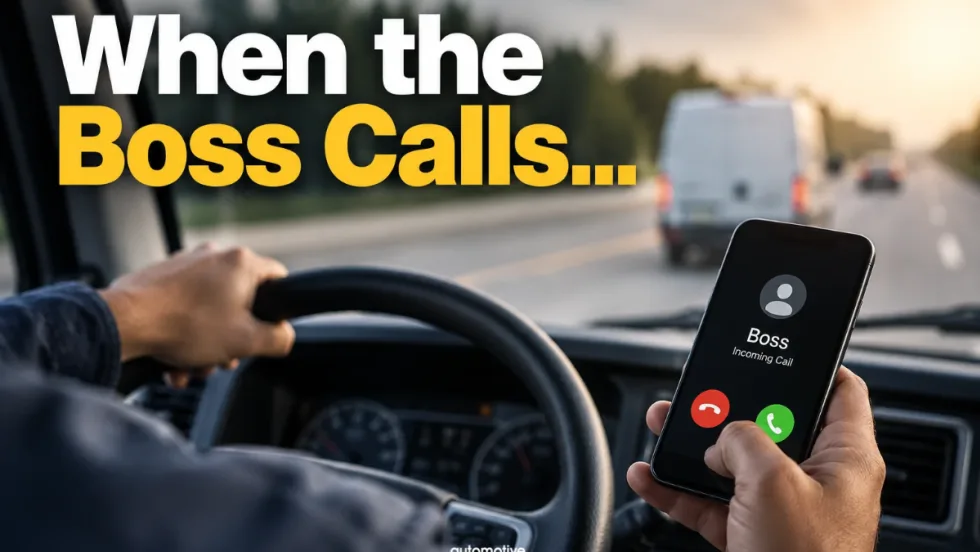
Does Your Fleet's Culture Encourage Distracted Driving?
What happens when the people responsible for enforcing safety rules are the ones setting the wrong example? The answer may reveal why some of the biggest risks to fleet drivers have little to do with what's written in the employee handbook.
Read More →
Sponsored•October 1, 2026
Fleet Manager’s Ultimate Playbook: Navigating the New Standard in OEM Connectivity
Rising operating costs, driver safety concerns, and unplanned downtime are putting unprecedented pressure on modern fleets. Discover how fleet managers use embedded OEM connectivity and real-time vehicle data to cut TCO, prevent downtime, and protect drivers without aftermarket telematics hardware.
Read More →
From Driver Well-Being to EV Charging | AF News Recap
Mental health belongs in the fleet safety conversation. This week, we’re looking at five ways fleets can support employee well-being before a crisis, plus Holman’s expansion in Mexico, new one-day Fleet Forward passes, and why EV charging demand is outpacing infrastructure growth.
Read More →
Nexar-Nauto Merger Aims to Give Fleets Better Safety Intelligence Through Larger Driving Dataset
Stefan Heck tells Automotive Fleet that combining more than 10 billion miles of driving history with Nexar's AI models will give fleets deeper insights into driver risk and roadway conditions than either company could provide independently.
Read More →
Don't Wait for a Crisis: 5 Ways to Build Mental Health Into Your Fleet Safety Program
For Suicide Prevention Month, fleet and safety leaders have an opportunity to put mental health where it belongs: at the center of workplace safety.
Read More →
How Camera Data Can Strengthen a Fleet’s Insurance Renewal
Insights from a commercial insurance carrier and a broker show how fleets can turn video telematic data, driver coaching, and improved claims results into a stronger case at insurance renewal.
Read More →
The Safest Fleets Aren’t the Ones with the Most Technology
You’ve made the telematics investment. Here’s how to capture the other half of its value and build the safest fleet on the road.
Read More →
Sponsored•August 7, 2026
Hidden in Plain Sight: Fleet Compliance Risks
Fleet compliance isn't just about having policies — it's about consistently enforcing them. This practical guide reveals six hidden compliance risks common in public sector and shared fleet operations and outlines proven strategies to improve visibility, accountability, and audit readiness
Read More →
NETS Sets 2026 Fleet Safety Benchmark Conference for Indianapolis
The Sept. 15–17 program will feature fleet benchmarking data, case studies, emerging technologies, and implementation strategies while running alongside the NSC Safety Congress & Expo.
Read More →