




Ford Introduces First All-Electric with a Mustang Badge
Equipped with an extended-range battery and rear-wheel drive, the Mustang Mach-E has a targeted range of at least 300 miles. Is tying an all-electric to the iconic Mustang badge a risky move?
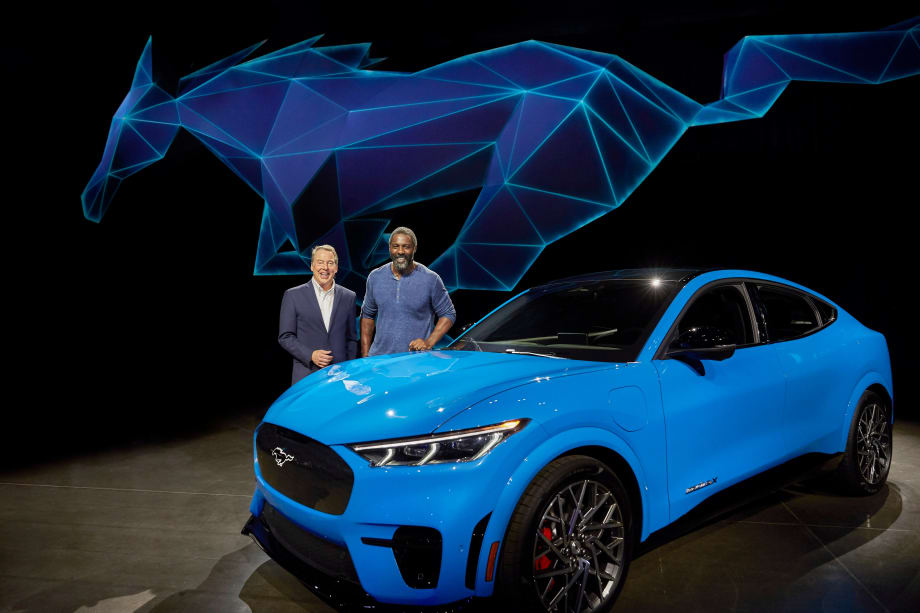
Ford Motor Company Executive Chairman Bill Ford, left, and actor Idris Elba next to Ford Motor Co.’s all-electric Mustang Mach-E GT SUV at Jet Center Los Angeles in Hawthorne, Calif., on Nov. 17. Elba, who previously worked at Ford Motor Co. in the 1980s, helped introduce the vehicle to the public. Launching in late 2020, Mustang Mach-E will be available in several variations, including an extended-range battery and rear-wheel drive option that has a targeted EPA-estimated range of at least 300 miles.
Photo via Ford.
In Los Angeles and prior to the opening of the LA Auto Show, Ford introduced the Mustang Mach-E, an all-new, all-electric SUV.
When it arrives in late 2020, Mustang Mach-E will be available with standard and extended-range battery options with either rear-wheel drive or all-wheel drive powered by permanent magnet motors. Equipped with an extended-range battery and rear-wheel drive, Mach-E has a targeted EPA-estimated range of at least 300 miles.
Customers can now visit the Mustang Mach-E reservation site to make a $500 reservation deposit.
Making its debut in the Mach-E is the next-generation SYNC communications and entertainment system, with a 15.5-inch interface that uses machine learning to learn drivers’ preferences, and will be able to receive over-the-air updates.
Using Ford’s new all-electric architecture that places batteries inside the underbody, the Mustang Mach-E is designed to maximize SUV space for five passengers and cargo.
Along with its all-new propulsion system, the Mach-E also features a drainable front trunk storage unit. Providing 4.8 cubic feet of storage space, the front trunk is large enough to comfortably store the equivalent of a carryon luggage bag. In addition to the exterior front trunk, the rear trunk offers 29 cubic feet of space. With the rear seats down, the Mach-E has 59.6 cubic feet of space.
The new model also offers Phone As A Key technology, which makes its debut in the Ford brand lineup in Mustang Mach-E. Using Bluetooth, the vehicle can detect customers’ smartphones as they approach, unlocking the Mach-E and allowing them to start driving without getting their phones out of their pockets or using a key fob.
Mustang Mach-E will be available in both standard-range (75.7 kWh lithium-ion battery) and extended-range (98.8 kWh battery), which has a targeted EPA-estimated range of at least 300 miles in rear-wheel-drive configuration.
Ford will give customers access to the FordPass Charging Network,which has more than 12,500 charging stations (and more than 35,000 charge plugs) and growing, including DC fast chargers.
Will the public accept an all-electric model with the Mustang badge?
“In the case of the Mustang Mach E, Ford is promising compelling performance and attractive styling that pay proper homage to the Mustang brand,” said Karl Brauer, executive publisher at Kelley Blue Book and Autotrader. “If that holds true, borrowing Ford’s most iconic name for its new electric SUV won’t cause any damage, and might actually contribute to awareness and sales.”
Said Michael Harley, executive editor for Kelley Blue Book: “It’s an obvious piggyback move, meant to vault this all-new electric vehicle to the celebrated status that has accompanied the brand’s combustion-powered muscle car for more than 50 years. It’s also a risky move, as slapping the badge on a futuristic, emission-free, sport-utility vehicle is about the last thing that Mustang loyalists are expecting. If the vehicle is outstanding and well-received, Ford will win big. If it falls short, the company will have another Edsel on its hands.”
More Fleet Forward

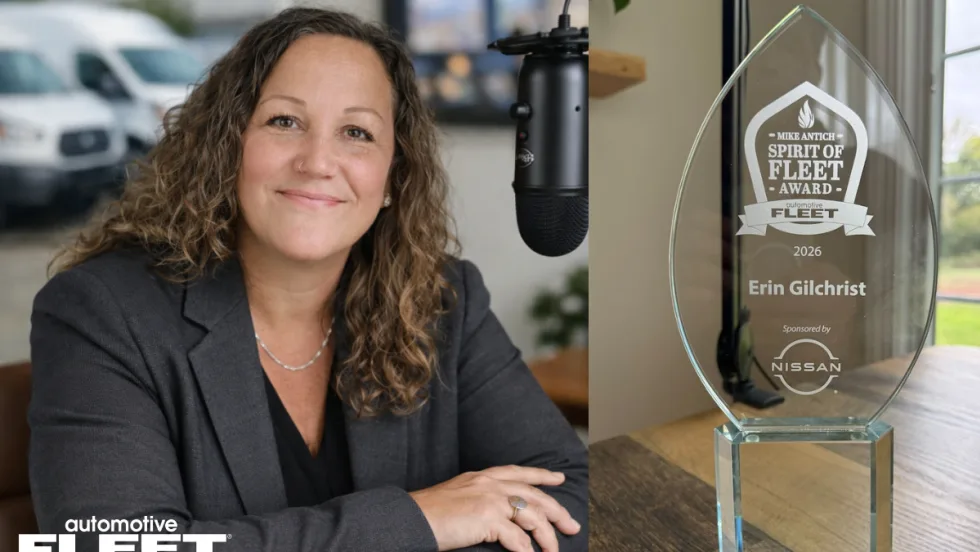
Erin Gilchrist Receives Mike Antich Spirit of Fleet Award
Last week at AFLA in Vegas, Erin Gilchrist received the inaugural, brand-new Spirit of Fleet Award.
Read More →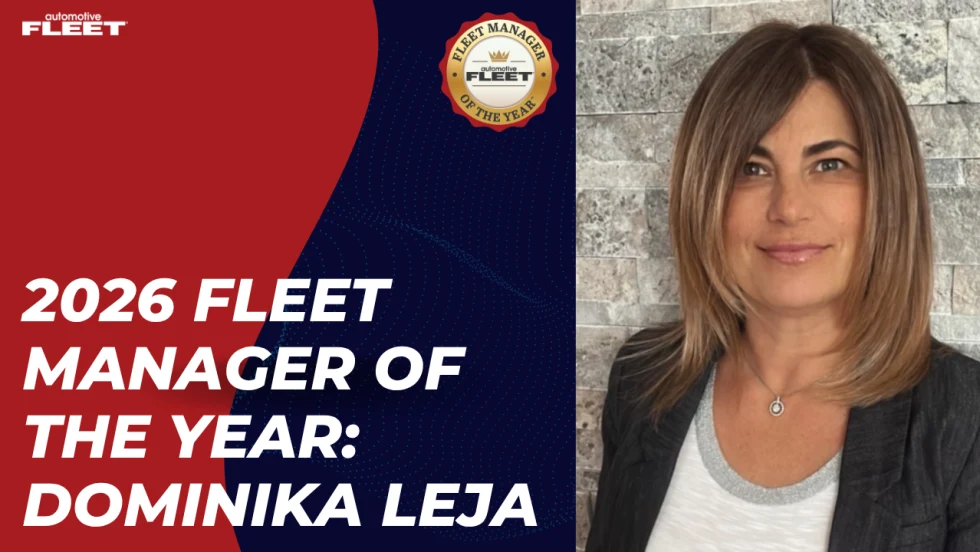
Dominika Leja Named the 2026 Fleet Manager of the Year
The AstraZeneca associate director of fleet was recognized for her leadership in fleet electrification, cost savings, and operational transformation.
Read More →
Jamie McKay Named the 2026 Fleet Visionary Award Winner
The Aptive Pest Control fleet manager was recognized for her approach to operations, data, lifecycle management, and driver needs.
Read More →
Fleet Forward Conference Introduces One-Day Passes for 2026
New one-day registration gives fleet professionals the flexibility to attend Tuesday, Wednesday, or Thursday, with passes available for $199 through Sept. 18.
Read More →
Vibe Coding: When Fleet Managers Become Software Builders
Five fleet professionals — none with programming skills — discuss how they’re using AI to build fleet solutions in-house and in a fraction of the time.
Read More →
Fleet Forward Conference Tackles Fleet Industry’s Growing Leadership Gap
This session will examine succession planning, knowledge transfer, and the skills the next generation of fleet leaders will need as veteran professionals leave the industry.
Read More →
2026 Fleet Manager of the Year Finalists Announced
Who are the 2026 Fleet Manager of the Year finalists?
Read More →
John Rossant to Deliver Opening Keynote at 2026 Fleet Forward Conference
The CoMotion founder will draw on developments across Europe, China, the Middle East, and other international markets to identify trends that could influence how U.S. fleets plan for the coming decade.
Read More →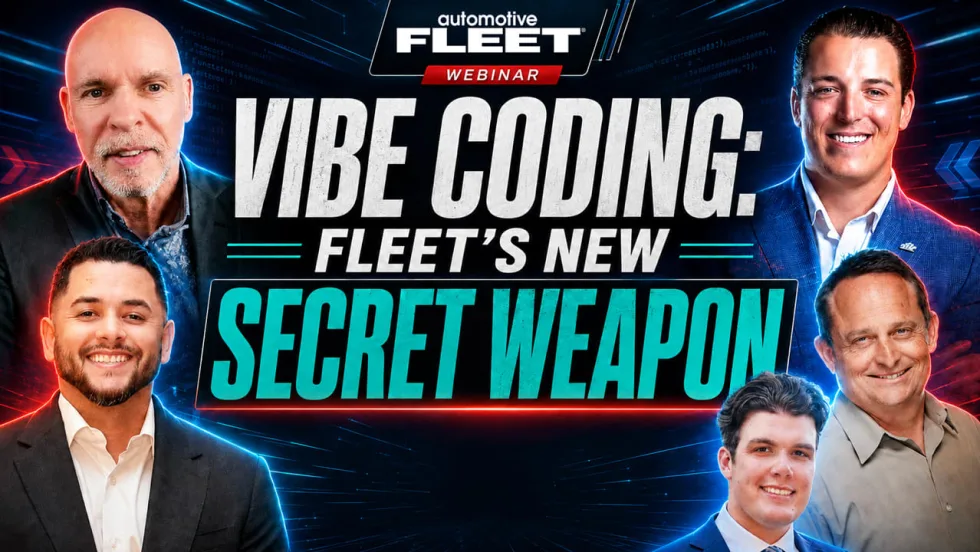
How to Build Custom Fleet Tools With AI and Vibe Coding [Webinar]
A new Automotive Fleet webinar explores how fleet managers are using AI and vibe coding to automate routine work and create simple operational tools without traditional programming skills.
Read More →