




Fleet Response Expands, Improves HQ Space
Steady year-over-year growth of 10-15 percent in revenue for the past five years, and a hand-in-hand increase in its employee footprint has resulted in the recent expansion of Fleet Response’s Cleveland-based headquarters.

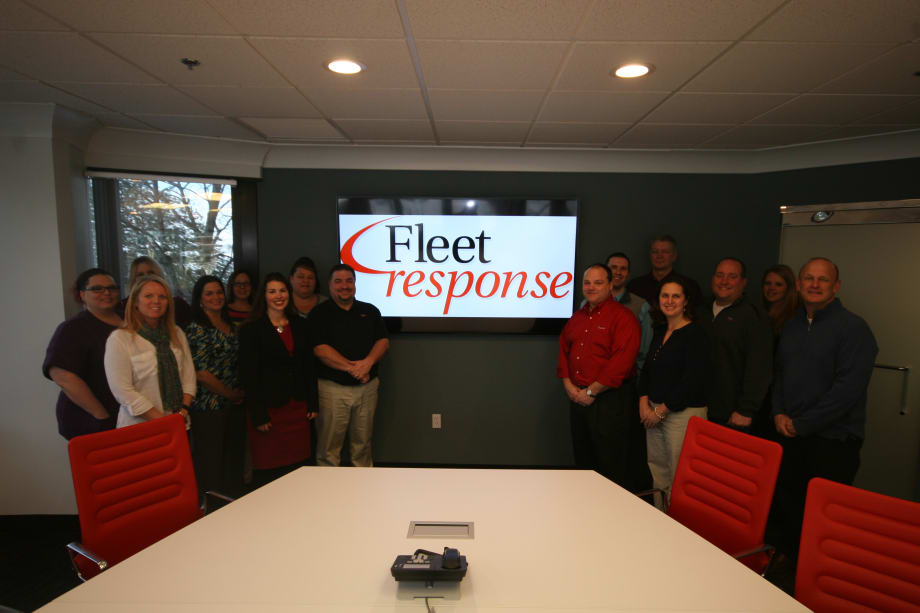
The new and expanded executive board room can fit up to 30 people. Photo: Automotive Fleet
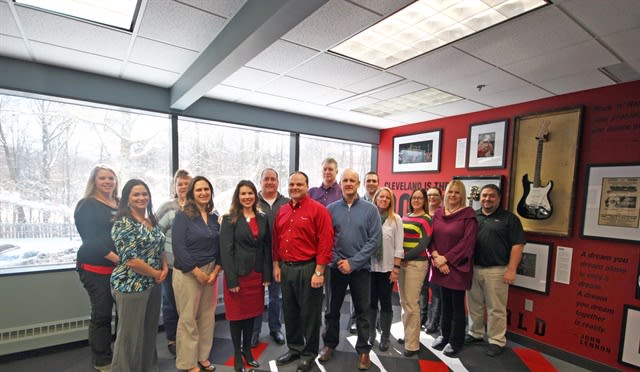
Fleet Response's new office space pays tribute to the cultural history of Cleveland.
Photo: Automotive Fleet
Steady year-over-year growth of 10-15 percent in revenue for the past five years, and a hand-in-hand increase in its employee footprint has resulted in the recent expansion of Fleet Response’s Cleveland-based headquarters.
“During the past three years we’ve increased our employees by about 20 percent, so we needed the additional space,” explained Jeff Fender, vice president sales and marketing for Fleet Response, a provider of custom-designed fleet management services with programs including accident reporting, vehicle repair, salvage, rental replacements, preventative maintenance programs, loss recovery, and driver safety programs.
The new and improved space, which added 7,800 square feet to the existing offices for a total of 23,700 square feet, includes a new employee kitchen and lounge — which Fender describes as the “decompression lounge” — a new employee training center, a collaboration room, and an expanded executive board room will enable Fleet Response to better provide day-to-day amenities for employees and visitors.
The employee lounge has couches and low lighting to create a living room feeling, and is designed to give associates a quiet place to relax during their break times.
“It’s really a place where employees can go during the day and unwind, because, by the nature of our business, you’re going to be on the phone with drivers and shops, dealing with accidents, which are a pretty stressful time for clients,” said Jodie Varner, director of business development for Fleet Response. “We’ve added a place in the employee lounge that’s a quiet area to help employees recharge during the day.”
The training center has a dedicated workstation where employees can do online customer service training and ongoing I-CAR training to maintain Fleet Response's I-CAR Gold status.
The new collaboration room has a white board that covers an entire wall and is designed as a place for group brainstorming in a laid-back atmosphere.
“The hope for these new spaces is that tehy will bring people together to further support our mission of innovation and effective service," Varner said. “We continue to invest in our people to enhance the experience for our clients and their drivers.”
The new and expanded executive board room can fit up to 30 people.Photo: Automotive Fleet
The enlarged executive board room can now bring more people — about 30 — together, about double the number that could meet in the old board room. The necessity for the enlarged board room is another result of the company’s success.
“It’s a product of growth as well. There was a time when we could get all of our managers in the smaller board room that was about eight people. Now it’s about 15 people, so we needed more space,” Varner explained.
Along with the added space is a new decoration scheme, which shows pride in Cleveland's storied cultural history — including images from the Rock & Roll Hall of Fame, professional sports teams, local colleges, and cultural landmarks.
“Our goal is to provide a better work environment for employees with the hopes of retaining them long term and making them less stressed at work, which ultimately provides better customer service and service levels for our clients,” Fender said. “Fleet Response is investing in itself with its human capital through a better work environment.”
--By Chris Wolski
More Operations

Company Vehicle or Reimbursement? How Fleets Are Rethinking Assignments
As fleet costs and insurance pressures rise, fleet managers are taking a closer look at which employees need company-provided vehicles and when a reimbursement program may make more sense.

Fleetio, ASE Launch Scholarship Program for Automotive Technicians
The second annual program will award 15 scholarships totaling $35,000 to support ASE certification, testing fees, and equipment costs.

Reading the Global Signals: What AI and the Energy Transition Mean for Fleets Now
In this opening keynote of the 2026 Fleet Forward Conference, John Rossant, founder of CoMotion, How can fleet managers navigate a never-ending, changing industry landscape?

90% Use Telematics. Are Fleets Getting Safer? | AF News Recap
This week, we're breaking down which industries have the highest rates, how Jamie McKay manages 2,400 vehicles, what's happening with the 2027 fleet awards, and why software-defined vehicles could introduce new costs.

What's Best Handled by an FMC, and What's Better Done Directly?
Fleet managers continue to rely on FMCs for essential services but are taking a closer look at where working directly with suppliers can improve efficiency and responsiveness.

Fleet Meets: Erin Gilchrist
Meet Erin Gilchrist, the inaugural Mike Antich Spirit of Fleet Award winner, as she shares insights on leadership, mentorship, the power of industry connections, and why people remain at the heart of fleet's future.

How 2026 Fleet Visionary Jamie McKay Manages 2,400 Vehicles Across 37 States
How do you keep 2,400 vehicles running across 37 states? Fleet Visionary Award winner Jamie McKay shares how collaboration, flexibility, and a few simple strategies help her tackle fleet management challenges at Aptive Pest Control.

Managing Fleet Costs in an Era of Permanent Volatility
Fleet operating costs have risen more than 20% since 2020, raising a key question: When does extending a vehicle's service life stop making financial sense?

The Next Evolution of Fleet Management: Autonomous Operations
This opening keynote session at the Fleet Forward Conference highlights the future of autonomous driving for fleets.

How to Reduce the Total Cost of Risk From Catalytic Converter Theft
A stolen catalytic converter can cost fleets far more in downtime and lost productivity than in repairs. A total-cost-of-risk approach can help fleet managers quantify their exposure and prioritize theft prevention.