




Feds May Override State Autonomous Vehicle Laws
Automakers and technology companies argue that a patchwork of state regulations is slowing progress on the research and development of self-driving cars.
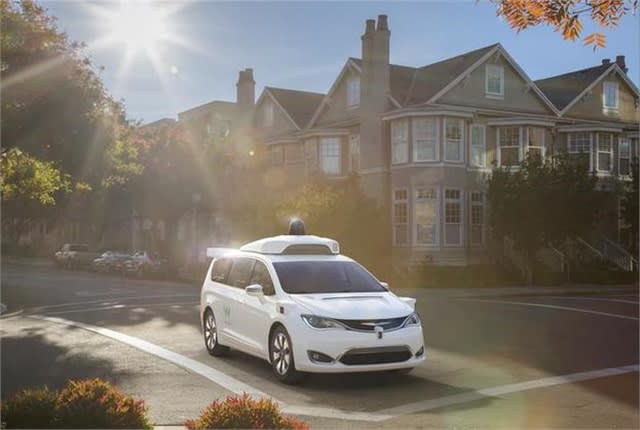
Photo of Waymo self-driving Chrysler Pacifica Hybrid minivan courtesy of FCA.
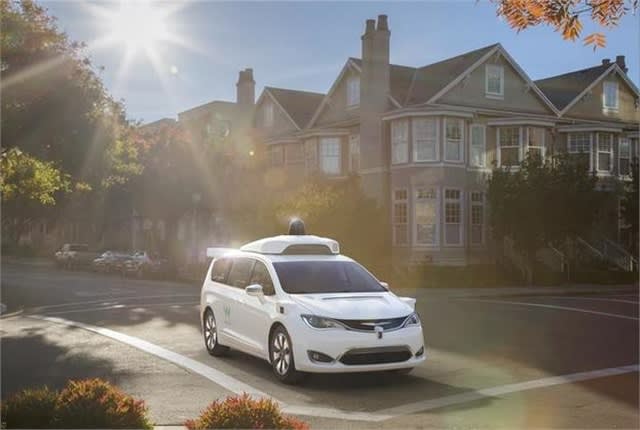
Photo of Waymo self-driving Chrysler Pacifica Hybrid minivan courtesy of FCA.
The U.S. Congress is taking steps to enact policy changes aimed at removing barriers to autonomous vehicle research and development, while the auto and tech industries continue to lobby for federal regulations that supersede the evolving patchwork of state laws.
Republican draft legislation in the House includes a 14-bill package that would designate the National Highway Traffic Safety Administration (NHTSA), which is part of the U.S. Department of Transportation, as the lead agency for regulating autonomous vehicles, according to a report from Reuters. If ultimately passed into law, this legislative package would essentially strip away the states' authority to set policy for self-driving vehicles.
States could continue to set some insurance and registration rules that affect autonomous vehicles under the proposal.
One of the draft bills would permit the U.S. Department of Transportation to exempt up to 100,000 vehicles annually from federal motor vehicle safety rules, which currently prohibit the sale of self-driving vehicles lacking steering wheels, pedals and other controls designed for human driver use, Reuters reported.
Meanwhile, on the Senate side, three lawmakers last week released a list of principles they want to form the foundation for future Senate bills on self-driving vehicles. Senators John Thune (R-S.D.), Gary Peters (D-Mich.) and Bill Nelson (D-Fla.) released their statement of policy goals in advance of a Senate Commerce, Science and Transportation Committee hearing focused on self-driving vehicles.
The principles are prioritizing safety, promoting continued innovation and reducing existing roadblocks, remaining tech neutral, reinforcing separate federal and state roles, strengthening cybersecurity, and educating the public to encourage responsible adoption of self-driving vehicles.
“Self-driving vehicles will not only dramatically change how we get from place to place, they have the potential to prevent accidents and save thousands of lives,” said Peters, a member of the committee. “I’m pleased we have compiled this bipartisan framework, which is an important step toward introducing and enacting meaningful legislation that will help the federal government promote the safe development and adoption of self-driving vehicles and ensure the United States remains the world leader in transportation innovation.”
More Safety
IIHS Crash Avoidance Tests Reveal Safety Gaps in Cargo Vans and Work Trucks
New crash-avoidance ratings from the Insurance Institute for Highway Safety reveal inconsistent performance among commercial vehicles, with several popular cargo vans and heavy-duty pickups struggling to avoid collisions with other vehicles and pedestrians.
Read More →
What’s Next for Fleet? Safety, AI & Industry Recognition | AF News Recap
Could your company's culture be encouraging distracted driving? This week, we're exploring how workplace expectations affect driver safety, what AI, EVs, and autonomous vehicles could mean for the future of fleet management, and how fleet professionals can strengthen their award nominations.
Read More →
Does Your Fleet's Culture Encourage Distracted Driving?
What happens when the people responsible for enforcing safety rules are the ones setting the wrong example? The answer may reveal why some of the biggest risks to fleet drivers have little to do with what's written in the employee handbook.
Read More →
Fleet Manager’s Ultimate Playbook: Navigating the New Standard in OEM Connectivity
Rising operating costs, driver safety concerns, and unplanned downtime are putting unprecedented pressure on modern fleets. Discover how fleet managers use embedded OEM connectivity and real-time vehicle data to cut TCO, prevent downtime, and protect drivers without aftermarket telematics hardware.
Read More →
From Driver Well-Being to EV Charging | AF News Recap
Mental health belongs in the fleet safety conversation. This week, we’re looking at five ways fleets can support employee well-being before a crisis, plus Holman’s expansion in Mexico, new one-day Fleet Forward passes, and why EV charging demand is outpacing infrastructure growth.
Read More →
Nexar-Nauto Merger Aims to Give Fleets Better Safety Intelligence Through Larger Driving Dataset
Stefan Heck tells Automotive Fleet that combining more than 10 billion miles of driving history with Nexar's AI models will give fleets deeper insights into driver risk and roadway conditions than either company could provide independently.
Read More →
Don't Wait for a Crisis: 5 Ways to Build Mental Health Into Your Fleet Safety Program
For Suicide Prevention Month, fleet and safety leaders have an opportunity to put mental health where it belongs: at the center of workplace safety.
Read More →
How Camera Data Can Strengthen a Fleet’s Insurance Renewal
Insights from a commercial insurance carrier and a broker show how fleets can turn video telematic data, driver coaching, and improved claims results into a stronger case at insurance renewal.
Read More →
The Safest Fleets Aren’t the Ones with the Most Technology
You’ve made the telematics investment. Here’s how to capture the other half of its value and build the safest fleet on the road.
Read More →
Hidden in Plain Sight: Fleet Compliance Risks
Fleet compliance isn't just about having policies — it's about consistently enforcing them. This practical guide reveals six hidden compliance risks common in public sector and shared fleet operations and outlines proven strategies to improve visibility, accountability, and audit readiness
Read More →