




Driverless Cars Hit California Roads in April
Driverless cars without a human operator will begin rolling out on California city streets in April, following legal approval by the Department of Motor Vehicles to institute ground rules and issue permits to auto manufacturers and tech companies that want to test their autonomous cars.
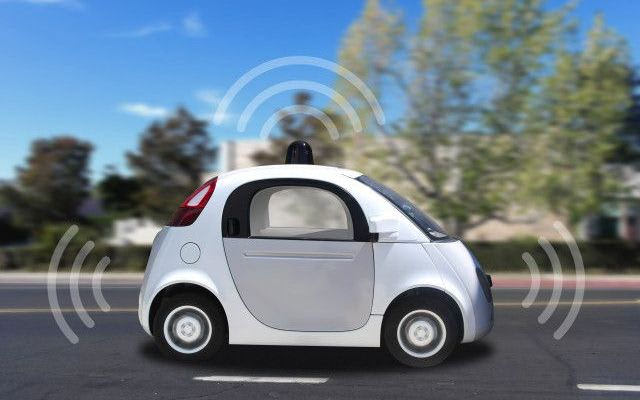
Photo via Automobileitalia/Flickr.
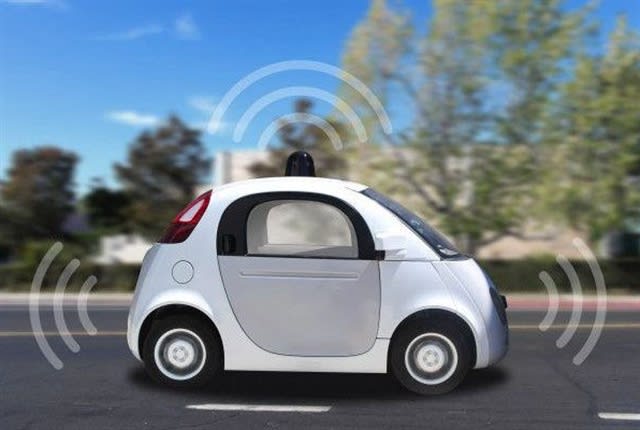
Photo via Automobileitalia/Flickr.
Driverless cars without a human operator will begin rolling out on California city streets in April, following legal approval by the Department of Motor Vehicles to institute ground rules and issue permits to auto manufacturers and tech companies that want to test their autonomous cars.
Currently, autonomous vehicle testing on California roads — such as that by Waymo and General Motors — requires an engineer or other person sitting behind the wheel, reports the Sacramento Bee. The new regulations, on the other hand, will allow companies to test unmanned vehicles being monitored from remote locations.
Some 50 companies have registered with the state to do some kind of testing, though it is unclear when they will seek permits and what locales they will select for their testing.
Under the new DMV rules, in order to obtain a permit, companies have to show state and federal officials that the vehicles meet safety standards and comply with traffic laws, reports The Bee.
In addition, testing companies must notify any California city in which it plans to test its cars. The manufacturer must also supply the state with a communication link between the vehicle and a "remote operator" who would monitor a vehicle being controlled by an on-board computer.
The rules also mandate that test companies identify the owner of the test vehicle in some manner to the public on the street — in the event the vehicle were to be involved in a crash. In addition, all autonomous cars must carry proof of insurance. Companies must provide police with a means of deactivating the car as well as communicating with the manufacturer, reports the San Francisco Examiner.
Finally, according to the report, vehicles without steering wheels or pedals would be legal for street tests, but only if the manufacturer gets an exemption from the National Highway Traffic Safety Administration.
In March, California will also allow automakers and tech companies to obtain a second permit that will allow autonomous cars to be used commercially on city streets, but only after meeting specific safety test parameters.
More Safety

The Safest Fleets Aren’t the Ones with the Most Technology
You’ve made the telematics investment. Here’s how to capture the other half of its value and build the safest fleet on the road.
Read More →
Hidden in Plain Sight: Fleet Compliance Risks
Fleet compliance isn't just about having policies — it's about consistently enforcing them. This practical guide reveals six hidden compliance risks common in public sector and shared fleet operations and outlines proven strategies to improve visibility, accountability, and audit readiness
Read More →
NETS Sets 2026 Fleet Safety Benchmark Conference for Indianapolis
The Sept. 15–17 program will feature fleet benchmarking data, case studies, emerging technologies, and implementation strategies while running alongside the NSC Safety Congress & Expo.
Read More →
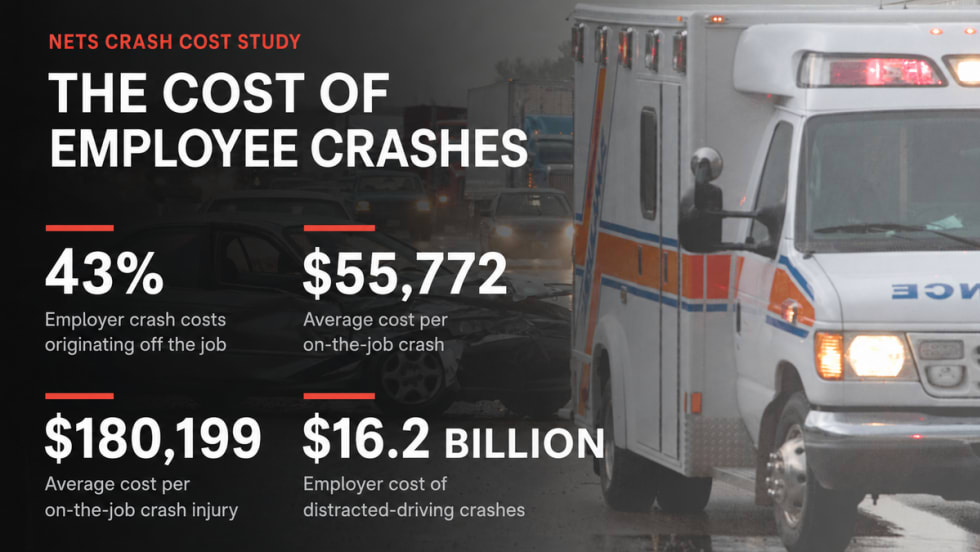
Off-the-Job Crashes Account for 43% of Employers’ $61.7 Billion Crash Burden
NETS quantifies costs dispersed across fleet, risk, HR, and other departments while providing new per-crash benchmarks for employers.
Read More →
Ram Recalls More Than 1.27 Million 1500 Pickups for Seat Belt Anchor Issue
The recall affects certain 2019-2026 Ram 1500 pickups that may have improperly attached second-row seat belt buckle anchors.
Read More →
How Better Visibility Cut Speeding Violations by 48%
Fleet leaders don't need more data, they need clearer visibility into what the data is saying. This case study explores how one utility replaced speeding-event counts with a single metric — miles driven in violation — to strengthen safety and significantly reduce speeding violations.
Read More →
Operation Safe Driver Week: Why the Industry's Oldest Safety Campaign Still Matters to Fleets
A look at how a 2007 enforcement initiative became one of the most consequential weeks on the fleet safety calendar, and what it means for your drivers in 2026.
Read More →
Nexar-Nauto Merger Aims to Give Fleets Better Safety Intelligence Through Larger Driving Dataset
Stefan Heck tells Automotive Fleet that combining more than 10 billion miles of driving history with Nexar's AI models will give fleets deeper insights into driver risk and roadway conditions than either company could provide independently.
Read More →
From Silos to Solutions: Relationship Management for Safer Fleets
From telematics adoption and driver accountability to policy consistency and risk mitigation, this episode breaks down what it really takes to build a safer fleet culture without slowing business down.
Read More →
IIHS Launches First Commercial Vehicle Safety Evaluations
The Insurance Institute for Highway Safety has begun evaluating heavy-duty pickups and cargo vans for driver protection. Which models earned top marks?
Read More →