




DHL Getting Into Last Mile Delivery Market
DHL is getting back into the domestic delivery market in the U.S. with its new DHL Parcel Metro service in major cities, backed by increasing use of high-tech solutions in the delivery process and the warehouse.
by Staff
March 16, 2018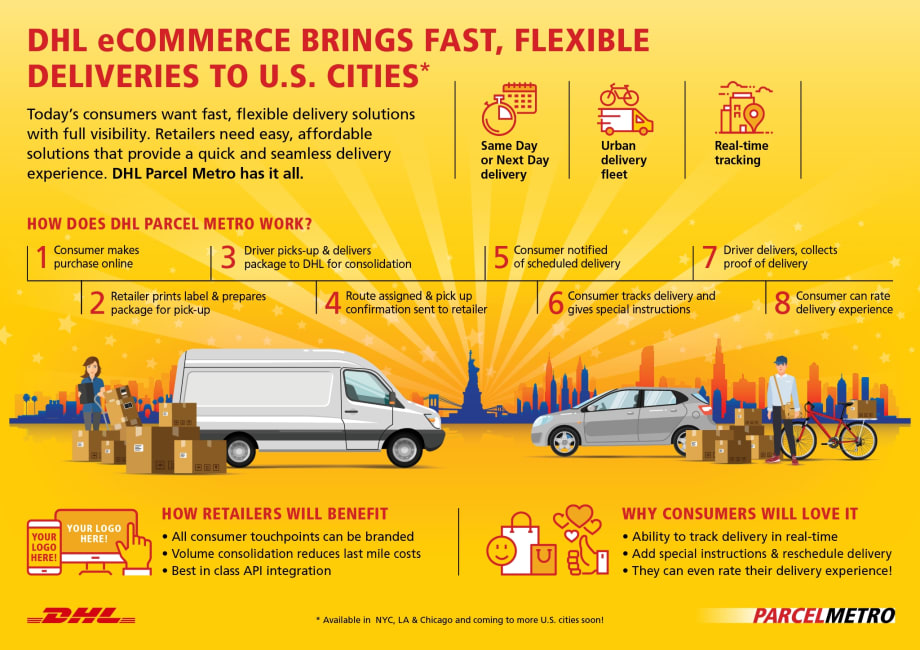
Parcel Metro uses customized software that allows DHL eCommerce to create a “virtual delivery network” of local and regional contract couriers and crowd-sourced providers. Image: DHL
2 min to read
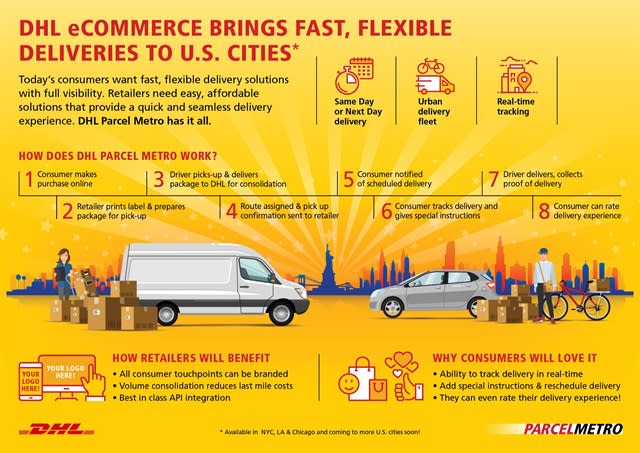
Parcel Metro uses customized software that allows DHL eCommerce to create a “virtual delivery network” of local and regional contract couriers and crowd-sourced providers.Image: DHL
Germany-based logistics company DHL is targeting e-commerce demand in the U.S., announcing new technologies and delivery solutions for urban consumers.
The company’s DHL eCommerce unit launched DHL Parcel Metro, a new fast and flexible service for online retailers that meets consumers’ increasing demand for same-day and next-day delivery. The new service is now available in Chicago, New York and Los Angeles, and will be launched in Dallas, Atlanta, San Francisco, and Washington, D.C., later in the year.
Parcel Metro uses customized software that allows DHL eCommerce to create a “virtual delivery network” of local and regional contract couriers and crowd-sourced providers “to ensure maximum flexibility and capacity over the last mile.” Retailers can offer a fully branded suite of delivery options to their customers. Consumers can track shipments in real-time online, as well as communicate special instructions to their courier, reschedule a delivery, and rate their delivery experience.
The Wall Street Journal notes that DHL’s move could increase competition for both UPS and FedEx, pointing out that both companies have been raising prices aggressively to help cover the costs of surging residential deliveries. “A new, low-cost entrant to the market could make that more difficult.”
WSJ reports that DHL pulled back its U.S. express-delivery unit in 2008 after investing billions of dollars to challenge UPS and FedEx. DHL eCommerce, originally called Global Post, kept its U.S. presence after the broader DHL withdrawal and operates 21 warehouses. It has used those to focus on international parcel shipments, relying on the U.S. Postal Service to make the domestic deliveries from its warehouses.
“The DHL Parcel Metro solution provides a technology solution to the last mile opportunity,” said Charles Brewer, CEO, DHL eCommerce.” DHL Parcel Metro is part of a number of innovations we are actively implementing, including augmented reality glasses for greater pick accuracy, ‘follow me’ robots, and autonomous vehicles.”
DHL Supply Chain has introduced robotics – including LocusBots and Sawyer collaborative robots – and augmented reality glasses in warehouse operations to improve productivity in the fulfillment of customer orders. DHL Express has been piloting artificial intelligence in its customer applications to further enhance its customer service. The company says increased automation at hubs and gateways has led to a 10% increase in shipment processing accuracy, while its On Demand Delivery online service has increased the first-time delivery success for e-commerce shipments from 80% to 92%.
“Eighty-six percent of consumers associate delivery as part of their total online shopping experience, according to recent research. It’s therefore important for DHL to offer services that not only meet their needs, but do so in a highly consistent fashion,” said Lee Spratt, CEO, DHL eCommerce Americas.
More Safety

Nexar-Nauto Merger Aims to Give Fleets Better Safety Intelligence Through Larger Driving Dataset
Stefan Heck tells Automotive Fleet that combining more than 10 billion miles of driving history with Nexar's AI models will give fleets deeper insights into driver risk and roadway conditions than either company could provide independently.
Read More →
Don't Wait for a Crisis: 5 Ways to Build Mental Health Into Your Fleet Safety Program
For Suicide Prevention Month, fleet and safety leaders have an opportunity to put mental health where it belongs: at the center of workplace safety.
Read More →
How Camera Data Can Strengthen a Fleet’s Insurance Renewal
Insights from a commercial insurance carrier and a broker show how fleets can turn video telematic data, driver coaching, and improved claims results into a stronger case at insurance renewal.
Read More →
The Safest Fleets Aren’t the Ones with the Most Technology
You’ve made the telematics investment. Here’s how to capture the other half of its value and build the safest fleet on the road.
Read More →
Sponsored•August 7, 2026
Hidden in Plain Sight: Fleet Compliance Risks
Fleet compliance isn't just about having policies — it's about consistently enforcing them. This practical guide reveals six hidden compliance risks common in public sector and shared fleet operations and outlines proven strategies to improve visibility, accountability, and audit readiness
Read More →
NETS Sets 2026 Fleet Safety Benchmark Conference for Indianapolis
The Sept. 15–17 program will feature fleet benchmarking data, case studies, emerging technologies, and implementation strategies while running alongside the NSC Safety Congress & Expo.
Read More →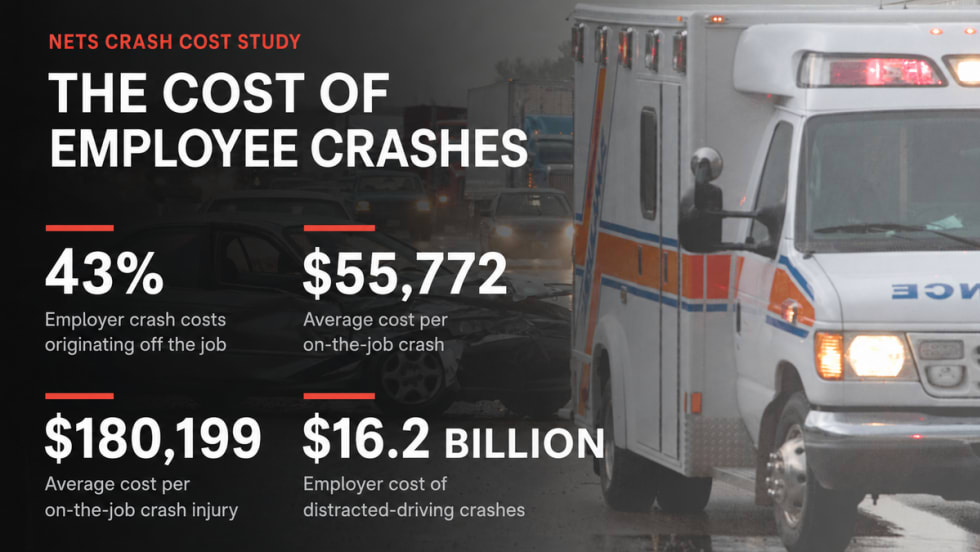
Off-the-Job Crashes Account for 43% of Employers’ $61.7 Billion Crash Burden
NETS quantifies costs dispersed across fleet, risk, HR, and other departments while providing new per-crash benchmarks for employers.
Read More →
Ram Recalls More Than 1.27 Million 1500 Pickups for Seat Belt Anchor Issue
The recall affects certain 2019-2026 Ram 1500 pickups that may have improperly attached second-row seat belt buckle anchors.
Read More →
Sponsored•July 17, 2026
How Better Visibility Cut Speeding Violations by 48%
Fleet leaders don't need more data, they need clearer visibility into what the data is saying. This case study explores how one utility replaced speeding-event counts with a single metric — miles driven in violation — to strengthen safety and significantly reduce speeding violations.
Read More →
Operation Safe Driver Week: Why the Industry's Oldest Safety Campaign Still Matters to Fleets
A look at how a 2007 enforcement initiative became one of the most consequential weeks on the fleet safety calendar, and what it means for your drivers in 2026.
Read More →