




Cougars Could Lower Deer-Vehicle Crashes
A new study examines how recolonizing big cats in the eastern U.S. could thin deer populations and ultimately reduce deer-vehicle collisions.
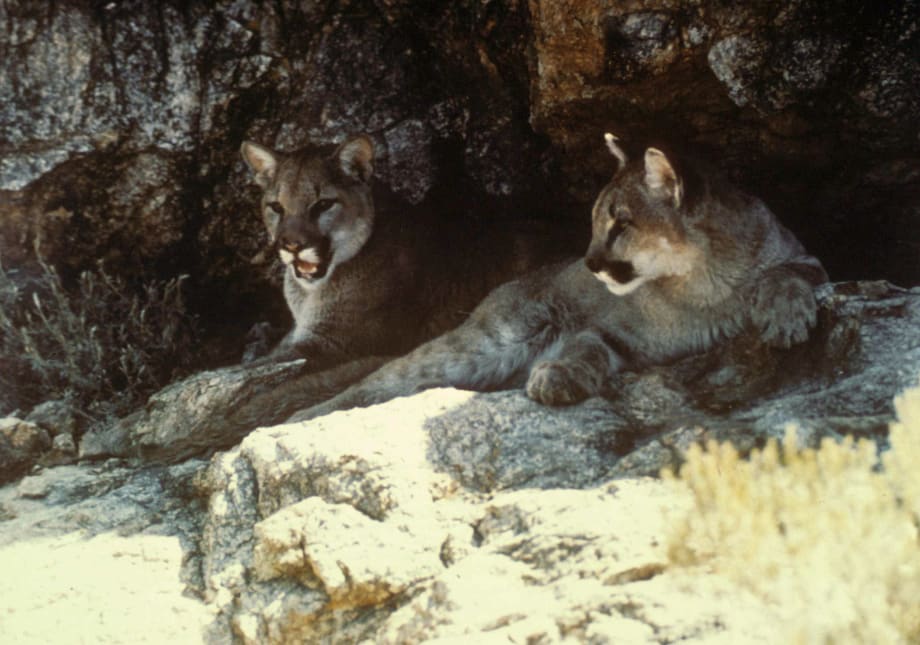
Photo of cougars courtesy of U.S. Fish and Wildlife Service via Wikimedia Commons.
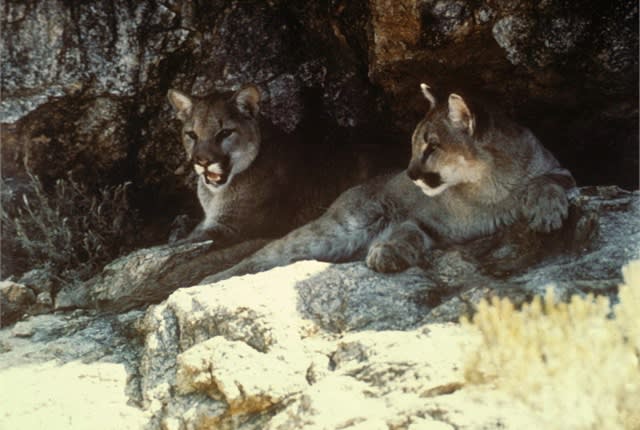
Photo of cougars courtesy of U.S. Fish and Wildlife Service via Wikimedia Commons.
Deer crossing roadways cause 1.2 million vehicle crashes in the U.S. each year, but a new study suggests a way to sharply reduce that alarming number: recolonize cougars in the eastern part of the country.
The incentive for finding an ecosystem solution to this public safety issue is considerable. Each year, the nation’s deer-vehicle collisions cause 200 human deaths and about 29,000 injuries. The costs associated with the vehicle damage, medical bills, and road cleanup total an estimated $1.66 billion.
The study, published online in the journal Conservation Letters, recognizes that deer populations have expanded unchecked because of the absence of the animal’s natural predators — carnivores such as wolves and cougars. Researchers concluded that within 30 years of cougars recolonizing the Eastern U.S., deer populations would thin and deer-vehicle collisions would drop 22%. That could save $50 million and avert an average of five human fatalities and 680 injuries each year.
The research got under way in 2014 during a University of Alaska Fairbanks ecology class taught by Laura Prugh, who is now with the University of Washington.
“The important take-home is that there can be very tangible benefits to having large carnivores around — economic and social benefits, not just ecological benefits,” Prugh explained in a University of Washington press release about the study. She is now an assistant professor of quantitative wildlife sciences in the University of Washington’s School of Environmental and Forest Sciences.
Cougars — also known as mountain lions, panthers, and pumas — used to be found throughout the U.S. and Canada. But state-sponsored bounty huts, aimed at protecting livestock and people, banished them from the Midwest and eastern states by the early 20th century.
Breeding populations have since recolonized their former habitats in South Dakota, North Dakota, and Nebraska. Individual male cougars have also been found in Connecticut and, most recently, in Tennessee.
It’s likely just a matter of time before new breeding populations pop up farther east, Prugh said. But for now the deer population explosion persists, especially in the eastern states. This leads to more crashes with vehicles.
“I think everyone on the East Coast has either hit a deer or knows somebody who’s hit a deer, so it’s a very real problem for people,” Prugh said. “An overabundance of ungulates might be a hunter’s paradise, but it comes with problems as well.”
To calculate the cougars’ potential impact, researchers compared white-tailed deer population densities and the amount of deer killed by vehicles with and without cougar predation. Researchers’ models showed that cumulatively over 30 years, 155 human deaths and more than 21,000 injuries could be prevented by the presence of cougars in 19 eastern states.
Cougars are prolific predators. A single cougar can kill 259 deer over its average six-year lifespan. In theory, those kills would prevent eight collisions and save nearly $40,000 in associated costs.
Researchers opted for a conservative approach to estimating the benefits that cougars could bring, according to the study.
It was assumed that three out of four deer killed by cougars would have died from other causes without cougars present, thereby diminishing the impact of cougars on deer mortality by 75%. Researchers also limited the possible range for cougars to large forested areas, although the big cats could likely live in rural areas as they do in western states.
The study team compared its modeled results with an actual example in South Dakota, where a viable cougar population lives in the Black Hills. The data demonstrated that after cougars repopulated the region in the 1990s, deer-vehicle collision rates dropped markedly.
The real-life test case delivered strong evidence of a trend that could happen elsewhere, Prugh said.
The question is, are people receptive to the idea of re-establishing cougars across the U.S.? Attacks on people, pets, and livestock might become more common. On the other hand, study estimates show that cougars would actually save five times the number of people they would kill by helping to curb deer-vehicle collisions.
“Carnivores are so controversial and there’s a lot of fear, anxiety and resistance when they are reintroduced or recolonize an area,” Prugh said. “We are hoping that showing people how their lives could really benefit in a tangible way from having large carnivores around could help people become more accepting of living with them.”
The study’s lead author was Sophie Gilbert.
More Safety
IIHS Crash Avoidance Tests Reveal Safety Gaps in Cargo Vans and Work Trucks
New crash-avoidance ratings from the Insurance Institute for Highway Safety reveal inconsistent performance among commercial vehicles, with several popular cargo vans and heavy-duty pickups struggling to avoid collisions with other vehicles and pedestrians.
Read More →
What’s Next for Fleet? Safety, AI & Industry Recognition | AF News Recap
Could your company's culture be encouraging distracted driving? This week, we're exploring how workplace expectations affect driver safety, what AI, EVs, and autonomous vehicles could mean for the future of fleet management, and how fleet professionals can strengthen their award nominations.
Read More →
Does Your Fleet's Culture Encourage Distracted Driving?
What happens when the people responsible for enforcing safety rules are the ones setting the wrong example? The answer may reveal why some of the biggest risks to fleet drivers have little to do with what's written in the employee handbook.
Read More →
Fleet Manager’s Ultimate Playbook: Navigating the New Standard in OEM Connectivity
Rising operating costs, driver safety concerns, and unplanned downtime are putting unprecedented pressure on modern fleets. Discover how fleet managers use embedded OEM connectivity and real-time vehicle data to cut TCO, prevent downtime, and protect drivers without aftermarket telematics hardware.
Read More →
From Driver Well-Being to EV Charging | AF News Recap
Mental health belongs in the fleet safety conversation. This week, we’re looking at five ways fleets can support employee well-being before a crisis, plus Holman’s expansion in Mexico, new one-day Fleet Forward passes, and why EV charging demand is outpacing infrastructure growth.
Read More →
Nexar-Nauto Merger Aims to Give Fleets Better Safety Intelligence Through Larger Driving Dataset
Stefan Heck tells Automotive Fleet that combining more than 10 billion miles of driving history with Nexar's AI models will give fleets deeper insights into driver risk and roadway conditions than either company could provide independently.
Read More →
Don't Wait for a Crisis: 5 Ways to Build Mental Health Into Your Fleet Safety Program
For Suicide Prevention Month, fleet and safety leaders have an opportunity to put mental health where it belongs: at the center of workplace safety.
Read More →
How Camera Data Can Strengthen a Fleet’s Insurance Renewal
Insights from a commercial insurance carrier and a broker show how fleets can turn video telematic data, driver coaching, and improved claims results into a stronger case at insurance renewal.
Read More →
The Safest Fleets Aren’t the Ones with the Most Technology
You’ve made the telematics investment. Here’s how to capture the other half of its value and build the safest fleet on the road.
Read More →
Hidden in Plain Sight: Fleet Compliance Risks
Fleet compliance isn't just about having policies — it's about consistently enforcing them. This practical guide reveals six hidden compliance risks common in public sector and shared fleet operations and outlines proven strategies to improve visibility, accountability, and audit readiness
Read More →