




Connected Cars Navigate Va. Highway
Virginia Tech Transportation Institute researchers demonstrate self-driving and connected-vehicle technologies while traveling on I-395.

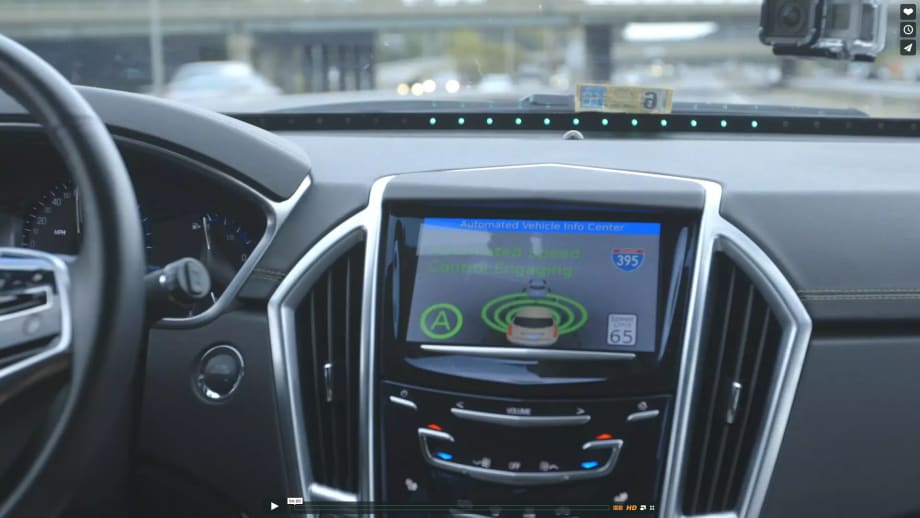
Virginia Tech Transportation Institute researchers recently demonstrated self-driving and connected-vehicle technology to a small group of government officials while traveling a 10-mile stretch of Interstate 395 in Northern Virginia.
The closed testing occurred during the regular midday reversal of the Interstate 395 express lanes. U.S. Senator Mark Warner (D-Va.) and Virginia Secretary of Technology Karen Jackson were among the passengers experiencing the technology first-hand.
The connected sedans are equipped with both dedicated short-range communications (DSRC) and cellular technology. The vehicles can provide advanced alerts to the driver using vehicle-to-vehicle and vehicle-to-infrastructure communications. (To view video of one of the test cars in action, click on the photo or link below the headline.)
“The growing use of automated and connected technologies is no longer a matter of if, but when,” Warner said. “It is exciting that Virginia is positioned to be a leader in the development of this game-changing technology and the new jobs and investment that will result.”
Test vehicle passengers witnessed lane changing and braking responses to several staged scenarios, including work zones, sudden traffic slowdowns and passing emergency vehicles.
The demonstration was part of the Virginia Connected Corridors and the Virginia Automated Corridors initiatives. Participants include the Virginia Department of Transportation, the Virginia Tech Transportation Institute, the Virginia Department of Motor Vehicles, Transurban, and HERE (a high-definition mapping business).
Continental, a global automotive supplier and a leading technology corporation, demonstrated several of its advanced safety systems on the interstate.
“Next-generation vehicular technology certainly has the potential to play a vast role within the transportation community – from increasing overall safety to reducing congestion and negative environmental impacts,” said Virginia Tech Transportation Institute Director Tom Dingus.
More Safety

Nexar-Nauto Merger Aims to Give Fleets Better Safety Intelligence Through Larger Driving Dataset
Stefan Heck tells Automotive Fleet that combining more than 10 billion miles of driving history with Nexar's AI models will give fleets deeper insights into driver risk and roadway conditions than either company could provide independently.
Read More →
Don't Wait for a Crisis: 5 Ways to Build Mental Health Into Your Fleet Safety Program
For Suicide Prevention Month, fleet and safety leaders have an opportunity to put mental health where it belongs: at the center of workplace safety.
Read More →
How Camera Data Can Strengthen a Fleet’s Insurance Renewal
Insights from a commercial insurance carrier and a broker show how fleets can turn video telematic data, driver coaching, and improved claims results into a stronger case at insurance renewal.
Read More →
The Safest Fleets Aren’t the Ones with the Most Technology
You’ve made the telematics investment. Here’s how to capture the other half of its value and build the safest fleet on the road.
Read More →
Hidden in Plain Sight: Fleet Compliance Risks
Fleet compliance isn't just about having policies — it's about consistently enforcing them. This practical guide reveals six hidden compliance risks common in public sector and shared fleet operations and outlines proven strategies to improve visibility, accountability, and audit readiness
Read More →
NETS Sets 2026 Fleet Safety Benchmark Conference for Indianapolis
The Sept. 15–17 program will feature fleet benchmarking data, case studies, emerging technologies, and implementation strategies while running alongside the NSC Safety Congress & Expo.
Read More →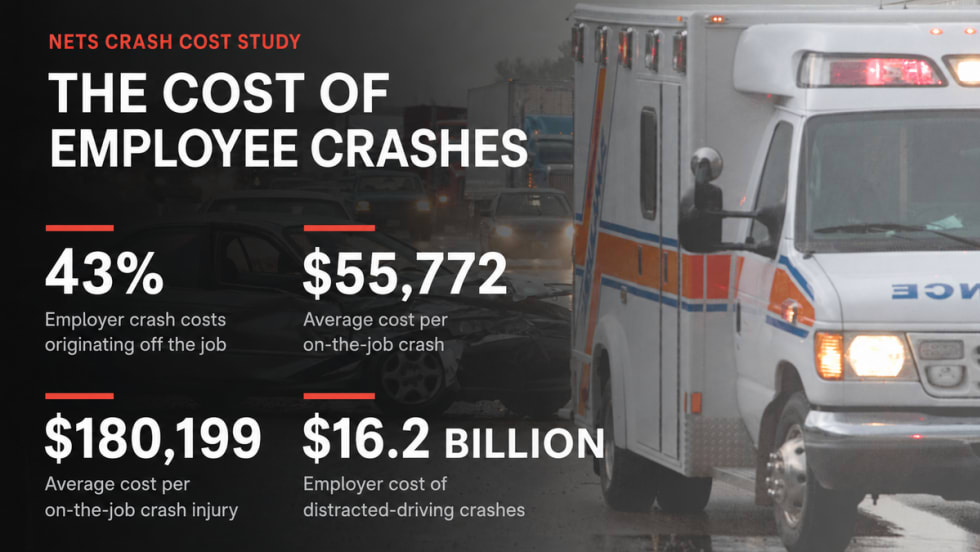
Off-the-Job Crashes Account for 43% of Employers’ $61.7 Billion Crash Burden
NETS quantifies costs dispersed across fleet, risk, HR, and other departments while providing new per-crash benchmarks for employers.
Read More →
Ram Recalls More Than 1.27 Million 1500 Pickups for Seat Belt Anchor Issue
The recall affects certain 2019-2026 Ram 1500 pickups that may have improperly attached second-row seat belt buckle anchors.
Read More →
How Better Visibility Cut Speeding Violations by 48%
Fleet leaders don't need more data, they need clearer visibility into what the data is saying. This case study explores how one utility replaced speeding-event counts with a single metric — miles driven in violation — to strengthen safety and significantly reduce speeding violations.
Read More →
Operation Safe Driver Week: Why the Industry's Oldest Safety Campaign Still Matters to Fleets
A look at how a 2007 enforcement initiative became one of the most consequential weeks on the fleet safety calendar, and what it means for your drivers in 2026.
Read More →