




Congressmen Promote Tax Breaks for Alt-Fuel Vehicles
Sen. Orrin Hatch (R-UT) and Rep. Dave Camp (R-MI) announced the introduction of the Clean Efficient Automobiles Resulting from Advance Car Technologies Act of 2003 (CLEAR ACT), a measure that provides incentives and base credits for the purchase of low-emission vehicles.

Sen. Orrin Hatch (R-UT) and Rep. Dave Camp (R-MI) announced the introduction of the Clean Efficient Automobiles Resulting from Advance Car Technologies Act of 2003 (CLEAR ACT), a measure that provides incentives and base credits for the purchase of low-emission vehicles. The CLEAR ACT seeks to reduce America’s consumption of petroleum and help improve air quality. The act relies on a series of tax-based incentives for the purchase or lease of these vehicles to help offset the costs of developing new technology and alternative-fuel vehicles. In the last Congress, the CLEAR ACT was part of the House and Senate versions of the Energy Bill, which did not pass in the House and Senate Conference Committee. In a joint press conference with Rep. Camp announcing the introduction of the measure, Hatch described the CLEAR ACT as the "most comprehensive and effective plan we have seen in this country to accelerate the transformation of the automotive marketplace toward the widespread use of fuel cell vehicles. And it does so without any new federal mandates. Rather, it offers powerful market incentives to promote the advances in technology, in our infrastructure, and in the alternative fuels that are necessary if fuel cells are ever to reach the mass market." Camp, the House sponsor of the CLEAR ACT, says the plan could double and triple the performance of America’s automobiles while reducing the dependence on foreign oil. Camp says these new vehicle technologies are comparable to their gasoline counterparts; however, the development costs are higher. "The CLEAR ACT would allow for the government to provide consumer-based tax credits to help offset the higher costs of these technologies during early market introduction when low volume cost penalties exist." Incentives are provided in accordance with fuel economy performance. Fuel-cell vehicles garner a $4,000 base credit along with an additional $4,000, depending on the vehicle’s fuel economy. Similar incentives and credits are available for hybrid vehicles, dedicated alternative-fuel vehicles, and medium- and heavy-duty vehicles that have the same technologies as passenger vehicles. The act also includes incentives for the installation costs of alternative-fuel sites (up to $30,000 and a $100,000 tax deduction extended over 10 years). The plan offers credit of $0.50 for every gallon of gas equivalent to the retail distributor. Ethanol is not included in these provisions, due to the existing credit of $0.82 per gallon equivalent.
More Operations

The Top 300 Commercial Fleets
The Top 300 Commercial Fleets: See the List
Read More →

Your Local Dealer Knows More Than You Think
Your local dealer can provide an information advantage that extends well beyond courtesy deliveries.
Read More →


Fleet Meets: Austin Schutte
Here are some industry insights, personal touches, and words of advice from the CEO and Founder of Anew Solutions.
Read More →
Soap Box Derby Challenge: What’s Powering Team Brown
The car is coming together, the students are solving real build problems, and the fleet industry is helping push Team Brown toward the starting line.
Read More →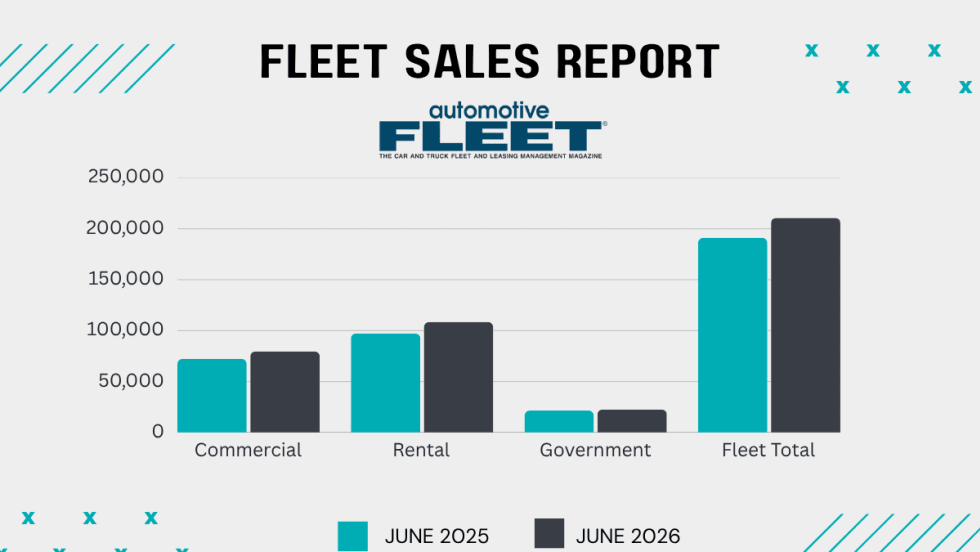
Commercial Fleet Sales Contribute To June, YTD Gains
The fleet sector has boosted its vehicle purchases at a reliable pace in the first half of this year compared with 1H 2025.
Read More →
What Fleet Managers Really Want From Vendors
From customer service frustrations and technology breakdowns to RFQs, change management, and the growing impact of turnover across the industry, this conversation pulls back the curtain on the real operational challenges fleet managers are navigating every day.
Read More →
Fleet Safety Masterclass: Industry Leaders on Storytelling, Strategy & Innovation
In this special masterclass episode, industry leaders break down what it really takes to build safer fleets in today’s increasingly distracted and data-driven world.
Read More →
Integrating Legacy Fleet Systems and Historical Data
In this episode, we bring together fleet and technology leaders to unpack the realities of data integration, system migrations, and the evolving role of AI in fleet management.
Read More →
From Resistance to Results: Change Management Strategies for Fleets
From new technologies and safety programs to evolving regulations, fleets are under constant pressure to adapt. But as Dr. Betz explains, success isn’t about the system you implement—it’s about whether your people actually use it.
Read More →