




Chrysler Group's Global Alliance Strategy
AUBURN HILLS, MI – Coming off consistent sales growth in global markets during 2006, the Chrysler Group announced that its global alliance strategy will enable it to bring a Taiwan-built cargo van to the Mexican market and launch production of the new Chrysler Sebring sedan in China for the local market.
AUBURN HILLS, MI – Coming off consistent sales growth in global markets during 2006, the Chrysler Group announced that its global alliance strategy will enable it to bring a Taiwan-built cargo van to the Mexican market and launch production of the new Chrysler Sebring sedan in China for the local market. The announcements come just a week after the Chrysler Group confirmed a letter of intent for China’s Chery Automobile Co. to produce small vehicles that the Chrysler Group will market in the NAFTA region, European regions, and possibly other global markets. The Chrysler Group has signed a Memorandum of Understanding with China Motor Corp. (CMC) to export a cargo van to Mexico. CMC will produce this vehicle at its assembly facility in Yangmei, Taiwan. The 1,000-kg panel/cargo van built in Taiwan will be exported to the Mexican market where it will be sold as a Dodge vehicle. CMC is a long-term partner with DaimlerChrysler. CMC produces the Chrysler Town and Country minivan in Taiwan, via license, for the Taiwan market. The Chrysler Group also will produce a Chinese-market minivan via license with CMC and Fujian Motor Group in Fuzhou. Production of the new Chrysler Sebring sedan for the China market will begin later this year in Beijing at Beijing-Benz DaimlerChrysler Automotive Co. (BBDC). BBDC is a joint venture between the Beijing Automotive Industry Holding Co. Ltd. and DaimlerChrysler. In 2006, the Chrysler Group sold 555,924 vehicles outside of the United States, an increase of 6.6 percent compared to 2005. Those figures include an increase of 1.7 percent in Canada, 3.3 percent in Mexico, and 15 percent outside of North America. Sales were boosted by the worldwide appeal of new products launched during 2006, including the Dodge Caliber and Jeep Compass. Chrysler Group worldwide vehicle sales decreased by 4.5 percent in 2006, to a total of 2,698,429 units (2005: 2,826,131 units). U.S. sales declined 7 percent to 2,142,505 units (2005: 2,304,833 units). Sales closed with momentum in the final quarter of 2006, as customers responded favorably to the launch of a majority of the company’s 10 all-new products for 2006. Against the overall market performance, the Chrysler Group posted sales of 190,415 units in December. This is an increase of 1 percent on an unadjusted basis compared to December 2005, when the company sold 189,449 units. On an adjusted basis, Chrysler Group U.S. sales were up by 4 percent. DaimlerChrysler Canada ended 2006 with five consecutive months of sales growth, and sales increased 1.7 percent for the year, totaling 220,553 units (2005: 216,857 units) and DaimlerChrysler remained the second-largest vehicle seller in Canada. Growth was driven by a combination of new and existing models. Sales in Mexico rose by 3.3 percent to 128,446 units (2005: 124,353 units). Products sold under the Chrysler, Jeep, and Dodge brands posted significant sales gains during 2006 as the company continues to make headway with Mexican customers in key segments.
More Operations

Moventum Fleet Management Names Mark Iorillo Head of Sales
Iorillo brings nearly 20 years of fleet management and sales experience to the role, including previous positions at Element Fleet Management, CEI, Donlen and Ryder.
Read More →
Fleet Has a Talent Pipeline Problem. What Comes Next? | AF News Recap
Where will fleet’s next generation of leaders come from? This week, we’re looking at the industry’s talent pipeline, what certification can add to a fleet career, how to build an award-worthy track record, and the return of Automotive Fleet’s Personal Use Survey.
Read More →
Smith System Launches Driver Risk Management Program
Fleets have more driver data than ever, but identifying risky behavior doesn't necessarily correct it. Smith System's new Driver Risk Management program combines monitoring, training, and follow-up coaching to help fleets connect risk signals with driver intervention.
Read More →
Automotive Fleet Opens 2026 Personal Use Survey for Commercial Fleet Managers
Less than two weeks left! Commercial and corporate fleet managers are invited to share how their organizations handle company vehicle personal-use policies, charges, and driver eligibility.
Read More →
From AI Prompts to AI-Generated Safety Songs | AF News Recap
Can better prompts make AI more useful for fleet managers? This week, we’re breaking down smarter fleet analysis, an AI-assisted experiment that turned safety training into music, and what happened to fuel prices in August.
Read More →
How to Write Better AI Prompts for Fleet Analysis
Include these six elements in your fleet prompts to generate more relevant analysis and accurate answers.
Read More →
Fleet Meets: Eric Kilgore
This edition of the Fleet Meets series features one of the industry's best leaders driving multi-market and national operations.
Read More →
Why Reactive Fleet Management Is Becoming Too Expensive to Sustain
Research highlights a growing need for proactive management strategies to address rising costs in fleet operations effectively.
Read More →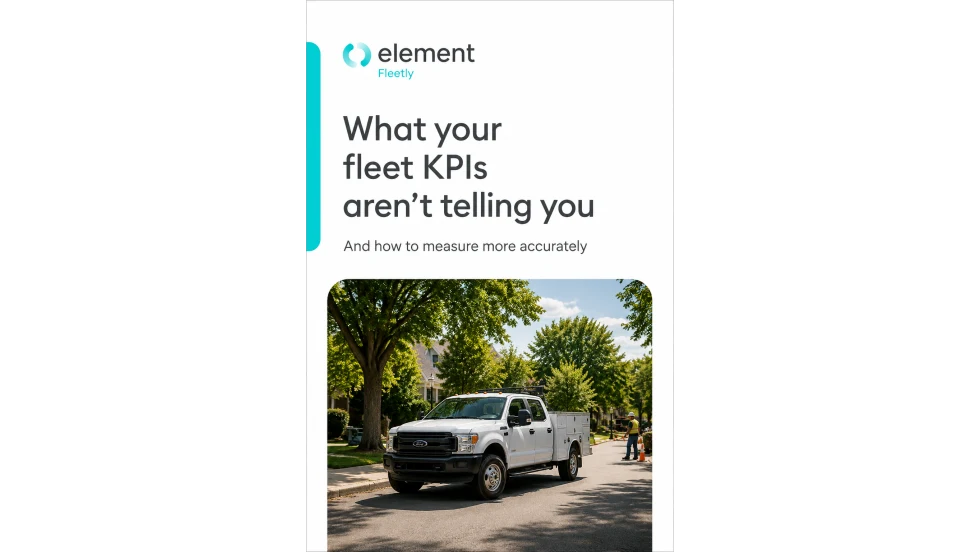
What Your Fleet KPIs Aren’t Telling You
Tracking fleet metrics is only useful when the data leads to better decisions. This guide helps fleet leaders assess cost, utilization, and downtime more accurately, identify performance gaps, and prioritize the actions that can improve operational results.
Read More →
Hidden in Plain Sight: Fleet Compliance Risks
Fleet compliance isn't just about having policies — it's about consistently enforcing them. This practical guide reveals six hidden compliance risks common in public sector and shared fleet operations and outlines proven strategies to improve visibility, accountability, and audit readiness
Read More →