




Chevrolet Debuts 2014 Cruze Clean Turbo Diesel at Chicago Auto Show
GM told Automotive Fleet that it would be an ideal choice for fleet customers whose drivers spend a lot of time on the road commuting, traveling to visit customers, or driving between offices.

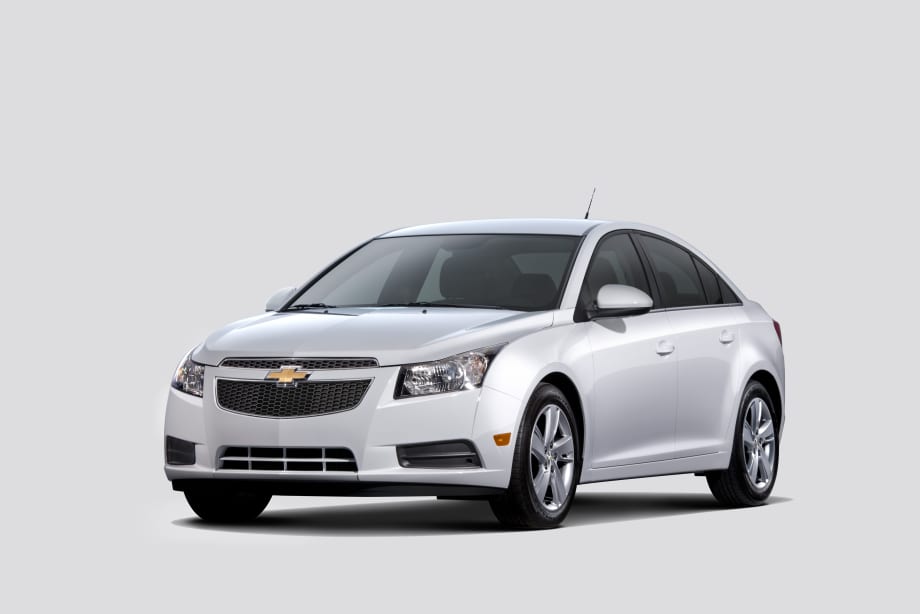
GM expects the 2014 Chevrolet Cruze Clean Turbo Diesel will get 42 mpg highway.
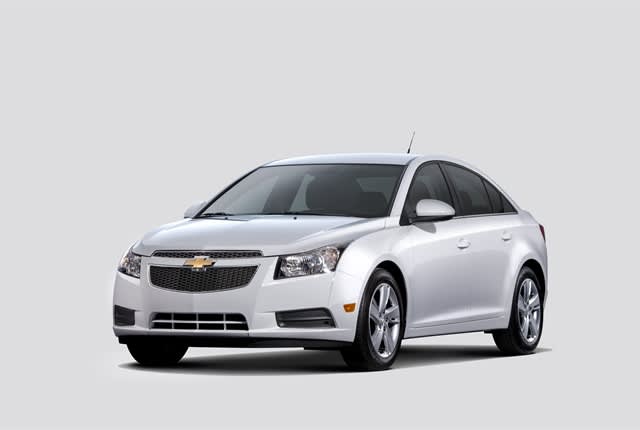
GM expects the 2014 Chevrolet Cruze Clean Turbo Diesel will get 42 mpg highway.
General Motors’ Chevrolet brand debuted a new clean diesel version of its Chevrolet Cruze sedan for the 2014 model-year, the Cruze Clean Turbo Diesel, at the Chicago Auto Show on Feb. 7.
The company told Automotive Fleet that although it’s focusing on retail sales during the launch, it’s interested in gauging its fleet customers' interest and hearing feedback about the vehicle. GM added that it would be an ideal choice for fleet customers whose drivers spend a lot of time on the road commuting, traveling to visit customers, or driving between offices. One key advantage of the Cruze Clean Turbo Diesel for fleets is that because diesel fuel prices are generally more stable, using this fuel type can make it easier for fleet customers to predict fuel-related costs and budget accordingly, according to GM.
In terms of fuel economy, GM said it expects its 2014-MY Chevrolet Cruze Clean Turbo Diesel to get 42 mpg highway and that emissions-wise it will produce emissions below the limit set by U.S. Tier 2 Bin 5 standards. The automaker said the compact sedan comes equipped with a 2.0L turbodiesel engine which produces an estimated 148 hp and 258 lb. ft. of torque. The diesel Cruze model’s final drive ratio is 3.20. GM added that the engine is rated for biodiesel and can use B20.
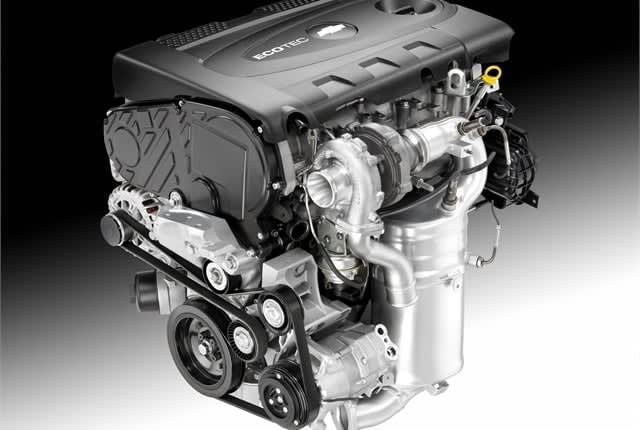
The engine in the Chevrolet Cruze Clean Turbo Diesel is a 2.0L that can produce an estimated 148 hp and 258 lb. ft. of torque.
Starting MSRP for this vehicle is $25,695, including a $810 destination charge (this price excludes tax, title, license, and dealer fees). The vehicle comes standard with a six-speed automatic transmission, four-wheel antilock disc brakes, 17-inch alloy wheels, ultra-low-rolling resistance all-season tires, a rear spoiler, an Aero Performance Package, a 140-amp alternator, an 800 cold-cranking amps battery, and leather-appointed seating. The Chevrolet MyLink infotainment system is also standard.
During a conference call, GM revealed additional details about the vehicle. To start, the company said the sedan uses selective catalytic reduction technology and will require diesel exhaust fluid (DEF) roughly every 10,000 miles. GM is offering a two-year maintenance plan, which will cover DEF, oil changes, tire rotations, and other basic preventive maintenance, and a five-year, 100,000-mile powertrain warranty. The DEF tank is located in the trunk area and owners will fill the tank via a nozzle there. GM said there isn’t a separate indicator for DEF and that owners should bring the vehicle in to check DEF levels when the oil change indicator activates (oil changes are set for every 7,500 miles).
As with the Duramax diesel engine used in other GM vehicles, when DEF levels start to get low, an indicator will alert the driver that he or she needs to add more. According to GM, the indicator will alert the driver and he or she will have another 400 miles before having to add more DEF. If the driver fails to add DEF after this limit, the vehicle will initiate a staged deceleration down to 4 mph.
Sales-wise, GM is planning a staged rollout, specifically in 13 markets during the first couple of months after launch. The automaker said it plans to sell them in markets where Chevrolet Silverado diesel models have done well. Examples of these markets include the West Coast, the Baltimore area, D.C., and the East Coast. You can expect to see this vehicle arrive in dealer showrooms later this summer.
By Greg Basich
More Operations

Fleetio, ASE Launch Scholarship Program for Automotive Technicians
The second annual program will award 15 scholarships totaling $35,000 to support ASE certification, testing fees, and equipment costs.
Read More →
Reading the Global Signals: What AI and the Energy Transition Mean for Fleets Now
How can fleet managers navigate a never-ending, changing industry landscape?
Read More →
90% Use Telematics. Are Fleets Getting Safer? | AF News Recap
This week, we're breaking down which industries have the highest rates, how Jamie McKay manages 2,400 vehicles, what's happening with the 2027 fleet awards, and why software-defined vehicles could introduce new costs.
Read More →
What's Best Handled by an FMC, and What's Better Done Directly?
Fleet managers continue to rely on FMCs for essential services but are taking a closer look at where working directly with suppliers can improve efficiency and responsiveness.
Read More →
Fleet Meets: Erin Gilchrist
Meet Erin Gilchrist, the inaugural Mike Antich Spirit of Fleet Award winner, as she shares insights on leadership, mentorship, the power of industry connections, and why people remain at the heart of fleet's future.
Read More →
How 2026 Fleet Visionary Jamie McKay Manages 2,400 Vehicles Across 37 States
How do you keep 2,400 vehicles running across 37 states? Fleet Visionary Award winner Jamie McKay shares how collaboration, flexibility, and a few simple strategies help her tackle fleet management challenges at Aptive Pest Control.
Read More →
Managing Fleet Costs in an Era of Permanent Volatility
Fleet operating costs have risen more than 20% since 2020, raising a key question: When does extending a vehicle's service life stop making financial sense?
Read More →
The Next Evolution of Fleet Management: Autonomous Operations
This opening keynote session at the Fleet Forward Conference highlights the future of autonomous driving for fleets.
Read More →
How to Reduce the Total Cost of Risk From Catalytic Converter Theft
A stolen catalytic converter can cost fleets far more in downtime and lost productivity than in repairs. A total-cost-of-risk approach can help fleet managers quantify their exposure and prioritize theft prevention.
Read More →
Personal-Use Charges Rise as Vehicle Values Fall | AF News Recap
Personal-use charges are climbing, wholesale used-vehicle values are declining, and commercial fleet sales growth is slowing. This week, we're breaking down the latest fleet data, plus how Element Fleet Management is helping Waymo prepare for its first Canadian robotaxi market.
Read More →