




California Senate's Bill to Cut Tailpipe Exhaust Could Force Higher Fuel Efficiency Standards
The California Senate has passed the nation's first bill to limit carbon dioxide emissions from vehicle exhaust - a bow to fears of global warming, and a move automakers say might force them to sell more fuel-efficient vehicles, according to an Associated Press story by Jim Wasserman. Environmentalists and many senators, hoping to see the idea spread to other states, see the move as a way to get around the federal government's failure to impose tougher fuel mileage standards and reduce greenhouse gases. "Our federal government has let us down by failing to sign the Kyoto Protocol," Democratic state Sen. Debra Bowen said. "California should take the lead when the federal government refused to do what most Californians support." A coalition of 13 global carmakers calls that "enormously problematic." "We view it as nothing more than a California CAFE (Corporate Average Fuel Economy) standard," said Kris Kiser, vice president of state affairs for the Alliance of Automobile Manufacturers based in Washington, DC. "It's a back-door attempt at mileage standards. That should be handled in Washington."
More Operations

Top 50 Executive Fleets
It is that time of year again! Time for the 2026 list of the Top 50 Executive Fleets, presented by Automotive Fleet and Volvo as part of its annual Fleet 500. Download now to see this year's list of companies!
Read More →
Gary Van Orden Retires After Nearly Four Decades in Commercial Fleet
From answering customer calls at Ford Motor Company to leading fleet sales across multiple OEMs and a fleet management company, Gary Van Orden's career reflects nearly four decades of leadership in commercial fleet.
Read More →
How Stellantis Plans to Get Ahead of Fleet Downtime
Vehicle acquisition may grab the headlines, but fleet uptime increasingly determines operating success. Darren Bradshaw of Mopar North America gives the details.
Read More →
Hyundai Releases 2027 Commercial Program Incentives
The 2027 Model Year "Fleet Street Incentives" are available to commercial and government fleets.
Read More →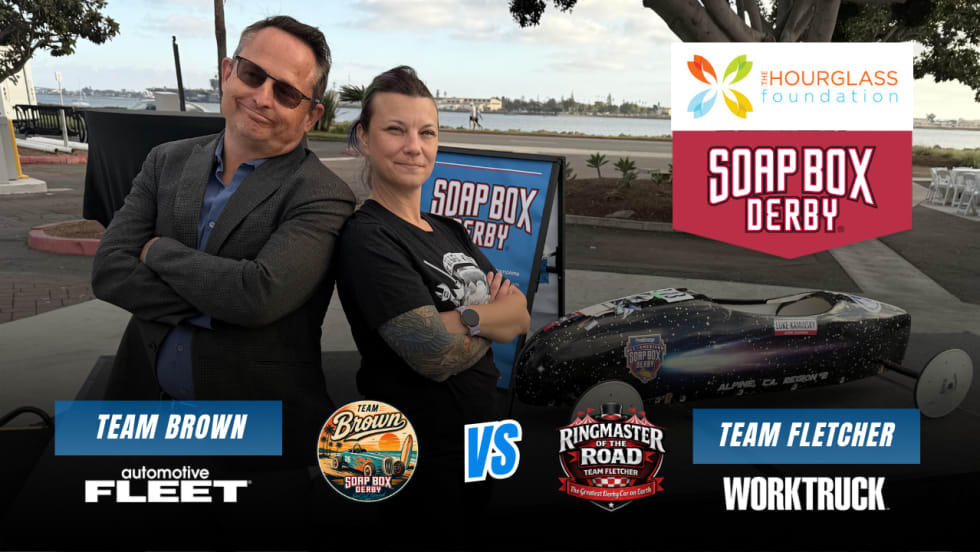
It's All Downhill from Here! Fleet Industry Raises $22,000 for Skilled Trades Scholarships
Work Truck’s Lauren Fletcher and Automotive Fleet’s Chris Brown turned a friendly racing rivalry into $22,000 for automotive technology and skilled trades scholarships.
Read More →
The Top 300 Commercial Fleets
The Top 300 Commercial Fleets: See the List
Read More →
Your Local Dealer Knows More Than You Think
Your local dealer can provide an information advantage that extends well beyond courtesy deliveries.
Read More →
Fleet Meets: Austin Schutte
Here are some industry insights, personal touches, and words of advice from the CEO and Founder of Anew Solutions.
Read More →
Soap Box Derby Challenge: What’s Powering Team Brown
The car is coming together, the students are solving real build problems, and the fleet industry is helping push Team Brown toward the starting line.
Read More →