




Calif. Hearing to Address Driverless Cars
The state’s Department of Motor Vehicles is taking steps to set requirements for the testing and deployment of vehicles that lack a human driver.
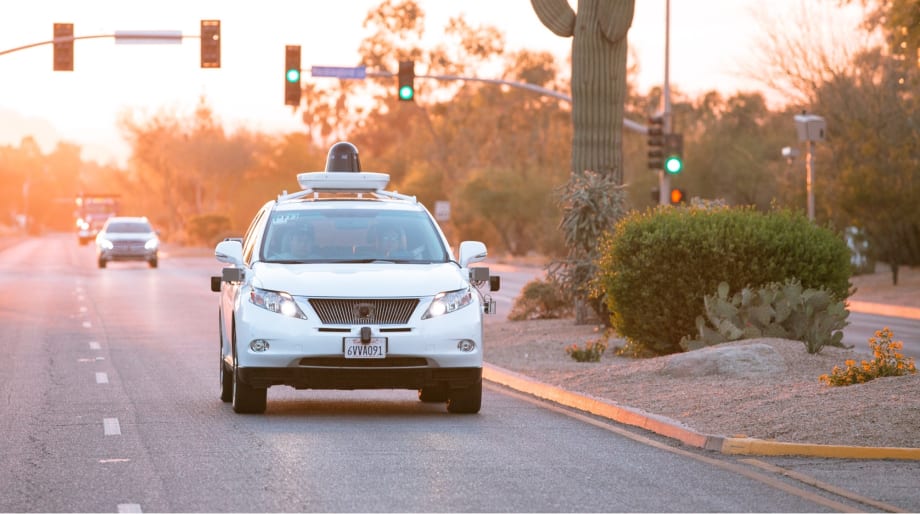
California law requires the presence of a human driver during testing of autonomous vehicles, but the state is preparing to change that policy. Photo courtesy of Waymo (previously known as the Google self-driving car project).
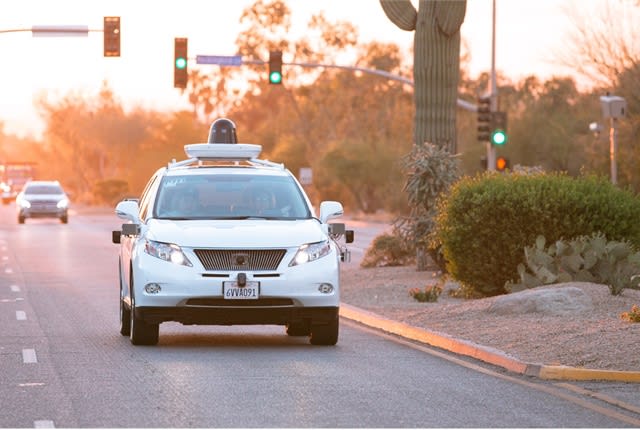
California law requires the presence of a human driver during testing of autonomous vehicles, but the state is preparing to change that policy. Photo courtesy of Waymo (previously known as the Google self-driving car project).
The California Department of Motor Vehicles has scheduled a public hearing for April 25 to alow stakeholders to discuss proposed regulations for testing and deploying autonomous vehicles that lack a human driver.
The state’s draft regulations seek to establish a framework for testing autonomous vehicles without a driver; recognize the authority of the National Highway Traffic Safety Administration (NHTSA) to develop and enforce federal safety and performance standards for such vehicles; and set requirements that a manufacturer must meet to sell or lease such vehicles outside of a testing program. Additionally, the proposed rules address such issues as vehicle advertising, driver licensing and vehicle registration.
The hearing will be held at the California Department of Water Resources Auditorium in Sacramento. Written comments may be submitted to LADRegulations@dmv.ca.gov until April 24.
“These rules expand our existing autonomous vehicle testing program to include testing vehicles where no driver is present,” said California DMV Director Jean Shiomoto. “This is the next step in eventually allowing driverless autonomous vehicles on California roadways.”
Currently, 27 manufacturers hold an autonomous vehicle test permit in California. But they must have a human driver onboard poised to intervene and take control of the vehicle when needed. Some future self-driving cars operating in the state won’t even be equipped with a steering wheel and pedals for such human intervention.
The new rules will also position California to better compete with states that already permit the testing of driverless cars, including Texas and Michigan.
More Safety

From Driver Well-Being to EV Charging | AF News Recap
Mental health belongs in the fleet safety conversation. This week, we’re looking at five ways fleets can support employee well-being before a crisis, plus Holman’s expansion in Mexico, new one-day Fleet Forward passes, and why EV charging demand is outpacing infrastructure growth.
Read More →
Nexar-Nauto Merger Aims to Give Fleets Better Safety Intelligence Through Larger Driving Dataset
Stefan Heck tells Automotive Fleet that combining more than 10 billion miles of driving history with Nexar's AI models will give fleets deeper insights into driver risk and roadway conditions than either company could provide independently.
Read More →
Don't Wait for a Crisis: 5 Ways to Build Mental Health Into Your Fleet Safety Program
For Suicide Prevention Month, fleet and safety leaders have an opportunity to put mental health where it belongs: at the center of workplace safety.
Read More →
How Camera Data Can Strengthen a Fleet’s Insurance Renewal
Insights from a commercial insurance carrier and a broker show how fleets can turn video telematic data, driver coaching, and improved claims results into a stronger case at insurance renewal.
Read More →
The Safest Fleets Aren’t the Ones with the Most Technology
You’ve made the telematics investment. Here’s how to capture the other half of its value and build the safest fleet on the road.
Read More →
Hidden in Plain Sight: Fleet Compliance Risks
Fleet compliance isn't just about having policies — it's about consistently enforcing them. This practical guide reveals six hidden compliance risks common in public sector and shared fleet operations and outlines proven strategies to improve visibility, accountability, and audit readiness
Read More →
NETS Sets 2026 Fleet Safety Benchmark Conference for Indianapolis
The Sept. 15–17 program will feature fleet benchmarking data, case studies, emerging technologies, and implementation strategies while running alongside the NSC Safety Congress & Expo.
Read More →
Off-the-Job Crashes Account for 43% of Employers’ $61.7 Billion Crash Burden
NETS quantifies costs dispersed across fleet, risk, HR, and other departments while providing new per-crash benchmarks for employers.
Read More →
Ram Recalls More Than 1.27 Million 1500 Pickups for Seat Belt Anchor Issue
The recall affects certain 2019-2026 Ram 1500 pickups that may have improperly attached second-row seat belt buckle anchors.
Read More →
Operation Safe Driver Week: Why the Industry's Oldest Safety Campaign Still Matters to Fleets
A look at how a 2007 enforcement initiative became one of the most consequential weeks on the fleet safety calendar, and what it means for your drivers in 2026.
Read More →