




Brake Safety Week Kicks Off August 21
The Commercial Vehicle Safety Alliance plans to address a growing problem of brake systems and brake adjustment violations during its annual Brake Safety Week running Aug. 21-27.

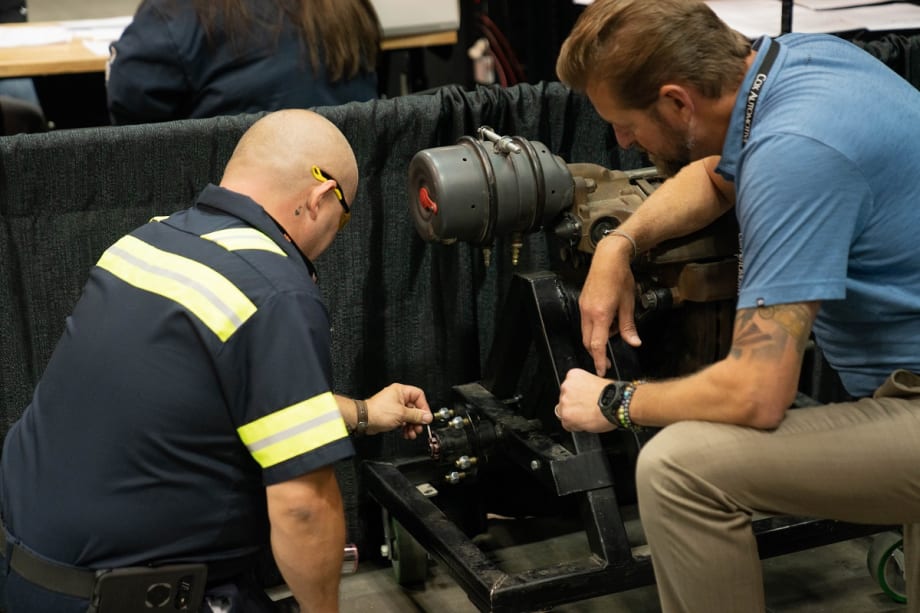
Kevin Clark, AVP of operations, Cox Automotive Mobility Fleet Services, with a technician.
Photo: Cox Automotive Mobility Fleet Services
Brake systems and brake adjustment violations accounted for 38.9% of all vehicle out-of-service violations — the most of any category of vehicle violations — according to last year’s three-day International Roadcheck data.
The Commercial Vehicle Safety Alliance (CVSA) plans to address this problem during its annual Brake Safety Week scheduled for Aug. 21-27. The yearly commercial motor vehicle brake-safety inspection, enforcement, and education initiative spans the U.S., Canada, and Mexico.
Now is the time for fleet operators to prepare for the North American Standard Level 1 and V Inspections. Inspectors will conduct the tests and capture and report brake-related data to CVSA.
“The purpose of these inspections is to enforce compliance to brake system maintenance and safety standards. The inspections also provide continued education and awareness to commercial vehicle operators on the importance of these standards,” said Kevin Clark, AVP of operations, Cox Automotive Mobility Fleet Services. “When a commercial vehicle has a failed braking system, the risk to the commuting public increases substantially.”
During Brake Safety Week, inspectors will look for missing, non-functioning, loose, contaminated, or cracked parts on the brake system, and non-manufactured holes such as rust holes and holes. In addition, they’ll check for broken springs in the spring brake housing section of the parking brake, according to CVSA.
Inspectors will also listen for audible air leaks around brake components and lines, and ensure the air system maintains air pressure between 90-100 psi. They’ll also inspect required brake-system warning devices, such as ABS malfunction lamps and low air-pressure warning devices. And, they will ensure the breakaway system is operable on the trailer, and inspect the tractor protection system.
Brake systems are complex, so fleet operators need to be prepared. “Fleet operators should always be thinking about brake safety, not just in preparation for safety week inspections,” Clark said. “Fleet operators who are unsure if their vehicles will pass the inspection can enlist a maintenance partner like CAM Fleet Services to conduct inspections while the vehicles are inactive leading up to Brake Safety Week.”
Clark also notes that regular maintenance is critical in ensuring a vehicle’s braking system is safe and functioning properly. “Brake systems inspections should be a part of regularly scheduled preventative maintenance inspections, performed by a qualified technician who can identify mechanical problems that exist or will exist if action is not taken,” Clark said.
However, operators should know what to look for and listen for as well. “Vehicle operators also play a role and should be trained and held accountable for completing quality pre- and post-trip inspections. For example, tests to measure air pressure loss and visual inspections for key components can easily be added to your operators’ daily inspections,” Clark said. “Another best practice is to add a brake system inspection to your inbound, outbound, fueling, or regular safety inspection.”
A violation during Brake Safety Week can lead to an out of service condition, which has many ripple effects. These include fines, CSA score issues, driver retention issues, and possibly a missed commitment to the fleet operator’s client.
Most importantly, brake violations mean safety is at stake. “Every week should be brake safety week,” Clark said. “When you are operating a commercial vehicle, you are responsible for the safety of your vehicle, your driver, and all the families who share the road.”
More Safety

Fleet Manager’s Ultimate Playbook: Navigating the New Standard in OEM Connectivity
Rising operating costs, driver safety concerns, and unplanned downtime are putting unprecedented pressure on modern fleets. Discover how fleet managers use embedded OEM connectivity and real-time vehicle data to cut TCO, prevent downtime, and protect drivers without aftermarket telematics hardware.
Read More →
From Driver Well-Being to EV Charging | AF News Recap
Mental health belongs in the fleet safety conversation. This week, we’re looking at five ways fleets can support employee well-being before a crisis, plus Holman’s expansion in Mexico, new one-day Fleet Forward passes, and why EV charging demand is outpacing infrastructure growth.
Read More →
Nexar-Nauto Merger Aims to Give Fleets Better Safety Intelligence Through Larger Driving Dataset
Stefan Heck tells Automotive Fleet that combining more than 10 billion miles of driving history with Nexar's AI models will give fleets deeper insights into driver risk and roadway conditions than either company could provide independently.
Read More →
Don't Wait for a Crisis: 5 Ways to Build Mental Health Into Your Fleet Safety Program
For Suicide Prevention Month, fleet and safety leaders have an opportunity to put mental health where it belongs: at the center of workplace safety.
Read More →
How Camera Data Can Strengthen a Fleet’s Insurance Renewal
Insights from a commercial insurance carrier and a broker show how fleets can turn video telematic data, driver coaching, and improved claims results into a stronger case at insurance renewal.
Read More →
The Safest Fleets Aren’t the Ones with the Most Technology
You’ve made the telematics investment. Here’s how to capture the other half of its value and build the safest fleet on the road.
Read More →
Hidden in Plain Sight: Fleet Compliance Risks
Fleet compliance isn't just about having policies — it's about consistently enforcing them. This practical guide reveals six hidden compliance risks common in public sector and shared fleet operations and outlines proven strategies to improve visibility, accountability, and audit readiness
Read More →
NETS Sets 2026 Fleet Safety Benchmark Conference for Indianapolis
The Sept. 15–17 program will feature fleet benchmarking data, case studies, emerging technologies, and implementation strategies while running alongside the NSC Safety Congress & Expo.
Read More →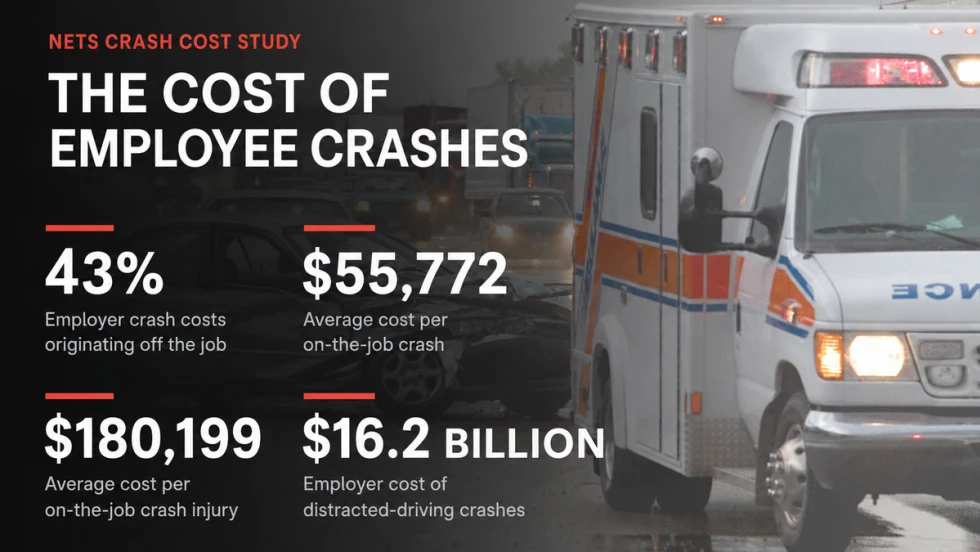
Off-the-Job Crashes Account for 43% of Employers’ $61.7 Billion Crash Burden
NETS quantifies costs dispersed across fleet, risk, HR, and other departments while providing new per-crash benchmarks for employers.
Read More →
Ram Recalls More Than 1.27 Million 1500 Pickups for Seat Belt Anchor Issue
The recall affects certain 2019-2026 Ram 1500 pickups that may have improperly attached second-row seat belt buckle anchors.
Read More →