




BMW Hydrogen 7: A Sedan Fueled by the Future
MUNICH, GERMANY – Long lists of restrictions are familiar to journalists who drive press cars from automakers’ fleets, but one prohibition placed on the BMW Hydrogen 7, a 760Li luxury liner modified to run on hydrogen in addition to its normal gasoline diet, was an eye-opener
MUNICH, GERMANY – Long lists of restrictions are familiar to journalists who drive press cars from automakers’ fleets: no smoking, no racing, no loaning the keys to your fugitive brother-in-law. But one prohibition placed on the BMW Hydrogen 7, a 760Li luxury liner modified to run on hydrogen in addition to its normal gasoline diet, was an eye-opener: The Port Authority of New York and New Jersey would not permit the car to be driven through the Lincoln or Holland Tunnels or on the lower level of the George Washington Bridge, according to www.nytimes.com.
It seems that BMW drew the Port Authority’s attention when it began pumping liquid hydrogen into its small test fleet of dual-fuel sedans in Port Jersey, not far from the docks where BMWs disembark after their voyage from Germany. But while BMW designed the Hydrogen 7 to be as explosion-resistant as any gasoline car, memories of the Hindenburg zeppelin cause misunderstandings among consumers and bureaucrats, a company spokesman acknowledged.
As with hydrogen cars from Ford, General Motors, Honda and others, showcasing hydrogen’s carbon-free potential is the BMW’s reason for being. But unlike far-costlier fuel-cell cars — which generate electricity through a chemical reaction of gaseous hydrogen and oxygen — the BMW runs on either liquid hydrogen or gasoline in a familiar internal-combustion engine.
When it is running on hydrogen, water vapor is the main byproduct, as shown by a damp spot beneath the bumper when the car idles. Emissions of carbon dioxide and nitrogen oxides are nearly zero, with just traces resulting from the engine’s lubricating oil and the heat of combustion.
BMW built its demonstration fleet of 100 Hydrogen 7s beginning in 2006 and keeps eight in the New York area and a dozen in Los Angeles, where testers have included the celebrities Leonardo DiCaprio, Brad Pitt, Will Ferrell, and Edward Norton. All told, the 100 BMWs have logged more than a million miles in testing around the world.
Automakers like Ford and Mazda are also experimenting with the technology of using hydrogen in conventional engines. Ford has built roughly 30 hydrogen powered V-10 buses for commercial customers in the United States and Canada, including major airports, the city of Las Vegas, and SeaWorld Orlando. In Japan, Mazda is road-testing a Premacy hydrogen hybrid minivan that combines a rotary engine with an electric motor and lithium-ion batteries.
BMW’s Hydrogen 7 is powered by the same 6-liter V-12 found in the 760Li, re-engineered to handle the special qualities of hydrogen, including separate injection systems for each fuel. But the real gee-whiz factor is at the rear, where tanks hold 17.5 pounds of hydrogen and 16 gallons of gasoline.
Inside that hydrogen tank is nature’s lightest element, super-chilled to 423 degrees below zero. At that temperature, nearing the frigid cold of outer space, hydrogen becomes a liquid and shrinks to about one-thousandth the volume, allowing the tank to pack in more fuel. Yet the vacuum-insulated tank felt room temperature to the touch, so well sealed that a block of ice inside would take 13 years to fully melt, BMW engineers say, and a fill-up of coffee would remain hot enough to drink three months later, according to www.nytimes.com.
The hydrogen tank leaves only enough trunk space for a pair of golf bags; a second-generation tank that fits the space more efficiently has been designed. The company is working with other automakers to create a standardized refueling system. When the car is parked for extended periods, the evaporating hydrogen builds pressure that must be safely released. A boil-off system mixes the hydrogen with air, runs it through a catalytic converter and releases water vapor through a rear-bumper vent.
Redundant safety systems abound. If the pressure inside the tank rises too high, a vent in the roof can release gaseous hydrogen directly. And if the car happened to roll over and block the roof opening, hydrogen would reroute through the underbody. A hydrogen detection system makes the car’s four door locks glow red to warn of leaking fuel in the trunk, fuel nozzle area or under the hood; windows automatically open if hydrogen should enter the cabin.
BMW conservatively estimates a 125-mile range on hydrogen, with another 300 miles on gasoline.
If the hydrogen economy fails to take off, BMW is hedging its bets with other technologies. The company plans to unveil an all-electric Mini Cooper at this year’s Los Angeles auto show; no date has been announced for sales.
More Safety

Nexar-Nauto Merger Aims to Give Fleets Better Safety Intelligence Through Larger Driving Dataset
Stefan Heck tells Automotive Fleet that combining more than 10 billion miles of driving history with Nexar's AI models will give fleets deeper insights into driver risk and roadway conditions than either company could provide independently.
Read More →
Don't Wait for a Crisis: 5 Ways to Build Mental Health Into Your Fleet Safety Program
For Suicide Prevention Month, fleet and safety leaders have an opportunity to put mental health where it belongs: at the center of workplace safety.
Read More →
How Camera Data Can Strengthen a Fleet’s Insurance Renewal
Insights from a commercial insurance carrier and a broker show how fleets can turn video telematic data, driver coaching, and improved claims results into a stronger case at insurance renewal.
Read More →
The Safest Fleets Aren’t the Ones with the Most Technology
You’ve made the telematics investment. Here’s how to capture the other half of its value and build the safest fleet on the road.
Read More →
Hidden in Plain Sight: Fleet Compliance Risks
Fleet compliance isn't just about having policies — it's about consistently enforcing them. This practical guide reveals six hidden compliance risks common in public sector and shared fleet operations and outlines proven strategies to improve visibility, accountability, and audit readiness
Read More →
NETS Sets 2026 Fleet Safety Benchmark Conference for Indianapolis
The Sept. 15–17 program will feature fleet benchmarking data, case studies, emerging technologies, and implementation strategies while running alongside the NSC Safety Congress & Expo.
Read More →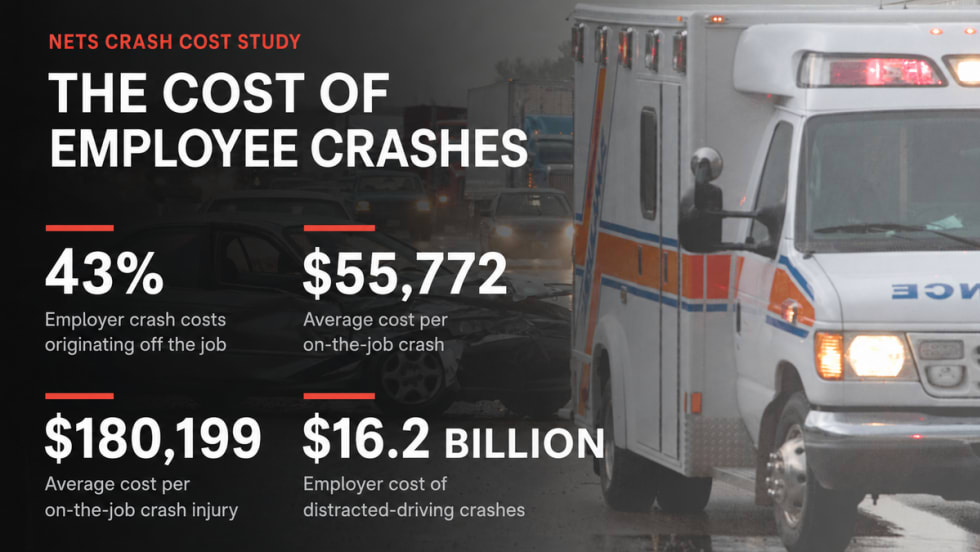
Off-the-Job Crashes Account for 43% of Employers’ $61.7 Billion Crash Burden
NETS quantifies costs dispersed across fleet, risk, HR, and other departments while providing new per-crash benchmarks for employers.
Read More →
Ram Recalls More Than 1.27 Million 1500 Pickups for Seat Belt Anchor Issue
The recall affects certain 2019-2026 Ram 1500 pickups that may have improperly attached second-row seat belt buckle anchors.
Read More →
How Better Visibility Cut Speeding Violations by 48%
Fleet leaders don't need more data, they need clearer visibility into what the data is saying. This case study explores how one utility replaced speeding-event counts with a single metric — miles driven in violation — to strengthen safety and significantly reduce speeding violations.
Read More →
Operation Safe Driver Week: Why the Industry's Oldest Safety Campaign Still Matters to Fleets
A look at how a 2007 enforcement initiative became one of the most consequential weeks on the fleet safety calendar, and what it means for your drivers in 2026.
Read More →