




Bi-Fuel Impala Tested With Bonfire, Rifle Round
General Motors has subjected the compressed natural gas (CNG) fuel tank of its 2015 Bi-fuel Chevrolet Impala to several extreme tests, including the "bonfire test," penetration test with an armor-piercing rifle round, and impact testing.
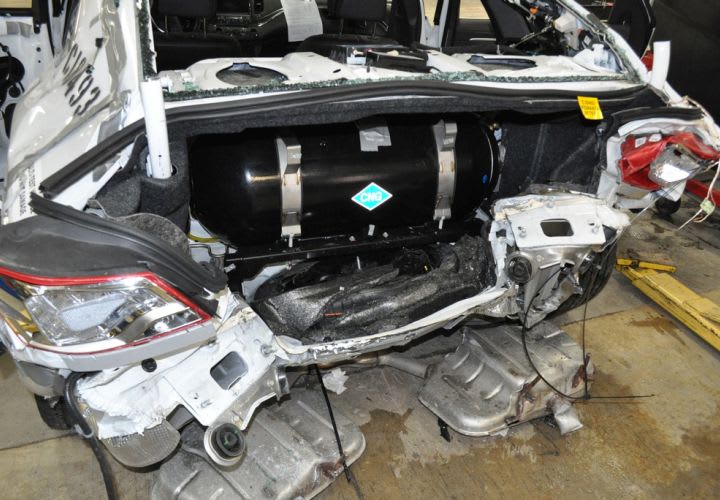
Photo of crash testing of 2015 Bi-Fuel Chevrolet Impala courtesy of GM.
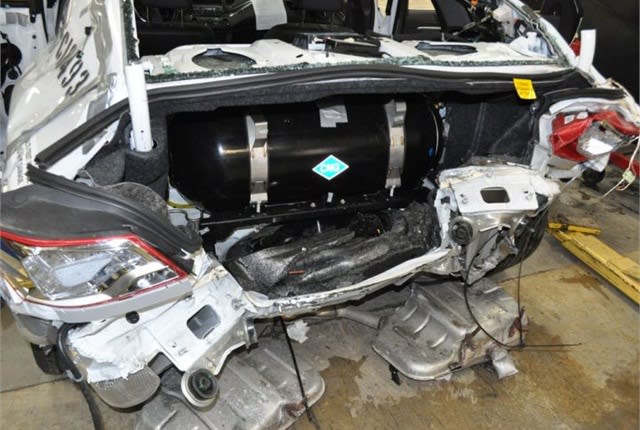
Photo of crash testing of 2015 Bi-Fuel Chevrolet Impala courtesy of GM.
General Motors has subjected the compressed natural gas (CNG) fuel tank of its 2015 Bi-fuel Chevrolet Impala to several extreme tests, including the "bonfire test," penetration test with an armor-piercing rifle round, and impact testing.
The vehicle's CNG tank is covered by a large piece of cast aluminum that also protects connection points from certain side impacts. Sheet metal plates on either side of the tank help protect it from loose objects in the trunk or rear seat, according to GM.
“We designed this system for those ‘what if’ situations,” said Nichole Kraatz, Impala chief engineer.
The bonfire test subjects the tank to a steady 800-degree Fahrenheit fire to confirm that the CNG tank's pressure relief valves remain operation and the tank won't rupture. The tests are done at two fuel levels.
The penetration test involves engineers filling the tank to its service pressure. The tank is then shot with a 7.62 mm rifle round. The 7.62x51 mm NATO round travels at a velocity of more than 2,500 feet per second.
Additionally, the automaker conducted front barrier, side impact, and rear impact crash tests. The tank also undergoes long-term structural integrity tests equivalent to 15,000 pressure cycles and hydrostatic bursting tests of up to 8,100 PSI, according to GM.
The steel trunk-mounted CNG tank holds approximately 7.8 gallons, which is sufficient for about 150 miles of driving. The Impala then switches to gasoline power.
More Operations
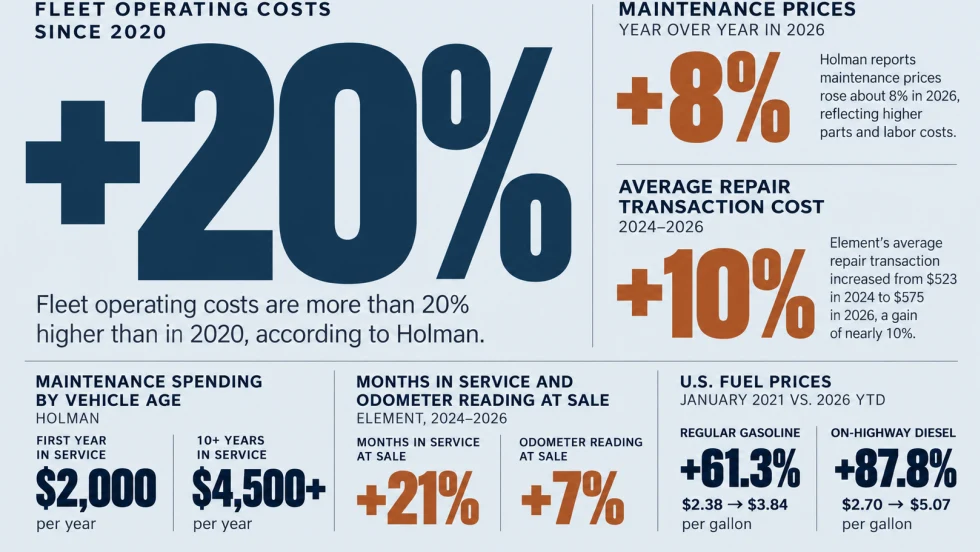
Managing Fleet Costs in an Era of Permanent Volatility
Fleet operating costs have risen more than 20% since 2020, raising a key question: When does extending a vehicle's service life stop making financial sense?
Read More →
The Next Evolution of Fleet Management: Autonomous Operations
This opening keynote session at the Fleet Forward Conference highlights the future of autonomous driving for fleets.
Read More →
How to Reduce the Total Cost of Risk From Catalytic Converter Theft
A stolen catalytic converter can cost fleets far more in downtime and lost productivity than in repairs. A total-cost-of-risk approach can help fleet managers quantify their exposure and prioritize theft prevention.
Read More →

Personal-Use Charges Rise as Vehicle Values Fall | AF News Recap
Personal-use charges are climbing, wholesale used-vehicle values are declining, and commercial fleet sales growth is slowing. This week, we're breaking down the latest fleet data, plus how Element Fleet Management is helping Waymo prepare for its first Canadian robotaxi market.
Read More →
Here's When You Should Make an Exception to Fleet Policy
Fleet policies are designed to create consistency, but not every driver or situation fits neatly within standard rules.
Read More →
AI-Native or AI-Acquired: What Should Fleet Managers Look for in an AI Platform?
Six questions can help fleet managers look beyond AI marketing claims to evaluate integration, data access, and real-world operational performance.
Read More →
A buyer's guide to fleet management software in 2027
Buying fleet management software in 2027 means looking beyond features and price. As fleet operations, technology and expectations evolve, this guide explores what today’s fleet professionals should consider when choosing a system that can deliver value now and adapt to what comes next.
Read More →
What Will Shape the Next Era of Fleet Management?
EVs, AI, and autonomous vehicles are reshaping fleet management. Discover what’s ahead—and how fleet leaders can prepare for the next era.
Read More →
How Fleets Can Recruit and Train Veterans for Technician Roles
Here's how the technician shortage has affected uptime for fleets, and what to do about it.
Read More →
Avis Budget Group Deploys Neology Toll Management Technology Across Major Brands
Neology’s neoFleet platform will manage toll transactions and toll-authority operations for vehicles across Avis, Budget, Payless, Budget Truck and Zipcar.
Read More →