




Autonomous Vehicles Could Be Environmental Boon or Disaster
Judi Greenwald and co-author Alain Kornhauser, professor of operations research and financial engineering who has a Ph.D. in mechanical and aerospace engineering from Princeton, found that the best way to ensure a good outcome is to deploy AVs in managed fleets rather than as personal vehicles.
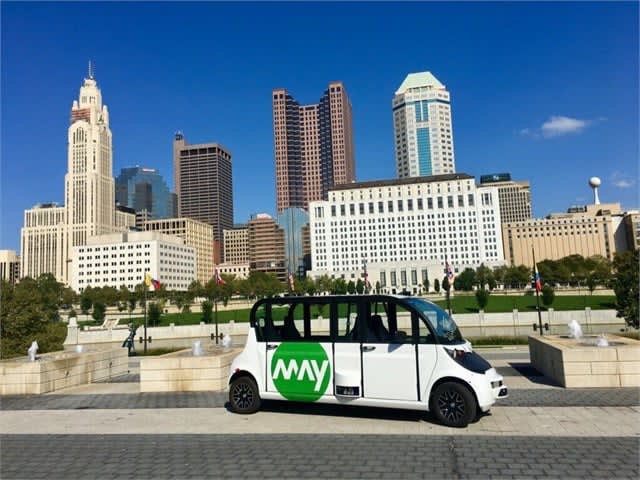
High barriers to market entry, such as expensive licenses similar to a commercial trucking license, could discourage individuals from buying autonomous vehicles.
Photo courtesy of May Mobility.
Widespread use of autonomous vehicles (AVs) could either massively increase or drastically cut greenhouse gas emissions depending, in large part, on public policy, according to new research from Princeton University.
“We need fuel economy standards to ensure the cars are clean, and policies to encourage ridesharing to reduce vehicle miles traveled,” said Judi Greenwald, non-resident fellow at Princeton’s Andlinger Center for Energy and the Environment and co-author of a Jan. 4 paper published in the journal Energy Policy.
The researchers found that well-managed autonomous vehicles “could increase mobility, improve safety, reduce traffic congestion and make fleet management companies rich, while lowering emissions and reducing energy use.” But, they said, poorly managed ones could make “things significantly worse on all these fronts.”
By allowing passengers to work or relax en route, automated vehicles would greatly improve the experience of traveling in an automobile. But planning, management and carefully crafted regulations are essential to reducing vehicle emissions and avoiding additional miles traveled by the vehicles, specifically vehicles traveling with few passengers or without any passengers at all.
"Two big changes are coming — automation and mobility as a service,” said Greenwald, who served as deputy director for climate, environment and energy efficiency in the Department of Energy during the Obama administration.
“Depending on how they interact, and how clean the fuel is, it could really end up a lot better or worse off for the environment,” said Greenwald, who is a Princeton engineering alumna.
Greenwald and co-author Alain Kornhauser, professor of operations research and financial engineering who has a Ph.D. in mechanical and aerospace engineering from Princeton, found that the best way to ensure a good outcome is to deploy AVs in managed fleets rather than as personal vehicles, and to implement rigorous fuel efficiency standards for the vehicles.
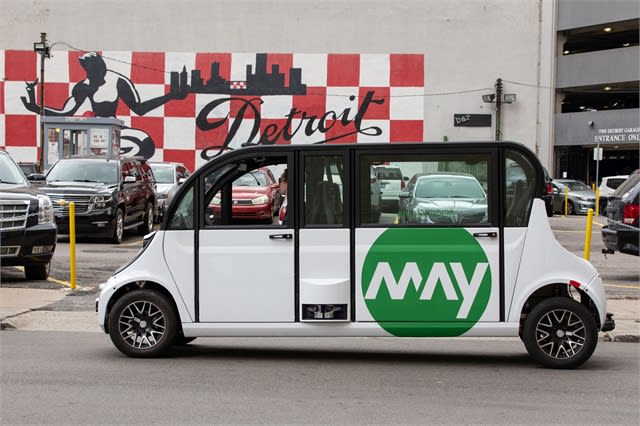
Photo courtesy of May Mobility.
Fleet managers have strong incentives to use the most efficient fuels and to minimize the amount of time on the road that cars spend with few or no passengers.
“Fleets are motivated to deliver as many person-miles out of each vehicle as they possibly can,” said Kornhauser, who is also director of Princeton’s Program in Transportation. “If you’re getting two person-miles out of each vehicle-mile traveled (because there are two passengers in the vehicle), energy use and pollution are chopped in half, regardless of the fuel source.”
For the study, the authors examined a large body of earlier research by Kornhauser, with one study showing that a properly managed fleet, combined with public transit, could cut vehicle travel by 43% in New Jersey. They also pointed to the National Renewable Energy Laboratory 2016 report that showed that AVs could triple fuel use due to easier travel and an increase in empty vehicle miles traveled.
Greenwald said policy will play a big role in controlling which players are able to operate these vehicles and how. High barriers to market entry, such as expensive licenses similar to a commercial trucking license, could discourage individuals from buying autonomous vehicles. Regulations could also prohibit the technology from being sold to individuals, the report said.
“While a future with autonomous vehicles may seem far off, we must be planning for them today to ensure they deliver on their promise versus set us back,” said Rob Freudenberg, VP for energy and environment at Regional Plan Association, an urban research and advocacy organization focused on the tri-state area, and unaffiliated with the study. “That includes everything from encouraging the right technology, to integrating with existing public transportation networks, to completely reimagining our streets for the better.”
“We need public policy to ensure that we align the economic incentives with what we want from a societal perspective,” said Greenwald. “It’s really up to us.”
More Fleet Forward

Erin Gilchrist Receives Mike Antich Spirit of Fleet Award
Last week at AFLA in Vegas, Erin Gilchrist received the inaugural, brand-new Spirit of Fleet Award.
Read More →
Dominika Leja Named the 2026 Fleet Manager of the Year
The AstraZeneca associate director of fleet was recognized for her leadership in fleet electrification, cost savings, and operational transformation.
Read More →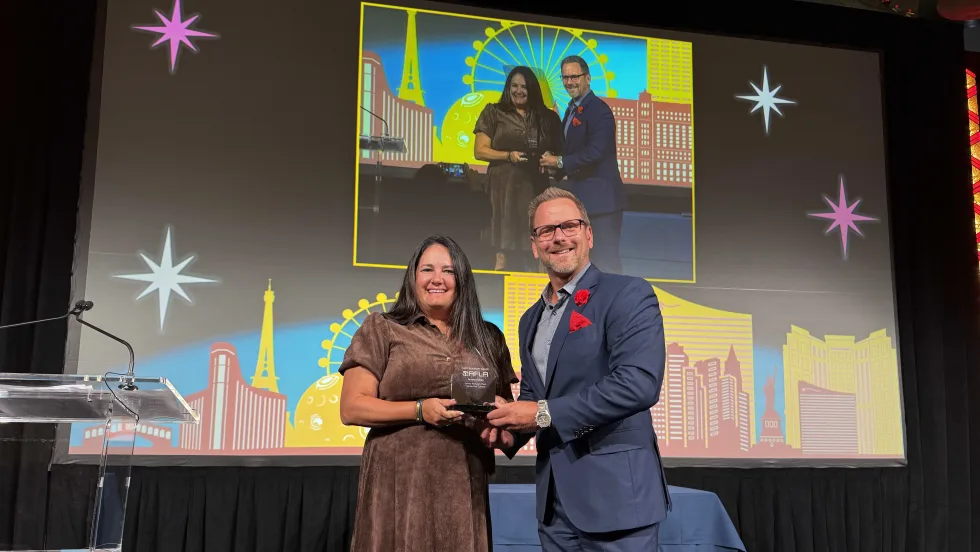
Jamie McKay Named the 2026 Fleet Visionary Award Winner
The Aptive Pest Control fleet manager was recognized for her approach to operations, data, lifecycle management, and driver needs.
Read More →
Fleet Forward Conference Introduces One-Day Passes for 2026
New one-day registration gives fleet professionals the flexibility to attend Tuesday, Wednesday, or Thursday, with passes available for $199 through Sept. 18.
Read More →
Vibe Coding: When Fleet Managers Become Software Builders
Five fleet professionals — none with programming skills — discuss how they’re using AI to build fleet solutions in-house and in a fraction of the time.
Read More →
Fleet Forward Conference Tackles Fleet Industry’s Growing Leadership Gap
This session will examine succession planning, knowledge transfer, and the skills the next generation of fleet leaders will need as veteran professionals leave the industry.
Read More →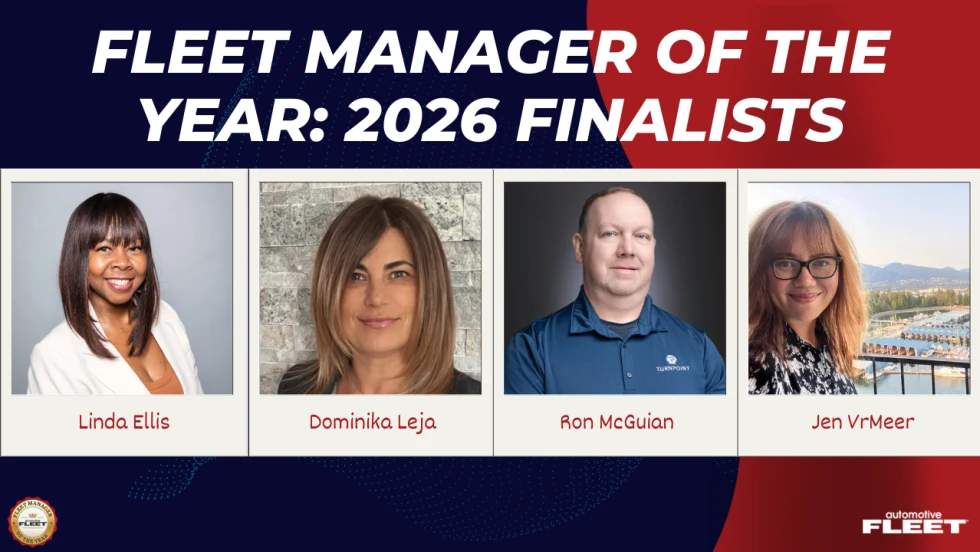
2026 Fleet Manager of the Year Finalists Announced
Who are the 2026 Fleet Manager of the Year finalists?
Read More →
John Rossant to Deliver Opening Keynote at 2026 Fleet Forward Conference
The CoMotion founder will draw on developments across Europe, China, the Middle East, and other international markets to identify trends that could influence how U.S. fleets plan for the coming decade.
Read More →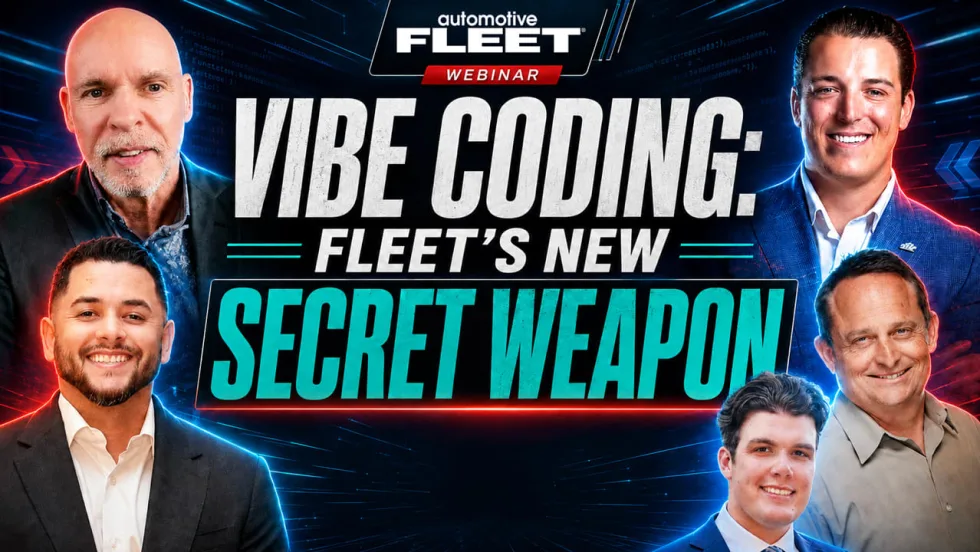
How to Build Custom Fleet Tools With AI and Vibe Coding [Webinar]
A new Automotive Fleet webinar explores how fleet managers are using AI and vibe coding to automate routine work and create simple operational tools without traditional programming skills.
Read More →