




Automakers Set to Use Wireless Chips, Study Says
Automakers, exploring the potential of wireless technology, will incorporate short-range wireless communications chips in new vehicles by 2007, according to a study released on Aug. 8, 2002.

Automakers, exploring the potential of wireless technology, will incorporate short-range wireless communications chips in new vehicles by 2007, according to a study released on Aug. 8, 2002. Market research firm Allied Business Intelligence said the promise of dashboard mobile telephone dialing, more advanced stereo systems, and even more efficient car production has automakers looking at the use of wireless chips. Farther out, car companies are exploring the use of long-range wireless to warn drivers when other cars are too close, and to allow emergency vehicles to communicate with surrounding cars to clear a path on the road. Safety, it turns out, is a focus as car makers study the feasibility of potentially distracting gadgets in the car. On Aug. 7, 2002, General Motors said it has granted $100,000 for a university study on the brain activity of caffeinated, sleep-deprived and multi-tasking drivers. The initial move to wireless in the car will be mobile telephones, said Allied Business analyst Frank Viquez, with luxury car makers like BMW and Mercedes experimenting with digital dash-boards and steering wheels that will dial numbers on the driver's phone. Chrysler is due this year to release its "UConnect" hands-free car kit, signifying the introduction of Bluetooth -- a short-range wireless communications standard -- in a production vehicle. But phones are only the beginning. Viquez said Toyota Motor Corp. is looking to replace the wires that connect car stereos to the vehicle with wireless transmitters and receivers. And Ford unit Volvo, Viquez said, has experimented with equipping its car-building robots with Bluetooth wireless capability to allow better communication with central computers. The car is certain to eventually raise new sets of privacy concerns. Viquez said automakers could use Wi-Fi long-range wireless to gather information on how a driver is treating a vehicle, and to bet-ter gather information on scheduled car maintenance. Meanwhile, General Motors is funding a study by Wayne State University School of Medicine that will use brain images to learn more about driver performance during distractions. "The imaging technique shows the actual portion of the brain while they are being used in proc-essing sensory information during driving tasks," Gregory Moore, co-director of the research study, said in a statement.
More Operations

The Top 300 Commercial Fleets
The Top 300 Commercial Fleets: See the List
Read More →

Your Local Dealer Knows More Than You Think
Your local dealer can provide an information advantage that extends well beyond courtesy deliveries.
Read More →


Fleet Meets: Austin Schutte
Here are some industry insights, personal touches, and words of advice from the CEO and Founder of Anew Solutions.
Read More →
Soap Box Derby Challenge: What’s Powering Team Brown
The car is coming together, the students are solving real build problems, and the fleet industry is helping push Team Brown toward the starting line.
Read More →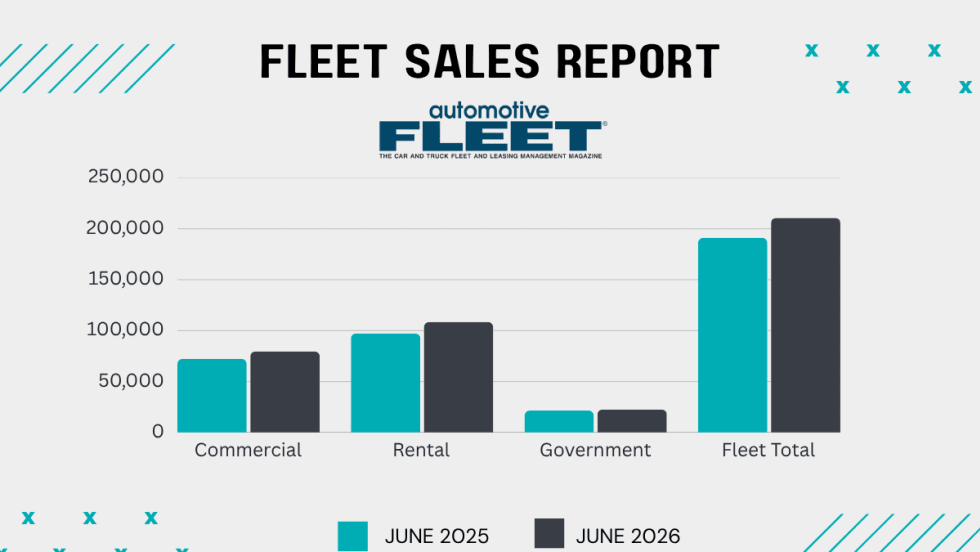
Commercial Fleet Sales Contribute To June, YTD Gains
The fleet sector has boosted its vehicle purchases at a reliable pace in the first half of this year compared with 1H 2025.
Read More →
What Fleet Managers Really Want From Vendors
From customer service frustrations and technology breakdowns to RFQs, change management, and the growing impact of turnover across the industry, this conversation pulls back the curtain on the real operational challenges fleet managers are navigating every day.
Read More →
Fleet Safety Masterclass: Industry Leaders on Storytelling, Strategy & Innovation
In this special masterclass episode, industry leaders break down what it really takes to build safer fleets in today’s increasingly distracted and data-driven world.
Read More →
Integrating Legacy Fleet Systems and Historical Data
In this episode, we bring together fleet and technology leaders to unpack the realities of data integration, system migrations, and the evolving role of AI in fleet management.
Read More →
From Resistance to Results: Change Management Strategies for Fleets
From new technologies and safety programs to evolving regulations, fleets are under constant pressure to adapt. But as Dr. Betz explains, success isn’t about the system you implement—it’s about whether your people actually use it.
Read More →