




Audi Study Tackles Myths About Autonomous Driving
The OEM's study titled “SocAIty” explores questions about autonomous driving and clears up some of the myths surrounding the topic.

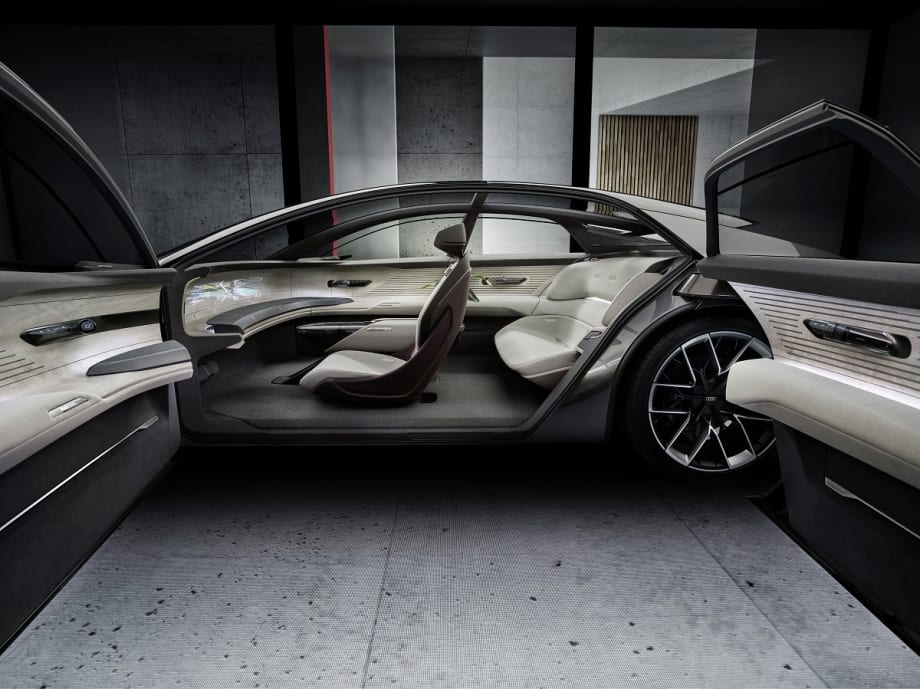
Nineteen experts around the world contributed to 2021 76-page &Audi study, “SocAIty - Autonomous Driving on the Road to Social Acceptance,” which covers such topics as law, ethics, and data.
Photo: Audi
If self-driving cars will be here in the near future, how will people’s attitudes have to change to ensure autonomous driving meets with broad acceptance? The &Audi study ("&Audi" is an initiative of Audi focused on AI and autonomous technology) “SocAIty,” compiled with the help of worldwide experts, explores these questions and others. It also clears up some of the myths surrounding the topic. Following are the myths they uncovered.
Myth No. 1:Self-driving cars will be like normal cars, just without drivers.
When it comes to electric vehicle ranges, aerodynamics is a factor and continues to play a role in design. The look of cars – and other means of transportation – with increasing automation will not radically change, but the design will focus on the interior. Passenger comfort will be a priority, which is why passenger seats will no longer necessarily face in the direction of travel in certain cases. Space for passengers will be maximized by allowing everything that’s no longer needed – the pedals, gearshift, and steering wheel – to be temporarily retracted.
Myth No. 2: Once the software is developed and available, autonomous cars can drive anywhere.
Getting self-driving cars on the road will require a reliable and safe software for the car and for the entire environment. This will change the way our cities look. Additionally, infrastructure must be expanded to include intelligent traffic lights and road sensors. Cities will become more digital, providing a suitable ecosystem for an increasing number of automated cars. This will make cities safer and where ideally traffic will be able to flow without disruptions or congestion.
Myth No. 3: Self-driving cars will make driving less fun.
Some fear that their car will prevent them from driving across the country and enjoying the pleasure of feeling their foot on the pedal and their hands on the steering wheel. But the opposite is true: Self-driving cars will not end the fun that we have behind the wheel. In the future, vehicle owners will still have the choice of driving the car themselves or handing over control to the car during unpleasant situations, such as stop-and-go traffic on the highway.
Myth No. 4: Self-driving cars are a hacking liability.
Self-driving cars will be no more vulnerable than cars driven by hand. That being said, the impact of a hacker attack on a self-driving car’s safety-related systems can be more serious. For this reason, manufacturers are continually developing protective measures against cyberattacks and improving the protective mechanisms, both inside the vehicle and outside in the back end.
As cars become increasingly networked with their environment, the effort required to ensure up-to-date cyber security increases, too. At the same time, automated vehicles will increase road safety.
Myth No. 5: Self-driving cars will require fewer parking spaces.
Self-driving cars won’t require less parking space, but they will use it much more efficiently. Additionally, vehicle density could drop in metropolitan areas if an increasing proportion of cars are used jointly through sharing models. According to the German Environment Agency, private cars are currently driven for an average of just one hour a day.
Myth No. 6: The technology is already developed, but laws on autonomous driving are still lacking.
It is true that technological development in some countries (U.S. and China) seems to be progressing more rapidly than in Germany and Europe. However, it is also true that German lawmakers created a legal framework early on that puts safety first in the development and introduction of self-driving technology. In this respect, Germany is considered a pioneer by international standards. Since as early as 2017, autonomous driving systems have been allowed, under certain circumstances, to take over actions that were previously the exclusive responsibility of humans (SAE Level 3).
In June 2021, a legal framework was established allowing autonomous vehicles, Level 4 and above, to operate regularly in public traffic within defined areas (A-to-B shuttle traffic and “people mover” buses on designated routes). This law is a first step toward more comprehensive regulation. Therefore, the authorities implementing the laws are not blocking development. They are simply following the legally established principle that safety comes first.
Myth No. 7: In extreme cases, autonomous vehicles will have to make life-and-death decisions.
For autonomous driving, the decisive factor from today’s perspective is: It is not the car itself that decides but the humans who program the vehicle. The vehicle can only reflect what the software specifies. And all previous research shows: Cars are significantly less susceptible to human error than humans – for example, due to their immunity to tiring even during long journeys.
Many people are troubled by the question as to whether a machine can make the right choice in a hazardous situation, but autonomous driving is not the first time this question arose. In fact, it has been a matter of discussion in ethics, as illustrated in the “trolley problem.” This thought experiment asks us to imagine a situation in which one individual could divert a runaway trolley onto a sidetrack where one person lies motionless, thereby saving the lives of five people tied up on the original track. Would this be a criminal act? Should the person rather not act at all? Or did the individual deliberate correctly and act to mitigate the greatest possible harm?
With autonomous driving, this discussion has witnessed a resurgence, but in the study, experts say the central point of the debate is that a self-driving car would not make its own decision in a hazardous situation. Instead, the vehicle would only reflect the software choices that its creators endowed it with. It can and will only assume the ethical decisions and values of the people who design it – and apply them without its own interpretation.
Myth No. 8: As a technology, self-driving cars will be so expensive that few people will be able to afford it.
The development of autonomous cars is an investment-heavy undertaking. In the short and medium term, this impacts product costs. But in the long term – i.e., when they are ready for series production and the development costs have been amortized accordingly – prices will fall again. Moreover, the predicted increase in road safety will reduce the damage that a self-driving car suffers. This will likely further lower repair and insurance costs.
Another important factor is the expected change in mobility use: In metropolitan areas, some autonomous vehicles will belong to mobility providers instead of to individuals. Or they will be shared by multiple people through sharing concepts. This, also, increases usage efficiency and will have a positive impact on costs.
“Digitalization allows us to make mobility even safer, more personal and especially smarter,” said Oliver Hoffmann, Audi board member for technical development. “The goal is for our vehicles to seamlessly integrate into our customer’s everyday lives. We’re thus creating a true added value – by giving them back time for things that are important to them.”
Nineteen experts contributed to the creation of the &Audi study, titled “SocAIty - Autonomous Driving on the Road to Social Acceptance,” which covers topics such as law, ethics, and data.
More Fleet Forward

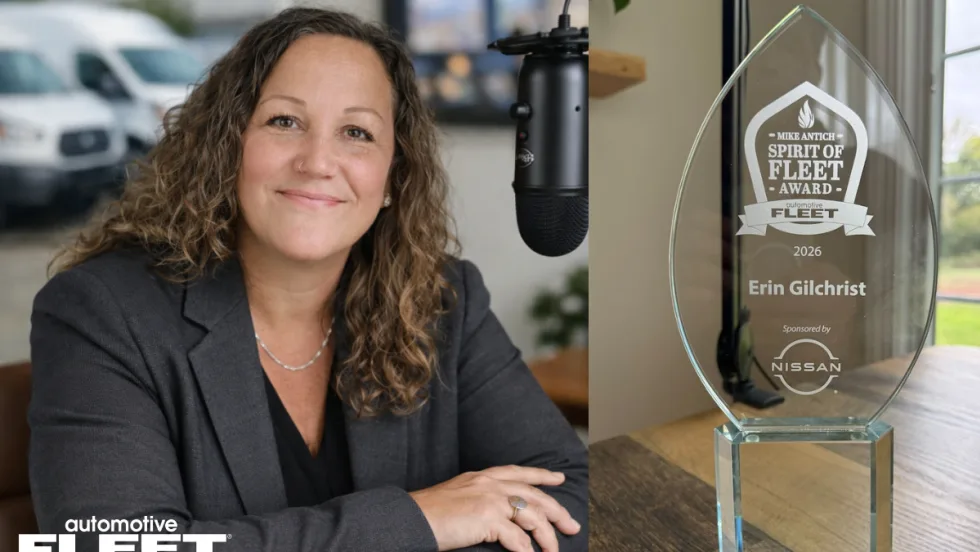
Erin Gilchrist Receives Mike Antich Spirit of Fleet Award
Last week at AFLA in Vegas, Erin Gilchrist received the inaugural, brand-new Spirit of Fleet Award.
Read More →
Dominika Leja Named the 2026 Fleet Manager of the Year
The AstraZeneca associate director of fleet was recognized for her leadership in fleet electrification, cost savings, and operational transformation.
Read More →
Jamie McKay Named the 2026 Fleet Visionary Award Winner
The Aptive Pest Control fleet manager was recognized for her approach to operations, data, lifecycle management, and driver needs.
Read More →
Fleet Forward Conference Introduces One-Day Passes for 2026
New one-day registration gives fleet professionals the flexibility to attend Tuesday, Wednesday, or Thursday, with passes available for $199 through Sept. 18.
Read More →
Vibe Coding: When Fleet Managers Become Software Builders
Five fleet professionals — none with programming skills — discuss how they’re using AI to build fleet solutions in-house and in a fraction of the time.
Read More →
Fleet Forward Conference Tackles Fleet Industry’s Growing Leadership Gap
This session will examine succession planning, knowledge transfer, and the skills the next generation of fleet leaders will need as veteran professionals leave the industry.
Read More →
2026 Fleet Manager of the Year Finalists Announced
Who are the 2026 Fleet Manager of the Year finalists?
Read More →
John Rossant to Deliver Opening Keynote at 2026 Fleet Forward Conference
The CoMotion founder will draw on developments across Europe, China, the Middle East, and other international markets to identify trends that could influence how U.S. fleets plan for the coming decade.
Read More →
How to Build Custom Fleet Tools With AI and Vibe Coding [Webinar]
A new Automotive Fleet webinar explores how fleet managers are using AI and vibe coding to automate routine work and create simple operational tools without traditional programming skills.
Read More →