




Audi AG Establishes Fully-Owned Subsidiary in China
HERNDON, VA - Audi AG established Audi (China) Enterprise Management Co. Ltd., Beijing, on April 18, 2009. Its business purpose is to coordinate all Audi activities in China, in close cooperation with the Changchun-based joint venture FAW-VW.
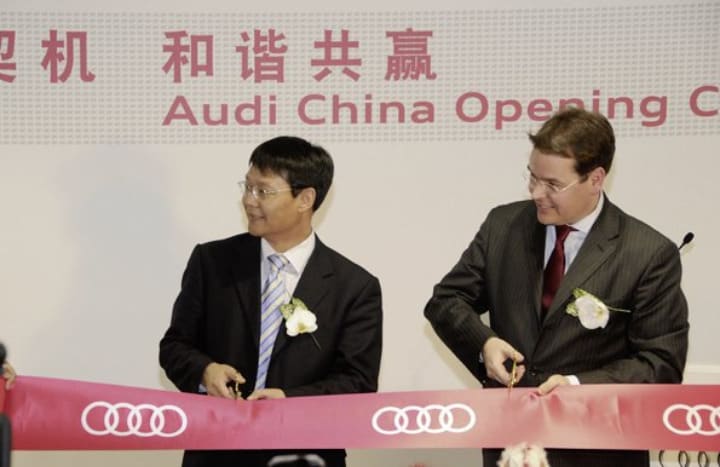
Qin Huanming, Vice President FAW Automotive Group and Dr. Dietmar Voggenreiter, Head of Audi (China) Enterprise Management Co. Ltd. at opening ceremony in Peking.
HERNDON, VA - Audi AG established Audi (China) Enterprise Management Co. Ltd., Beijing, on April 18. Its business purpose is to coordinate all Audi activities in China, in close cooperation with the Changchun-based joint venture FAW-VW. The new company's activities will include operating a test center for infotainment systems in Beijing.
"The establishment of the new company represents another milepost in the success story of Audi AG in China and gives us greater proximity to our second home market," remarked Rupert Stadler, chairman of the Board of Management of Audi AG.
Qin Huanming, vice president of the FAW Automotive Group, declared: "We welcome Audi AG's presence in China. This move will significantly improve the lines of communication between Ingolstadt and China and facilitate even closer cooperation with our joint venture partner."
The company will be headed by Dietmar Voggenreiter, who has already been steering Audi AG's operations in China from Ingolstadt for more than two years.
Audi (China) Enterprise Management Co. Ltd. will work in close partnership with the FAW-VW Audi Sales Division in Changchun, the responsibilities of which are unaffected by the establishment of the Beijing representation.
Johannes Thammer, managing director of the Audi Sales Division, will remain in charge of Sales of both locally-built and imported Audi models.
Audi entered the Chinese market in 1988 and sold some 120,000 vehicles there last year. To handle increasing demand, the cornerstone was laid last year for an additional assembly hall. Production of the Audi Q5 is scheduled to begin there from the end of 2009.

More Operations

Why Reactive Fleet Management Is Becoming Too Expensive to Sustain
Research highlights a growing need for proactive management strategies to address rising costs in fleet operations effectively.
Read More →
What Your Fleet KPIs Aren’t Telling You
Tracking fleet metrics is only useful when the data leads to better decisions. This guide helps fleet leaders assess cost, utilization, and downtime more accurately, identify performance gaps, and prioritize the actions that can improve operational results.
Read More →
Hidden in Plain Sight: Fleet Compliance Risks
Fleet compliance isn't just about having policies — it's about consistently enforcing them. This practical guide reveals six hidden compliance risks common in public sector and shared fleet operations and outlines proven strategies to improve visibility, accountability, and audit readiness
Read More →


Turning Fleet Payment Data into Executive Insights
Does data alone drive results in operations?
Read More →
Automotive Fleet Opens 2026 Personal Use Survey for Commercial Fleet Managers
Commercial and corporate fleet managers are invited to share how their organizations handle company vehicle personal-use policies, charges, and driver eligibility.
Read More →
Gary Van Orden Retires After Nearly Four Decades in Commercial Fleet
From answering customer calls at Ford Motor Company to leading fleet sales across multiple OEMs and a fleet management company, Gary Van Orden's career reflects nearly four decades of leadership in commercial fleet.
Read More →
How Stellantis Plans to Get Ahead of Fleet Downtime
Vehicle acquisition may grab the headlines, but fleet uptime increasingly determines operating success. Darren Bradshaw of Mopar North America gives the details.
Read More →
Hyundai Releases 2027 Commercial Program Incentives
The 2027 Model Year "Fleet Street Incentives" are available to commercial and government fleets.
Read More →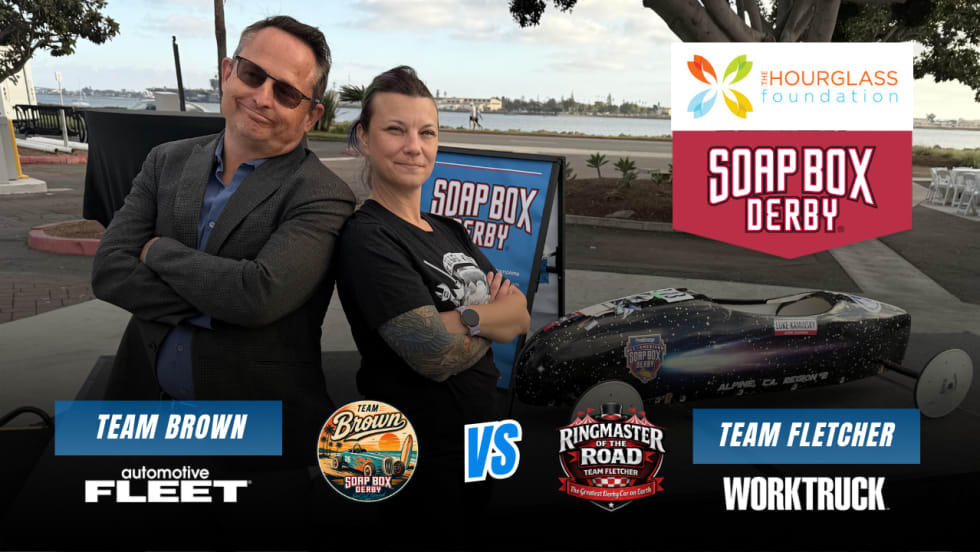
It's All Downhill from Here! Fleet Industry Raises $22,000 for Skilled Trades Scholarships
Work Truck’s Lauren Fletcher and Automotive Fleet’s Chris Brown turned a friendly racing rivalry into $22,000 for automotive technology and skilled trades scholarships.
Read More →
The Top 300 Commercial Fleets
The Top 300 Commercial Fleets: See the List
Read More →