




Amazon is Target of $100 Million Lawsuit for Causing Driver Distraction
A new lawsuit claims the tech giant put unrealistic expectations on a delivery driver that caused a collision and resulted in a motorcyclist losing his leg.

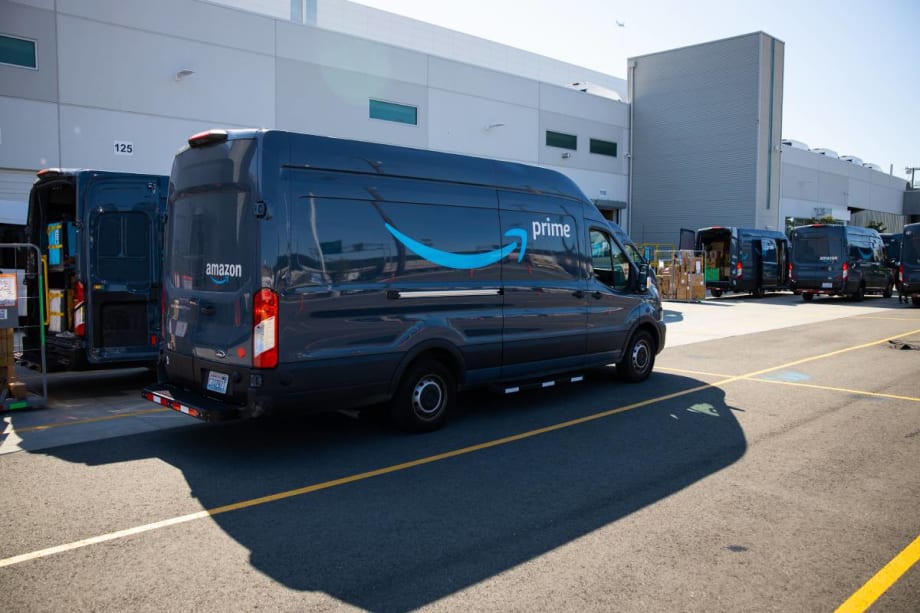
A recent lawsuit indicates that Amazon delivery drivers are under pressure to stay on schedule, which can lead to distracted driving behaviors.
Photo via Amazon
Amazon is the target of a $100 million lawsuit that argues the online giant put unreasonable demands on a delivery driver that led to negligence and caused a collision in October 2021, leaving a motorcyclist to suffer a leg amputation after the crash, reports Federal News Network.
The lawsuit faults Amazon for putting “unrealistic expectations” on its drivers that fuel negligence. Another way to frame it is to say that Amazon’s methods are pushing its delivery drivers to the point of driver distraction.
Specifically, in this case Justin Hartley was riding his motorcycle in Virginia Beach when a truck with an Amazon logo turned directly into his lane, striking him. The driver of the truck did not have his eyes on the road, according to the report.
Rather, the delivery driver — Christopher Gill — was looking down at GPS directions on his Amazon-supplied navigation device, which he admitted to authorities. The lawsuit claims the driver was so distracted by the process of making his delivery that he did not see the motorcyclist.
Hartley suffered multiple fractures and ultimately, doctors were forced to amputate one leg.
Drivers for Amazon.com and Amazon Logistics are required to use the Amazon “Flex App,” according to the lawsuit. The app manages every aspect of a delivery driver’s route, including what directions to take, when to take breaks, and when to return to the station, notes the report.
But the pressure on the delivery drivers via the app goes even further, according to Federal News Network.
For example, when a driver falls behind the desired pace during a route, Amazon sends text messages stating the driver is “behind the rabbit” and needs to be “rescued” to ensure that they get back on schedule. If falling behind occurs too often, a driver’s pay can be reduced.
Amazon has denied all allegations connected with the lawsuit. The company has been down this road before. Amazon has been a defendant in at least 119 motor vehicle injury lawsuits across 35 states, notes the report.
More Safety

Fleet Manager’s Ultimate Playbook: Navigating the New Standard in OEM Connectivity
Rising operating costs, driver safety concerns, and unplanned downtime are putting unprecedented pressure on modern fleets. Discover how fleet managers use embedded OEM connectivity and real-time vehicle data to cut TCO, prevent downtime, and protect drivers without aftermarket telematics hardware.
Read More →
From Driver Well-Being to EV Charging | AF News Recap
Mental health belongs in the fleet safety conversation. This week, we’re looking at five ways fleets can support employee well-being before a crisis, plus Holman’s expansion in Mexico, new one-day Fleet Forward passes, and why EV charging demand is outpacing infrastructure growth.
Read More →
Nexar-Nauto Merger Aims to Give Fleets Better Safety Intelligence Through Larger Driving Dataset
Stefan Heck tells Automotive Fleet that combining more than 10 billion miles of driving history with Nexar's AI models will give fleets deeper insights into driver risk and roadway conditions than either company could provide independently.
Read More →
Don't Wait for a Crisis: 5 Ways to Build Mental Health Into Your Fleet Safety Program
For Suicide Prevention Month, fleet and safety leaders have an opportunity to put mental health where it belongs: at the center of workplace safety.
Read More →
How Camera Data Can Strengthen a Fleet’s Insurance Renewal
Insights from a commercial insurance carrier and a broker show how fleets can turn video telematic data, driver coaching, and improved claims results into a stronger case at insurance renewal.
Read More →
The Safest Fleets Aren’t the Ones with the Most Technology
You’ve made the telematics investment. Here’s how to capture the other half of its value and build the safest fleet on the road.
Read More →
Hidden in Plain Sight: Fleet Compliance Risks
Fleet compliance isn't just about having policies — it's about consistently enforcing them. This practical guide reveals six hidden compliance risks common in public sector and shared fleet operations and outlines proven strategies to improve visibility, accountability, and audit readiness
Read More →
NETS Sets 2026 Fleet Safety Benchmark Conference for Indianapolis
The Sept. 15–17 program will feature fleet benchmarking data, case studies, emerging technologies, and implementation strategies while running alongside the NSC Safety Congress & Expo.
Read More →
Off-the-Job Crashes Account for 43% of Employers’ $61.7 Billion Crash Burden
NETS quantifies costs dispersed across fleet, risk, HR, and other departments while providing new per-crash benchmarks for employers.
Read More →
Ram Recalls More Than 1.27 Million 1500 Pickups for Seat Belt Anchor Issue
The recall affects certain 2019-2026 Ram 1500 pickups that may have improperly attached second-row seat belt buckle anchors.
Read More →