




Aftermarket Auto Lights Exec Agrees to Plead Guilty to Price Fixing
WASHINGTON – The former chairman of a Taiwan aftermarket auto lights manufacturer has agreed to plead guilty for his participation in an international conspiracy to fix the prices of aftermarket auto lights, the Department of Justice announced on Feb. 24.
WASHINGTON – The former chairman of a Taiwan aftermarket auto lights manufacturer has agreed to plead guilty for his participation in an international conspiracy to fix the prices of aftermarket auto lights, the Department of Justice announced on Feb. 24.
The aftermarket auto lights were typically sold and installed during collision repair or as accessories and upgrades.
According to a one-count felony charge filed Feb. 24 in U.S. District Court in San Francisco, Shiu-Min Hsu conspired with others to suppress and eliminate competition by fixing the prices of aftermarket auto lights. The department said that Hsu, former chairman of Depo Auto Parts Industrial Co. Ltd., a Taiwan manufacturer of aftermarket auto lights, participated in the conspiracy from as early as April 2000 until about Sept. 3, 2008. According to the plea agreement, which is subject to court approval, Hsu has agreed to cooperate with the department’s investigation.
“The international price-fixing conspiracy in the aftermarket auto lights industry caused harm to businesses and consumers,” said Sharis A. Pozen, acting assistant attorney general in charge of the Department of Justice’s Antitrust Division. “Including today’s filing, five individuals and four corporations have been charged as a result of the Antitrust Division’s efforts to thwart this type of anticompetitive activity.”
According to the charge, Hsu and co-conspirators participated in a conspiracy in which the participants met and agreed to charge prices of aftermarket auto lights at certain predetermined levels. According to the court document, the participants in the conspiracy issued price announcements and price lists in accordance with the agreements reached, and collected and exchanged information on prices and sales of aftermarket auto lights for the purpose of monitoring and enforcing adherence to the agreed-upon prices. The department said that the conspirators met in Taiwan and the United States for their discussions.
On March 29, 2011, Polo Shu-Sheng Hsu, the former president and CEO of Maxzone Vehicle Lighting Corp., a U.S. distributor of aftermarket auto lights, was sentenced to serve 180 days in prison and to pay a $25,000 criminal fine for his role in the conspiracy. Chien Chung Chen, the former executive vice president of Sabry Lee (U.S.A.) Inc., another U.S. distributor of aftermarket auto lights, pleaded guilty for his participation in the conspiracy on June 7, 2011. He is scheduled to be sentenced on Oct. 16.
In addition, two corporations have pleaded guilty. On Oct. 4, 2011, Sabry Lee pleaded guilty and was sentenced to pay a $200,000 criminal fine. On Nov. 15, 2011, Maxzone pleaded guilty and was sentenced to pay a $43 million criminal fine.
On Nov. 29, 2011, a federal grand jury returned a superseding indictment charging Eagle Eyes Traffic Industrial Co. Ltd. and its U.S. subsidiary E-Lite Automotive Inc., as well as Eagle Eyes’ two highest-ranking officers -- Chairman Yu-Chu Lin and Vice Chairman Homy Hong-Ming Hsu. Trial is set for June 18 in U.S. District Court in San Francisco.
This case is part of an investigation being conducted by the Department of Justice Antitrust Division’s San Francisco Field Office and the FBI in San Francisco.
Anyone with information concerning illegal or anticompetitive conduct in the aftermarket auto lights industry is urged to call the Antitrust Division’s San Francisco Field Office at (415) 436-6660 or you can visit https://www.justice.gov/atr/citizen-complaint-center.
More Safety

Nexar-Nauto Merger Aims to Give Fleets Better Safety Intelligence Through Larger Driving Dataset
Stefan Heck tells Automotive Fleet that combining more than 10 billion miles of driving history with Nexar's AI models will give fleets deeper insights into driver risk and roadway conditions than either company could provide independently.
Read More →
Don't Wait for a Crisis: 5 Ways to Build Mental Health Into Your Fleet Safety Program
For Suicide Prevention Month, fleet and safety leaders have an opportunity to put mental health where it belongs: at the center of workplace safety.
Read More →
How Camera Data Can Strengthen a Fleet’s Insurance Renewal
Insights from a commercial insurance carrier and a broker show how fleets can turn video telematic data, driver coaching, and improved claims results into a stronger case at insurance renewal.
Read More →
The Safest Fleets Aren’t the Ones with the Most Technology
You’ve made the telematics investment. Here’s how to capture the other half of its value and build the safest fleet on the road.
Read More →
Hidden in Plain Sight: Fleet Compliance Risks
Fleet compliance isn't just about having policies — it's about consistently enforcing them. This practical guide reveals six hidden compliance risks common in public sector and shared fleet operations and outlines proven strategies to improve visibility, accountability, and audit readiness
Read More →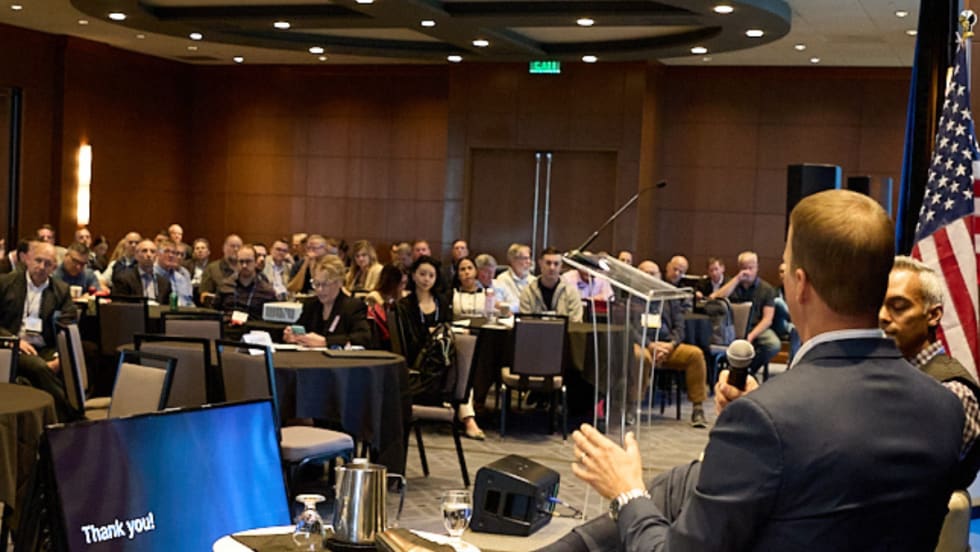
NETS Sets 2026 Fleet Safety Benchmark Conference for Indianapolis
The Sept. 15–17 program will feature fleet benchmarking data, case studies, emerging technologies, and implementation strategies while running alongside the NSC Safety Congress & Expo.
Read More →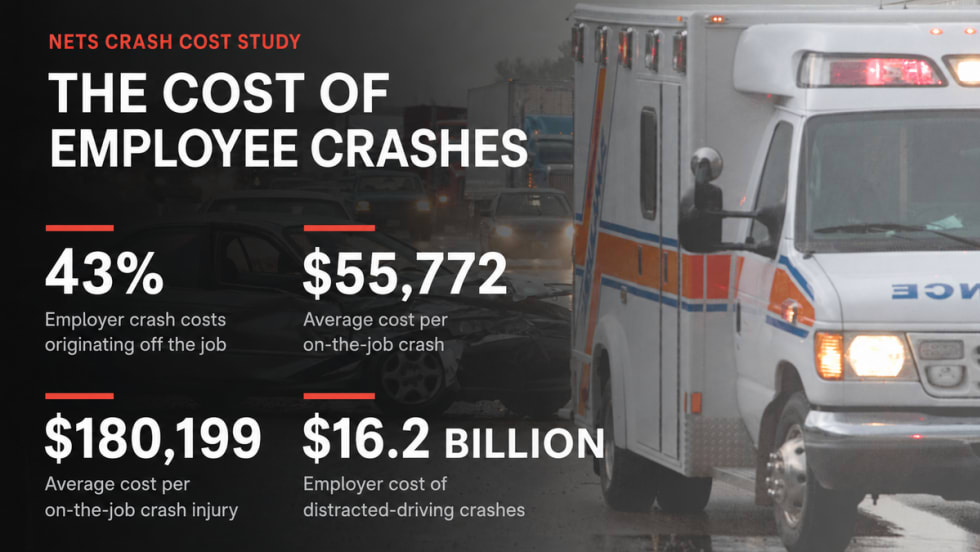
Off-the-Job Crashes Account for 43% of Employers’ $61.7 Billion Crash Burden
NETS quantifies costs dispersed across fleet, risk, HR, and other departments while providing new per-crash benchmarks for employers.
Read More →
Ram Recalls More Than 1.27 Million 1500 Pickups for Seat Belt Anchor Issue
The recall affects certain 2019-2026 Ram 1500 pickups that may have improperly attached second-row seat belt buckle anchors.
Read More →
How Better Visibility Cut Speeding Violations by 48%
Fleet leaders don't need more data, they need clearer visibility into what the data is saying. This case study explores how one utility replaced speeding-event counts with a single metric — miles driven in violation — to strengthen safety and significantly reduce speeding violations.
Read More →
Operation Safe Driver Week: Why the Industry's Oldest Safety Campaign Still Matters to Fleets
A look at how a 2007 enforcement initiative became one of the most consequential weeks on the fleet safety calendar, and what it means for your drivers in 2026.
Read More →