





Related: AAA Test: Active Safety Systems Experienced Issues Every 8 Miles
ADAS Exaggerates Automated Driving Capabilities to Users
According to AAA, motorists using active driving assistance systems (ADAS), which combine vehicle acceleration with braking and steering, tend to overlook safety limitations on vehicles that suggest an “automated” driving experience.
September 10, 2020
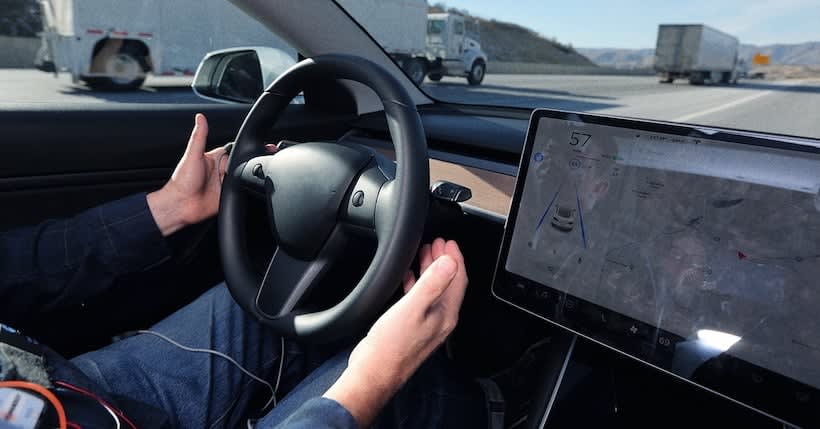
Researchers found that information that stresses convenience and capabilities while minimizing limitations can inflate expectations regarding what the system can do and the situations that it can handle.
Photo: AAA
3 min to read
Motorists using active driving assistance systems, which combine vehicle acceleration with braking and steering, tend to overlook safety limitations on vehicles that suggest an “automated” driving experience, according to new research from the AAA Foundation for Traffic Safety.
Researchers found that information that stresses convenience and capabilities while minimizing limitations can inflate expectations regarding what the system can do and the situations that it can handle. AAA warns that a false sense of system capabilities created by marketing campaigns can lead to dangerous scenarios on the road.
“Based on data collected from our research, subtle differences in tone and emphasis significantly influenced people’s understanding of the technology and their expectations of its capability,” said Dr. David Yang, executive director of the AAA Foundation for Traffic Safety. “These systems assist the driver and take some of the stress out of driving, but they don’t eliminate the need for drivers to pay attention.”
In this latest AAA Foundation study, 90 research participants received a brief overview of an active driving assistance system with a realistic but fictitious name.
Before driving the same vehicle, half of the participants were told their system was called “AutonoDrive” and were given an upbeat training that emphasized the system’s capabilities and driver convenience. The other half of the participants were told their system was named “DriveAssist,” and their training placed greater emphasis on the system’s limitations and driver responsibility. Participants trained on AutonoDrive came away with greater confidence — and in some cases, overconfidence — in the system. After completing the training and driving the test vehicle, 42% of the participants using AutonoDrive, said its name made the system sound more capable than it is, while only 11% of DriveAssist users felt the same.
A majority of drivers in the study trained on AutonoDrive (65%) said that the system would make them feel more comfortable eating while driving, compared to 27% using DriveAssist. Also, 45% of the drivers using AutonoDrive said the driving system would make them feel more comfortable using a handheld cell phone, compared to 13% using DriveAssist.
Potential consumer misunderstandings of new vehicle technology need to be addressed.
In a previous survey, 40% of Americans told AAA they expect active driving assistance systems, with names like Autopilot and ProPILOT, to have the ability to drive the car by itself. AAA recommends that automakers provide consumers information that is not only technically accurate but also balanced in terms of setting expectations that match what consumers will ultimately experience on the road. For consumers, there must be an emphasis on driver engagement and understanding the limitations of these technologies. Car dealers have a responsibility to educate car buyers on these technologies, but not to oversell a vehicle’s bells and whistles.
“Automakers are in the business of selling vehicles. Understandably, they will emphasize convenience and system capabilities in their marketing campaigns. But, their marketing campaigns, materials and consumer information should not mislead motorists,” said Jake Nelson, AAA director of traffic safety advocacy and research. “Words matter. We can do better by taking care to be more realistic in setting expectations for consumers such that the sale of a new vehicle does not come at the expense of safety.”
More Safety

Nexar-Nauto Merger Aims to Give Fleets Better Safety Intelligence Through Larger Driving Dataset
Stefan Heck tells Automotive Fleet that combining more than 10 billion miles of driving history with Nexar's AI models will give fleets deeper insights into driver risk and roadway conditions than either company could provide independently.
Read More →
Don't Wait for a Crisis: 5 Ways to Build Mental Health Into Your Fleet Safety Program
For Suicide Prevention Month, fleet and safety leaders have an opportunity to put mental health where it belongs: at the center of workplace safety.
Read More →
How Camera Data Can Strengthen a Fleet’s Insurance Renewal
Insights from a commercial insurance carrier and a broker show how fleets can turn video telematic data, driver coaching, and improved claims results into a stronger case at insurance renewal.
Read More →
The Safest Fleets Aren’t the Ones with the Most Technology
You’ve made the telematics investment. Here’s how to capture the other half of its value and build the safest fleet on the road.
Read More →
Sponsored•August 7, 2026
Hidden in Plain Sight: Fleet Compliance Risks
Fleet compliance isn't just about having policies — it's about consistently enforcing them. This practical guide reveals six hidden compliance risks common in public sector and shared fleet operations and outlines proven strategies to improve visibility, accountability, and audit readiness
Read More →
NETS Sets 2026 Fleet Safety Benchmark Conference for Indianapolis
The Sept. 15–17 program will feature fleet benchmarking data, case studies, emerging technologies, and implementation strategies while running alongside the NSC Safety Congress & Expo.
Read More →
Off-the-Job Crashes Account for 43% of Employers’ $61.7 Billion Crash Burden
NETS quantifies costs dispersed across fleet, risk, HR, and other departments while providing new per-crash benchmarks for employers.
Read More →
Ram Recalls More Than 1.27 Million 1500 Pickups for Seat Belt Anchor Issue
The recall affects certain 2019-2026 Ram 1500 pickups that may have improperly attached second-row seat belt buckle anchors.
Read More →
Sponsored•July 17, 2026
How Better Visibility Cut Speeding Violations by 48%
Fleet leaders don't need more data, they need clearer visibility into what the data is saying. This case study explores how one utility replaced speeding-event counts with a single metric — miles driven in violation — to strengthen safety and significantly reduce speeding violations.
Read More →
Operation Safe Driver Week: Why the Industry's Oldest Safety Campaign Still Matters to Fleets
A look at how a 2007 enforcement initiative became one of the most consequential weeks on the fleet safety calendar, and what it means for your drivers in 2026.
Read More →