Automotive Fleet
MenuMENU
SearchSEARCH

AAA Study: Calif.'s LA/OC Crashes Cost $11 Billion Annually

LOS ANGELES --- A report released by AAA shows that traffic crashes in the Los Angeles/Orange County area cost nearly $11 billion annually --– more than the massive price tag associated with traffic congestion, according to the Automobile Club of Southern California.

by Staff
March 5, 2008
3 min to read


LOS ANGELES --- A report released by AAA shows that traffic crashes in the Los Angeles/Orange County area cost nearly $11 billion annually --– more than the massive price tag associated with traffic congestion, according to the Automobile Club of Southern California.

The report, "Crashes: What’s the Cost to Society?," reveals that in most areas of the country, the cost of traffic crashes far outweighs the cost of traffic congestion. The cost of crashes includes such items as medical/emergency/police services, property damage, lost productivity, and reduced quality of life.

Ad Loading...

However, in Los Angeles and Orange counties, traffic congestion is at such a high level that its "cost to society" is just slightly lower than that of traffic crashes. According to the study, conducted on behalf of AAA by the transportation policy firm Cambridge Systematics, traffic congestion costs the Los Angeles/Orange County region an estimated $9.3 billion annually,  while traffic crashes cost $10.85 billion --- about $817 per person.

"This study clearly demonstrates that both traffic safety and traffic congestion are a tremendous challenge to Southern California in terms of out-of-pocket costs and reduced quality of life," said Alice Bisno, the Auto Club's vice president for public affairs. "In theory, the ability to get from place to place quickly and safely is of great importance to people in today’s busy world. But in practice, there isn't as much focus as there should be on taking aggressive steps to reduce the number of traffic crashes."

The Auto Club and AAA are calling on leaders at all levels of government to focus more attention on preventing crash deaths and injuries. Reducing both vehicle crashes and traffic congestion can be achieved through enhanced traffic law enforcement, improved highway safety, and better management of traffic incidents, said Bisno.

A recent Auto Club analysis of California crash statistics shows that collision deaths dropped sharply in the 1980s and 1990s at the same time that the number of licensed drivers was increasing. However, in recent years, the number of statewide crash fatalities has begun rising again.

"In the 1980s and 1990s, crash fatalities decreased because of numerous vehicle safety improvements such as airbags and increased use of seatbelts, as well as changes in public perception about the acceptability of drinking and driving," said Steven Bloch, the Auto Club's senior traffic safety researcher. "But after a nearly two-decade decline, the number of crash fatalities in California rose by 21 percent from 1998 through 2006. About 4,000 people die and 300,000 are injured each year in California traffic crashes. That creates a drain on limited medical and safety resources and a staggering cost emotionally and financially to families and society at large." 

Ad Loading...

The Los Angeles/Orange County metropolitan area has the highest "cost of congestion" and the second-highest "cost of crashes" among all metropolitan areas in the U.S. The area with the highest cost of crashes annually is the metropolitan area encompassing New York City, Newark, N.J. and Edison, N.J.

The study includes several recommendations to improve safety, including support for a national safety goal of cutting surface transportation fatalities in half by 2025, as recommended by the National Surface Transportation Policy and Revenue Study Commission.

The Cambridge report summary contains the study conclusions and recommendations. The full Cambridge report includes detailed statistics for each major metropolitan area in the U.S.     


Topics:Safety

More Safety

pictures of a lock with the words Cybersecurity 101
Safetyby Jeanny RoaMay 11, 2026

Fleet Cybersecurity 101: What You Need from Your Technology Vendors

From identity management to third-party certifications, the right technology partner should make security easier to manage. Here are the three building blocks that fleet managers need to stay in control as connected systems scale.

Read More →
Chris Brown sits across from safety experft at Lifesaver mobile in an interview about distracted driving and phone use tech.
Safetyby Chris BrownMay 1, 2026

Reducing Risk by Eliminating Phone Use Behind the Wheel

Distracted driving remains one of the most persistent risks in fleet operations. New approaches focus on removing mobile device use entirely while adding real-time safety support.

Read More →
Safetyby Jeanny RoaApril 15, 2026

Distracted Driving in the Age of Smart Tech – Part 2

As distraction risks evolve, fleets are turning to smarter, more connected technologies to better understand what’s happening behind the wheel. Part 2 explores how these tools are helping identify risky behaviors and improve visibility across operations.

Read More →
Ad Loading...
Safetyby Jeanny RoaApril 11, 2026

 Data Rights, Risks, and Responsibilities After a Crash

What fleets capture to improve safety can also expose them in litigation, forcing leaders to rethink how data is managed, stored, and shared.

Read More →
Driver holding a phone while steering, illustrating distracted driving and the importance of mental awareness and attention on the road for fleet safety.
Safetyby Judie NuskeyApril 10, 2026

From Distraction to Detection: Strengthening Awareness in Fleet Drivers

Distracted driving is often measured by what we can see—phones in hand, eyes off the road. But what about the distractions we can’t? A recent incident raises a bigger question about awareness, attention, and why subtle risks so often go unnoticed.

Read More →
Safetyby StaffApril 8, 2026

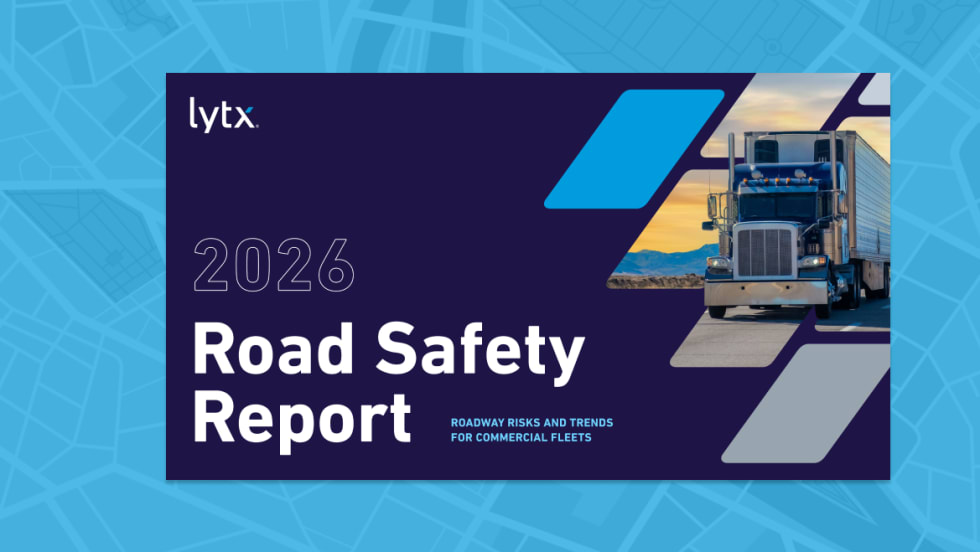
Lytx 2026 Road Safety Report

While serious crashes are declining, a rise in minor incidents and ongoing risk hotspots underscore the need for continued fleet safety investment.

Read More →
Ad Loading...
Driver’s hands on steering wheel in a sunlit vehicle, representing real-world driver behavior and the shift from data monitoring to hands-on training in fleet safety programs.
Safetyby Judie NuskeyApril 7, 2026

Behind-the-Wheel vs. Classroom Training: What Actually Changes Driver Behavior?

Fleets have more driver data than ever, so why isn't behavior changing? Training requires more than reports and coaching — it requires real-world practice.

Read More →
A person in a car on their phone behind the steering wheel.
Safetyby Jeanny RoaApril 1, 2026

Distracted Driving in the Age of Smart Tech – Part 1

A two-part conversation with Stefan Heck on how AI is transforming the fight against distracted driving. As fleets adopt smarter tools, the focus shifts from reacting to preventing risk. In Part 1, we look at where AI is making an impact for fleets today.

Read More →
Pedestrians crossing a busy street, highlighting the importance of driver awareness and caution to prevent pedestrian accidents.
Safetyby StaffMarch 30, 2026

Pedestrian Safety Starts With the Driver

More people on foot means more risk for drivers. These pedestrian safety tips can help prevent serious injuries and keep everyone safer on the road.

Read More →
Ad Loading...
SponsoredMarch 30, 2026

Safety by Design: Power and Protection in the Freightliner 114SD Plus

Fleet managers are under pressure to reduce accidents, control costs, and improve operational efficiency. See how advanced vehicle safety technologies are helping fleets operate smarter and safer.

Read More →