





Dive Deeper: Autonomous Vehicles: No Safety Without Security
A Fourth Traffic Light for Driverless Cars?
North Carolina State University's study explored a new traffic light concept that would allow autonomous vehicles to help traffic flow.
February 8, 2023
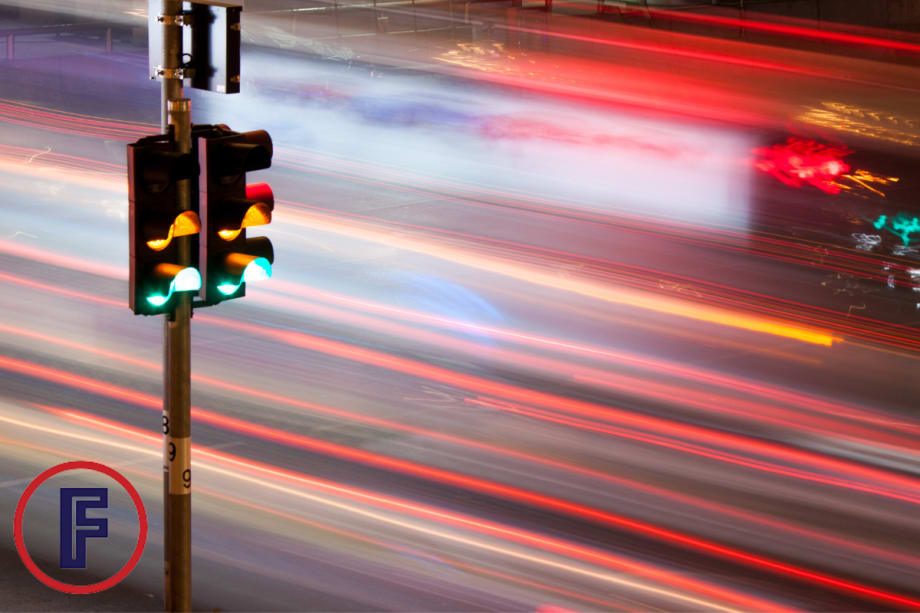
NC State's "white light" proposal is an indicator that AVs are coordinating their movement to facilitate traffic.
Photo: Fleet Forward/Canva
4 min to read
Transportation engineers at North Carolina State University are now proposing a “white light,” which would enable autonomous vehicles to help control traffic flow, according to the university's news release.
In computational simulations, the new approach improves travel time through intersections and reduces fuel consumption.
“This concept we’re proposing for traffic intersections, which we call a ‘white phase,’ taps into the computing power of autonomous vehicles (AVs) themselves,” said Ali Hajbabaie, corresponding author of the paper. “The white phase concept also incorporates a new traffic signal, so that human drivers know what they are supposed to do. Red lights will still mean stop. Green lights will still mean go. And white lights will tell human drivers to simply follow the car in front of them.”
A New Light
The white phase concept relies on the fact that it is possible for AVs to communicate wirelessly with both each other and the computer controlling the traffic signal. When enough AVs are approaching the intersection, this would activate the white light, according to the research.
The white light is a signal that AVs are coordinating their movement to facilitate traffic through the intersection more efficiently. Any non-automated vehicles would be required to follow the vehicle in front of them. If the car in front of them stops, they stop. If the car in front of them goes through the intersection, they go through the intersection.
When too many vehicles approaching the intersection are being controlled by drivers, rather than AVs, the traffic light would revert to the conventional green-yellow-red signal pattern.
“Granting some of the traffic flow control to the AVs is a relatively new idea, called the mobile control paradigm,” Hajbabaie said. “It can be used to coordinate traffic in any scenario involving AVs. But we think it is important to incorporate the white light concept at intersections because it tells human drivers what’s going on so that they know what they are supposed to do as they approach the intersection.
“And, just to be clear, the color of the ‘white light’ doesn’t matter. What’s important is that there be a signal that is clearly identifiable by drivers.”
The researchers first introduced a “white phase” traffic intersection concept in 2020. However, that initial concept relied on a centralized computing approach, with the computer controlling the traffic light being responsible for receiving input from all approaching AVs, making the necessary calculations, and then telling the AVs how they should proceed through the intersection.
“We’ve improved on that concept, and this paper outlines a white phase concept that relies on distributed computing – effectively using the computing resources of all the AVs to dictate traffic flow,” Hajbabaie said. “This is both more efficient and less likely to fall prey to communication failures. For example, if there’s an interruption or time lag in communication with the traffic light, the distributed computing approach would still be able to handle traffic flow smoothly.”
The Testing Phase
To test the performance of the distributed computing white phase concept, the researchers made use of microscopic traffic simulators. These simulators are computational models designed to replicate real-world traffic, down to the behavior of individual vehicles. Using these simulators, the researchers were able to compare traffic behavior at intersections with and without the white phase, as well as how the number of AVs involved influences that behavior.
“The simulations tell us several things,” Hajbabaie said. “First, AVs improve traffic flow, regardless of the presence of the white phase. Second, if there are AVs present, the white phase further improves traffic flow. This also reduces fuel consumption, because there is less stop-and-go traffic. Third, the higher the percentage of traffic at a white phase intersection that is made up of AVs, the faster the traffic moves through the intersection and the better the fuel consumption numbers.”
When only 10-30% of the traffic at a white phase intersection was made up of AVs, the simulations found there were relatively small improvements in traffic flow. But as the percentage of AVs at white phase intersections increased, so did the benefits.
“That said, even if only 10% of the vehicles at a white phase intersection are autonomous, you still see fewer delays,” Hajbabaie said. “For example, when 10% of vehicles are autonomous, you see delays reduced by 3%. When 30% of vehicles are autonomous, delays are reduced by 10.7%.”
Not Quite Ready
The researchers acknowledge that AVs are not ready to adopt the new distributed computing approach tomorrow, nor are governments going to install brand-new traffic lights at every intersection in the immediate future.
“However, there are various elements of the white phase concept that could be adopted with only minor modifications to both intersections and existing AVs,” Hajbabaie said. “We also think there are opportunities to test drive this approach at specific locations.
“For example, ports see high volumes of commercial vehicle traffic, for which traffic flow is particularly important. Commercial vehicles seem to have higher rates of autonomous vehicle adoption, so there could be an opportunity to implement a pilot project in that setting that could benefit port traffic and commercial transportation.”
More Fleet Forward

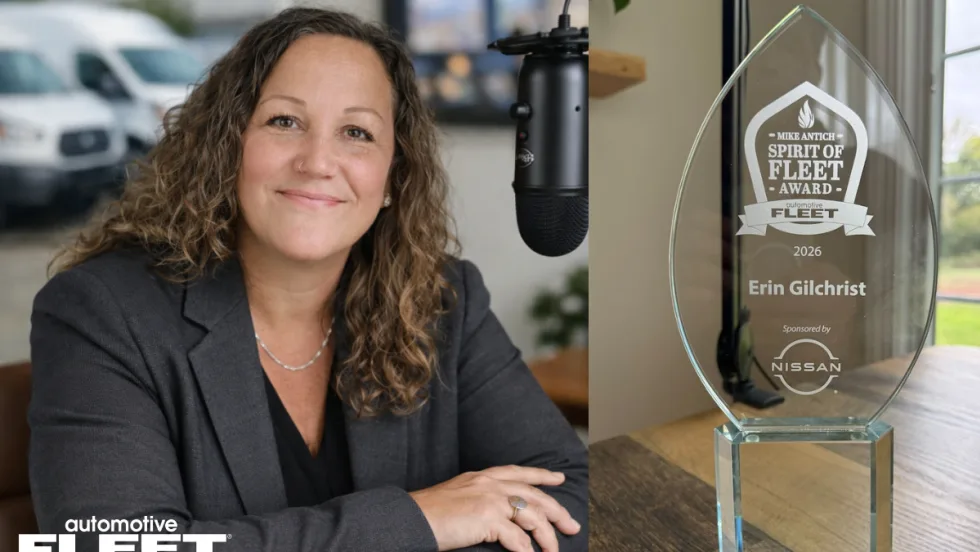
Erin Gilchrist Receives Mike Antich Spirit of Fleet Award
Last week at AFLA in Vegas, Erin Gilchrist received the inaugural, brand-new Spirit of Fleet Award.
Read More →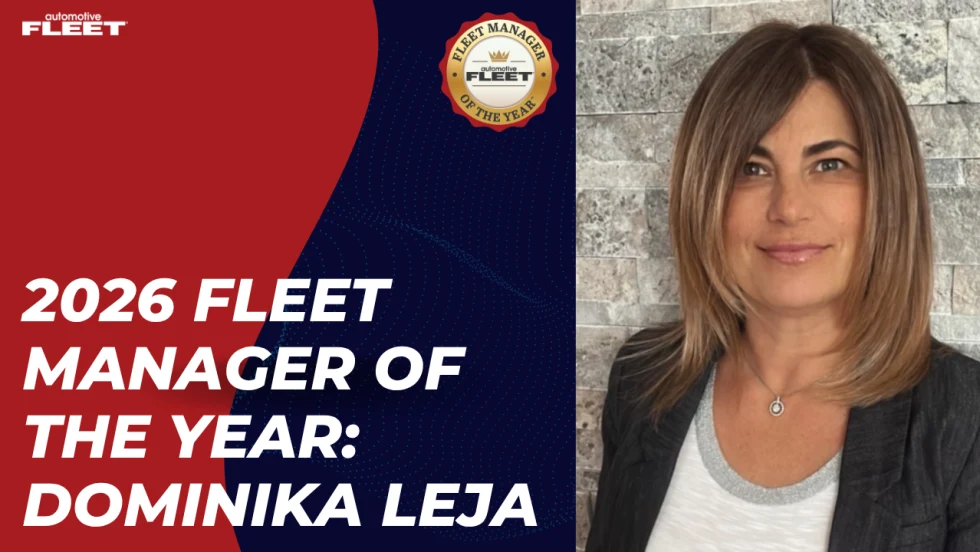
Dominika Leja Named the 2026 Fleet Manager of the Year
The AstraZeneca associate director of fleet was recognized for her leadership in fleet electrification, cost savings, and operational transformation.
Read More →
Jamie McKay Named the 2026 Fleet Visionary Award Winner
The Aptive Pest Control fleet manager was recognized for her approach to operations, data, lifecycle management, and driver needs.
Read More →
Fleet Forward Conference Introduces One-Day Passes for 2026
New one-day registration gives fleet professionals the flexibility to attend Tuesday, Wednesday, or Thursday, with passes available for $199 through Sept. 18.
Read More →
Vibe Coding: When Fleet Managers Become Software Builders
Five fleet professionals — none with programming skills — discuss how they’re using AI to build fleet solutions in-house and in a fraction of the time.
Read More →
Fleet Forward Conference Tackles Fleet Industry’s Growing Leadership Gap
This session will examine succession planning, knowledge transfer, and the skills the next generation of fleet leaders will need as veteran professionals leave the industry.
Read More →
2026 Fleet Manager of the Year Finalists Announced
Who are the 2026 Fleet Manager of the Year finalists?
Read More →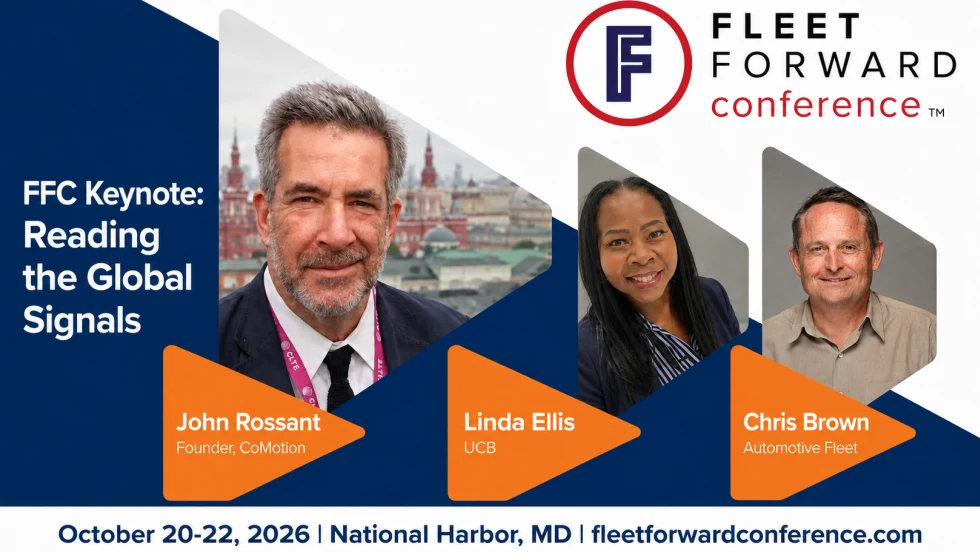
John Rossant to Deliver Opening Keynote at 2026 Fleet Forward Conference
The CoMotion founder will draw on developments across Europe, China, the Middle East, and other international markets to identify trends that could influence how U.S. fleets plan for the coming decade.
Read More →
How to Build Custom Fleet Tools With AI and Vibe Coding [Webinar]
A new Automotive Fleet webinar explores how fleet managers are using AI and vibe coding to automate routine work and create simple operational tools without traditional programming skills.
Read More →