





Read More: How to Avoid Wrong-Way Drivers
500 People a Year Die in Wrong-Way Crashes
Wrong-way crashes are up across America, resulting in higher fatality and injury rates than other collisions. A new solution from Michelin DDi aims to help both drivers and road authorizes tackle this serious roadway hazard.
March 31, 2023

Michelin DDi’s new Wrong Way solution detects and locates wrong-way driving events, and also provides precise information on the point of entry, the distance, and the duration of the incident.
Photo: Michelin DDi
4 min to read
For the past few previous decades, on average approximately 350 people were killed each year nationwide in wrong-way freeway crashes, according to one analysis based on the National Highway Traffic Safety Administration's (NHTSA) Fatal Accident Reporting System. From 1996 through 2000, 1,753 people died in wrong-way crashes on the nation's freeways and thousands more were injured.
However, more recent data suggests the problem is mounting. Between 2015 and 2018, there were 2,008 deaths from wrong-way crashes on highways, averaging 500 per year, according to NHTSA’s Fatality Analysis Reporting System (FARS) database. This is a 34% increase from the last reported figures of 375 deaths annually between 2010 and 2014.
What’s behind this deadly trend and what can stakeholders do about it?
Culprits: Impaired, Elderly, Distracted Drivers
Wrong-way crashes occur when a driver accidentally steers the vehicle into the opposite direction of travel, colliding with cars traveling in the correct direction. Experts say these accidents are most likely to occur as a driver enters a freeway using the exit ramp, but they can also occur at low speeds on city streets.
Alcohol impairment is the most common reason drivers cause a wrong- way collision. Research from the National Transportation Safety Board (NTSB) indicates that over half of all wrong-way crashes involve an intoxicated driver. In many cases, drink drivers in these kinds of collisions have a significantly high blood alcohol level — having consumed twice the legal limit or more.
For example, in 2021, after several years of research using cameras to capture roadway activity, the Iowa Department of Transportation found that approximately 60% of wrong-way driving was alcohol related, according to a report by Route Fifty. Moreover, wrong-way driving crashes have higher fatality rates than other collisions — 1.34 deaths per incident, versus 1.1 for all other car crashes.
Elderly drivers pose yet another risk — research shows they are responsible for causing about 15% of wrong-way collisions, according to data from Griffith Law. This could be due to vision problems, dementia, or physical limitations that prevent them from correcting a mistake quickly enough to avoid a crash.
In addition, distracted drivers — like those fiddling with a cell phone — may merge against traffic, turn onto the wrong highway ramp, or drive the wrong way up a one-way street, notes the Griffith Law website.
Roadway Design Problems and New Solutions
Finally, while driver error is the most frequent cause of wrong-way crashes, vehicle malfunction or poor roadway design can also contribute to these crashes. For example, highway interchanges, especially cloverleaf and partial cloverleaf designs, can pose a risk of collisions if entrance and exit ramps are parallel. If highway entrances and exits occur at intersections, drivers turning left may accidentally turn too shallowly, placing them in the path of traffic rather than on the opposing side.
In recent years, companies and municipalities have tested various solutions to help curb the wrong-way driving problem. For example, in 2015, The Tampa Hillsborough Expressway Authority (THEA) launched a pilot project to test connected vehicle technology and data demonstrated that the initiative alerted 14 wrong-way drivers, preventing crashes. Moreover, in 2017, the Arizona Department of Transportation (ADOT) launched a new phone app that alerts motorists of nearby wrong-way drivers. The app is tied into ADOT's pilot I-17 wrong-way vehicle alert system, which uses thermal cameras to detect wrong-way vehicles on I-17 off-ramps.
Most recently, there is a new service from Michelin DDi designed to help identify the locations where wrong-way driving is happening. Known as Wrong Way, the service aims to help both drivers and authorities reduce the number of crashes — often deadly — due to wrong-way driving. Typically, these events lead to crashes that are head-on collisions and frequently involve several vehicles, resulting in multiple fatalities and severe injuries.
Because road design can be a key contributing factor to wrong-way driving, the new service was developed to help road managers by arming them with life-saving data and insights on wrong-way driving hotspots — empowering them to prevent further incidents in their network.
Here’s how the technology works. Based on data collected from more than 40 million connected drivers in North America, Michelin DDi provides actionable insights. The service not only detects and locates wrong-way driving events, but it also provides unique and precise information on the point of entry, the distance, and the duration of the incident.
Wrong Way enables road managers to identify and assess wrong-way driving issues in their network and empowers them to adopt a preventative approach by taking appropriate measures and allocating efficiently their resources to help eliminate potential issues.
The manufacturer of the solution views Wrong Way as an opportunity for municipalities and governments to identify wrong-way hotspots, which can help them act before crashes occur by implementing changes when road design or signage is involved in the identified areas. It is one step further towards Vision Zero by helping to reduce crashes as a result of wrong way driving events and save more lives.
More Safety

Sponsored•October 1, 2026
Fleet Manager’s Ultimate Playbook: Navigating the New Standard in OEM Connectivity
Rising operating costs, driver safety concerns, and unplanned downtime are putting unprecedented pressure on modern fleets. Discover how fleet managers use embedded OEM connectivity and real-time vehicle data to cut TCO, prevent downtime, and protect drivers without aftermarket telematics hardware.
Read More →
From Driver Well-Being to EV Charging | AF News Recap
Mental health belongs in the fleet safety conversation. This week, we’re looking at five ways fleets can support employee well-being before a crisis, plus Holman’s expansion in Mexico, new one-day Fleet Forward passes, and why EV charging demand is outpacing infrastructure growth.
Read More →
Nexar-Nauto Merger Aims to Give Fleets Better Safety Intelligence Through Larger Driving Dataset
Stefan Heck tells Automotive Fleet that combining more than 10 billion miles of driving history with Nexar's AI models will give fleets deeper insights into driver risk and roadway conditions than either company could provide independently.
Read More →
Don't Wait for a Crisis: 5 Ways to Build Mental Health Into Your Fleet Safety Program
For Suicide Prevention Month, fleet and safety leaders have an opportunity to put mental health where it belongs: at the center of workplace safety.
Read More →
How Camera Data Can Strengthen a Fleet’s Insurance Renewal
Insights from a commercial insurance carrier and a broker show how fleets can turn video telematic data, driver coaching, and improved claims results into a stronger case at insurance renewal.
Read More →
The Safest Fleets Aren’t the Ones with the Most Technology
You’ve made the telematics investment. Here’s how to capture the other half of its value and build the safest fleet on the road.
Read More →
Sponsored•August 7, 2026
Hidden in Plain Sight: Fleet Compliance Risks
Fleet compliance isn't just about having policies — it's about consistently enforcing them. This practical guide reveals six hidden compliance risks common in public sector and shared fleet operations and outlines proven strategies to improve visibility, accountability, and audit readiness
Read More →
NETS Sets 2026 Fleet Safety Benchmark Conference for Indianapolis
The Sept. 15–17 program will feature fleet benchmarking data, case studies, emerging technologies, and implementation strategies while running alongside the NSC Safety Congress & Expo.
Read More →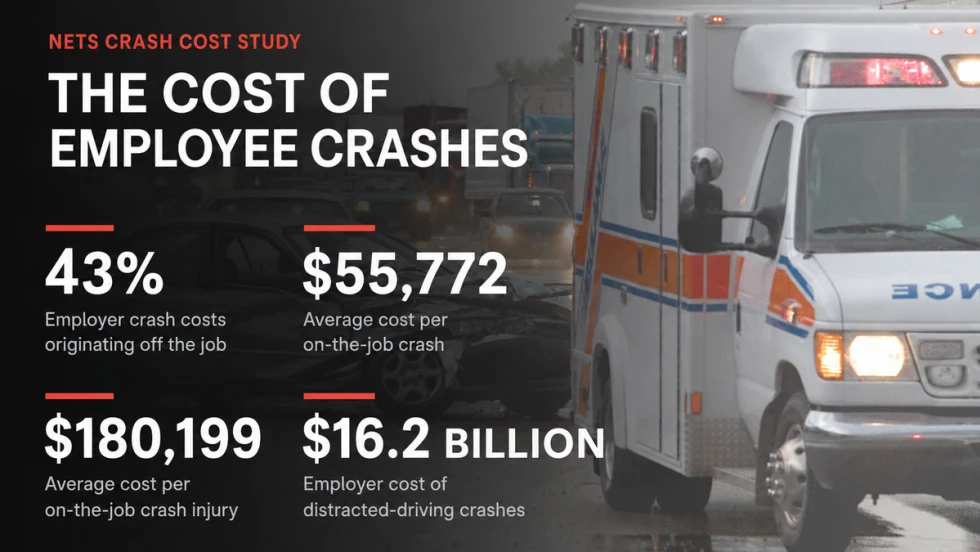
Off-the-Job Crashes Account for 43% of Employers’ $61.7 Billion Crash Burden
NETS quantifies costs dispersed across fleet, risk, HR, and other departments while providing new per-crash benchmarks for employers.
Read More →
Ram Recalls More Than 1.27 Million 1500 Pickups for Seat Belt Anchor Issue
The recall affects certain 2019-2026 Ram 1500 pickups that may have improperly attached second-row seat belt buckle anchors.
Read More →