




2015 Chevrolet City Express Van: GM's Mattman Details Project's Development
Learn more about GM’s strategy for the 2015 Chevrolet City Express in the fleet marketplace and what will differentiate it from the existing NV200.

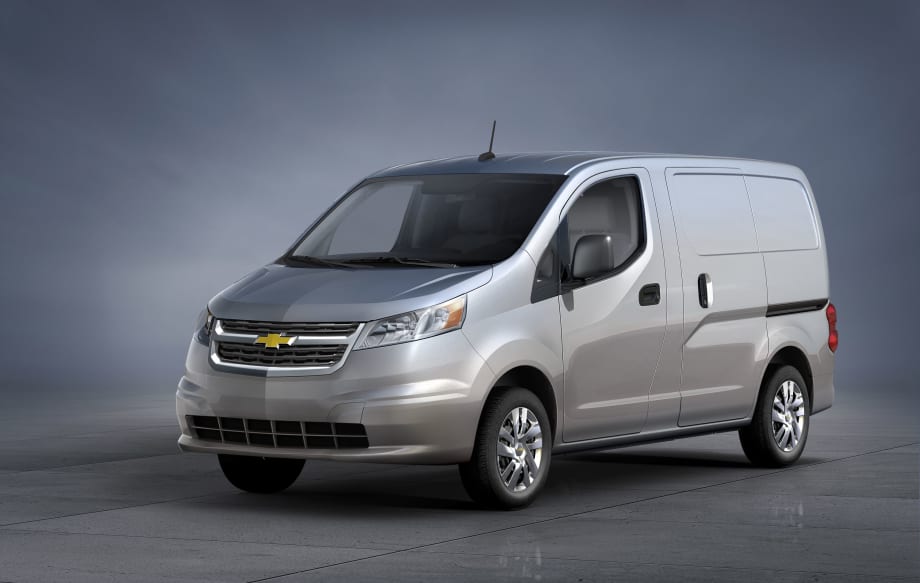
The 2015-MY Chevrolet City Express.
Photo: GM
General Motors recently announced it plans to source a new, compact cargo van from Nissan to fill this niche in its product lineup. The automaker plans to bring what it’s calling the Chevrolet City Express, based on the Nissan NV200’s platform, to the market in fall 2014 as a 2015 model-year vehicle.
Given that a number of automakers are introducing new compact cargo vans for the U.S. market, Automotive Fleet wanted to learn more about GM’s strategy for this vehicle in the fleet marketplace and what will differentiate it from the existing NV200. Automotive Fleet spoke with Joyce Mattman, General Motors’ director of commercial products, to find out.
With the development of a new category of smaller cargo vans in the U.S. Automotive Fleet first wanted to find out more about what motivated GM’s decision to enter this market segment by partnering with another OEM.
GM’s Mattman said the company looks at a number of factors when choosing a vehicle and platform for a specific niche in its product lineup. She said vehicle quality is the primary factor, but when selecting a vehicle for the fleet market, cost and ensuring fast order-to-delivery times are other key concerns. Finding a vehicle produced in North America was a major part of the company’s decision, according to Mattman.

GM's Joyce Mattman, director of commercial products for the automaker.
“As we look to fill a product gap, we definitely look at vehicles we have in other markets around the world,” she said.
Mattman noted that market size was also a factor in GM’s decision-making process for this vehicle.
“It’s not a huge market in the U.S., so it made sense to look at other OEMs for potential partnerships. This is commonly done in Europe,” she said. “Major factors are quality, cost and timing for a product that must meet customer needs.”
In choosing a vehicle, she said fuel economy and cargo capacity were two major factors the company considered, as was maneuverability in urban areas and parking lots.
As for differences between the NV200 and the 2015 Chevrolet City Express, Mattman said the look and some content will be different, though the base vehicle platform is the same.
“What we were really looking for in the design was that the Chevrolet vehicle would have a unique look and styling and that it would fit in with the entire Chevy portfolio,” Mattman said. “We redesigned everything from the A-pillars forward. We really felt the Nissan NV200 was contented very well. We do still have work to do, but you will see some packaging and content differences, designed for our customer base.”
For fuel economy, Mattman said it will be fairly close to what the Nissan NV200 offers (in the mid-20 mpg range), though there may be some differences.
“There may be some slight difference due to different sheet metal and content changes,” Mattman said. “It should be close.”
Because this is a 2015 model-year vehicle, there are still a number of specific features that GM’s Chevrolet brand has yet to work out, according to Mattman.
“Nissan’s NV200 is in its 2013 model-year. They’ve got a 2014 and 2015 model-year vehicle to bring out,” she said. “So Chevrolet’s 2015 features aren’t set in stone yet, but we’ll be working with Nissan.”
For the relatively new compact van segment, Mattman said GM is cautious but optimistic when asked whether it will grow. She noted that many companies, for example large service companies, have their technicians carrying much less product and less weight than they did in years past, which is allowing them to downsize to smaller vehicles.
“How much it grows remains to be seen,” Mattman said. “But I will tell you that we expect to see it go up some. As I mentioned, we have seen customers downsizing and shifting to different products, as their needs change and they look for more fuel-efficient products. We will definitely be watching this category.”
She added that although the compact van segment is relatively new, GM previously had a vehicle that filled a similar role in its commercial product lineup.
“GM had a vehicle that filled a similar role in its product lineup, the HHR panel,” Mattman said. “It was a surprise for us because it was designed for retail with a unique look and size. We looked at it for the commercial market and saw applications there. The market has been growing ever since. I wouldn’t be surprised if compact cargo van sales grow when you put this in the hands of Chevrolet dealers out there.”
As for the types of customers GM sees would be interested in this vehicle, Mattman listed a wide range of business types, from small to large.
“We’re thinking it would work for caterers, florists, the small-package delivery businesses, even companies that have services where they deliver interior cabinetry, or those that provide electrical services, or alarm companies,” she said.
She also noted that with many companies downsizing, this vehicle could work in the same role that some full-size vans filled in years past.
With the vehicle now officially in Chevrolet’s product pipeline, it’s now just a matter of time before it’s available to GM’s customers. The 2015 Chevrolet City Express is set to go on sale in the fall of 2014, according to Mattman.
More Operations

Fleet Has a Talent Pipeline Problem. What Comes Next? | AF News Recap
Where will fleet’s next generation of leaders come from? This week, we’re looking at the industry’s talent pipeline, what certification can add to a fleet career, how to build an award-worthy track record, and the return of Automotive Fleet’s Personal Use Survey.
Read More →
Smith System Launches Driver Risk Management Program
Fleets have more driver data than ever, but identifying risky behavior doesn't necessarily correct it. Smith System's new Driver Risk Management program combines monitoring, training, and follow-up coaching to help fleets connect risk signals with driver intervention.
Read More →
Automotive Fleet Opens 2026 Personal Use Survey for Commercial Fleet Managers
Less than two weeks left! Commercial and corporate fleet managers are invited to share how their organizations handle company vehicle personal-use policies, charges, and driver eligibility.
Read More →
From AI Prompts to AI-Generated Safety Songs | AF News Recap
Can better prompts make AI more useful for fleet managers? This week, we’re breaking down smarter fleet analysis, an AI-assisted experiment that turned safety training into music, and what happened to fuel prices in August.
Read More →
How to Write Better AI Prompts for Fleet Analysis
Include these six elements in your fleet prompts to generate more relevant analysis and accurate answers.
Read More →
Fleet Meets: Eric Kilgore
This edition of the Fleet Meets series features one of the industry's best leaders driving multi-market and national operations.
Read More →
Why Reactive Fleet Management Is Becoming Too Expensive to Sustain
Research highlights a growing need for proactive management strategies to address rising costs in fleet operations effectively.
Read More →
What Your Fleet KPIs Aren’t Telling You
Tracking fleet metrics is only useful when the data leads to better decisions. This guide helps fleet leaders assess cost, utilization, and downtime more accurately, identify performance gaps, and prioritize the actions that can improve operational results.
Read More →
Hidden in Plain Sight: Fleet Compliance Risks
Fleet compliance isn't just about having policies — it's about consistently enforcing them. This practical guide reveals six hidden compliance risks common in public sector and shared fleet operations and outlines proven strategies to improve visibility, accountability, and audit readiness
Read More →
Turning Fleet Payment Data into Executive Insights
Does data alone drive results in operations?
Read More →