





Related Photos: Toyota's 2016 Mirai
2016 Toyota Mirai (Fuel Cell)
The 2016 Mirai arrives as the first hydrogen-powered vehicle offered for sale in the U.S. market. Toyota's gambit is a bold one, especially considering the fact that fueling infrastructure remains in its infancy.
January 21, 2016
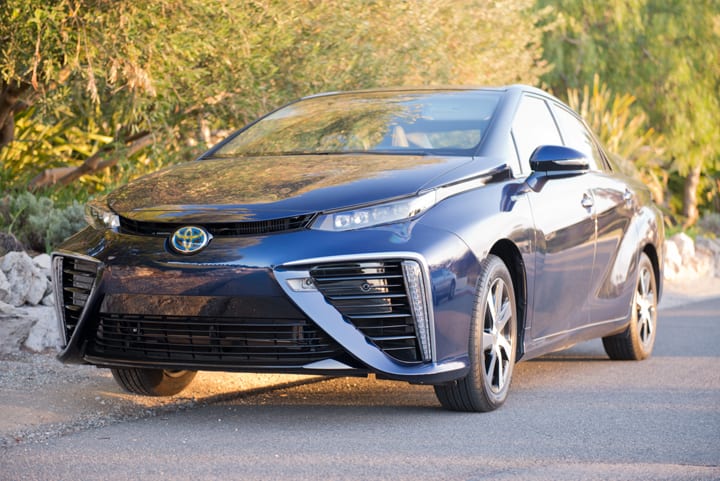
Photo by Vince Taroc.
3 min to read
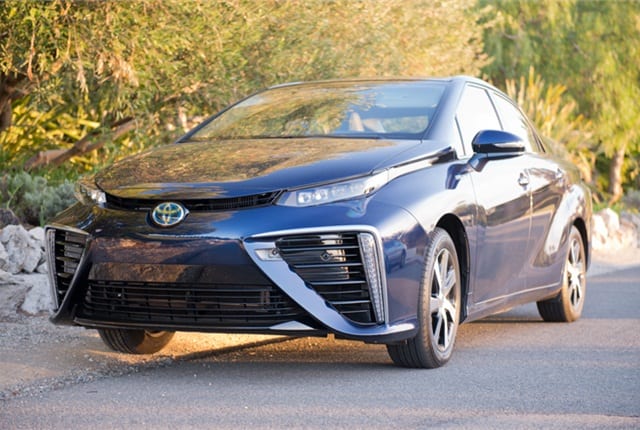
Photo by Vince Taroc.
Toyota has charged into the fuel-cell-powered future with its Mirai sedan, a nameplate carrying the Japanese word for "the future."
The 2016 Mirai arrives as the first hydrogen-powered vehicle offered for sale in the U.S. market. Toyota distributed more than 200 Mirai sedans to a pre-registered list starting in October with plans to sell another 2,800 in the next two years.
Up until now, manufacturers offered comparable vehicles such as the Honda FCX Clarity and Hyundai Tucson Fuel Cell with a retail lease and, in the case of Hyundai's compact SUV, complimentary access to fuel.
Toyota's gambit is a bold one, especially considering the fact that fueling infrastructure remains in its infancy. California has taken the lead in building out fuel stations. As of November, the state had spent $100 million to build 12 locations that dispense highly pressurized (10,000 psi) chilled H2 gas, the Los Angeles Times reported. Only four are commercial stations that allow a credit-card swipe for fuel that retails for $13.99 per kilogram. About four kilograms would fill the four tanks that feed hydrogen to the fuel stack to mix with oxygen prior to combustion, Toyota has told us.
Despite the experimental, emergent nature of the technology, some fleets have shown interest in hydrogen-fueled vehicles, including several government fleet managers who told us it could work as a motor pool car or command staff vehicle in the police department.
In November of 2014, Toyota shared its Mirai fleet strategy, which includes looking at commercial or government fleets with centralized fueling that want to send a green message to their communities or customers.
Fleet managers who drove the vehicle at Toyota's 2015 annual business meeting told us they were impressed with the technology, and mentioned that fueling challenges would likely delay adoption in fleets.
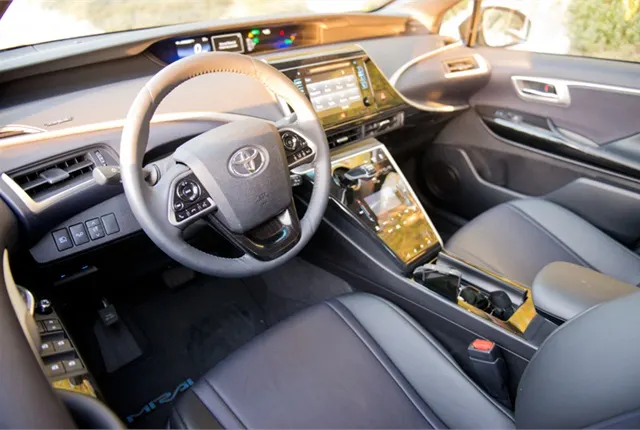
Photo by Vince Taroc.
Toyota's lower production volume makes the Mirai more of a niche vehicle at this point, but its zero-emission promise has drawn other automakers into the fray with plans to develop their own models to meet increasingly stringent federal emission standards.
The Mirai operates similarly to a gasoline-electric hybrid with the fuel-cell stack replacing the gasoline engine and delivers 151 hp. It uses the same 245-volt nickel-hydride battery found in the Toyota Prius. The Mirai's front end may remind you of a Camry, and length-wise it's similar (192.5 inches to the Camry's 190.9 inches).
Inside, you're transported to a flight-deck layout that may remind you of scenes from Star Trek episodes aboard the starship Enterprise. A strip of three screens line the top of the dashboard above the dash console to deliver an array of vehicle information. A triangular center stack provides a Prius-like shifter and touch controls for climate and seat heating shown on another display. The fifth screen serves as the home base for infotainment and navigation functions.
Like the Prius, the Mirai rolls up to speed after a silent start and quiet hum that builds with increasing speed. The vehicle handles nimbly around corners and moves through traffic with a sure grip on the road and responsive steering.
Other Mirai testers have tasted the water that's expelled from the tailpipe. Perhaps we'll try it next time. You can purge the system with an "H2O" button located to the left of the steering wheel, if you'd like to avoid water drips on your driveway overnight.
Subscribe to Our Newsletter
More Blog Posts

Fleet Review: 2026 Outback Is More SUV, Still an Outback
The redesigned Outback trades its station-wagon profile for a roomier, more conventional SUV shape while retaining the comfort and safety technology that give it fleet appeal.
Read More →
Why Should Fleets Choose the 2026 Mercedes-Benz GLC 300 SUV?
The GLC 300 offers corporate fleets attainable luxury, comfort, and practicality that transitions seamlessly to family duty.
Read More →
Fleet Review: Volvo EX90 & the Software-Defined Vehicle
Volvo’s new three-row electric SUV is designed for the corporate (and family) class.
Read More →
Fleet Review: Mercedes-Benz EQB 250+
With a reasonable entry point and the refinement of a Mercedes, The EQB 250+ defines “practical luxury” for fleets.
Read More →
Fleet Review: Volvo XC60 & XC90 PHEVs
Volvo’s XC60 and XC90 plug-in hybrid models are stylish, safe, sustainable — and surprisingly fast.
Read More →
Fleet Review: Volvo XC40 Recharge
The Volvo XC40 Recharge offers fleets the familiar premium Volvo experience, electrified.
Read More →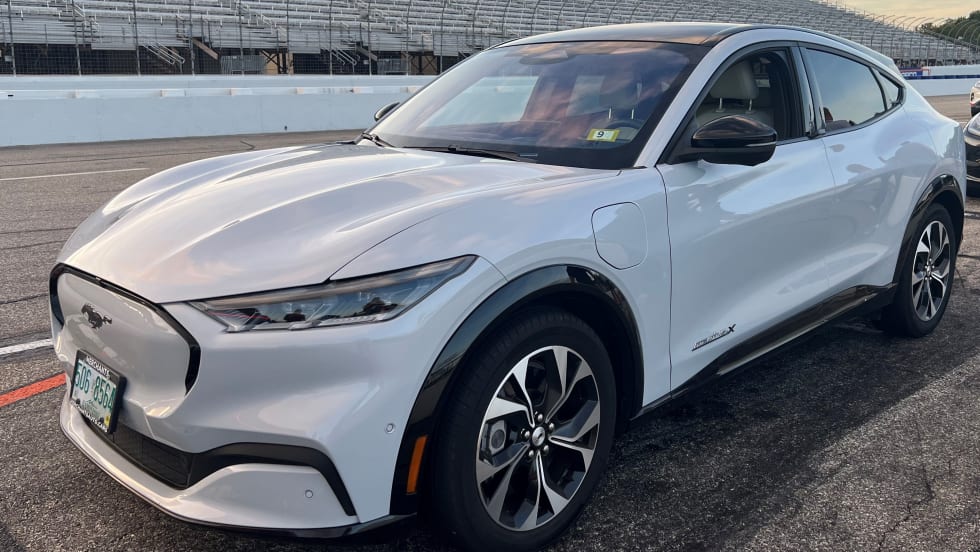
The 2023 Ford Mustang Mach-E Offers a Smooth Ride for New EV Drivers
A look at the bells and whistles on the car, plus how it drives, from the perspective of someone who’s never driven an EV.
Read More →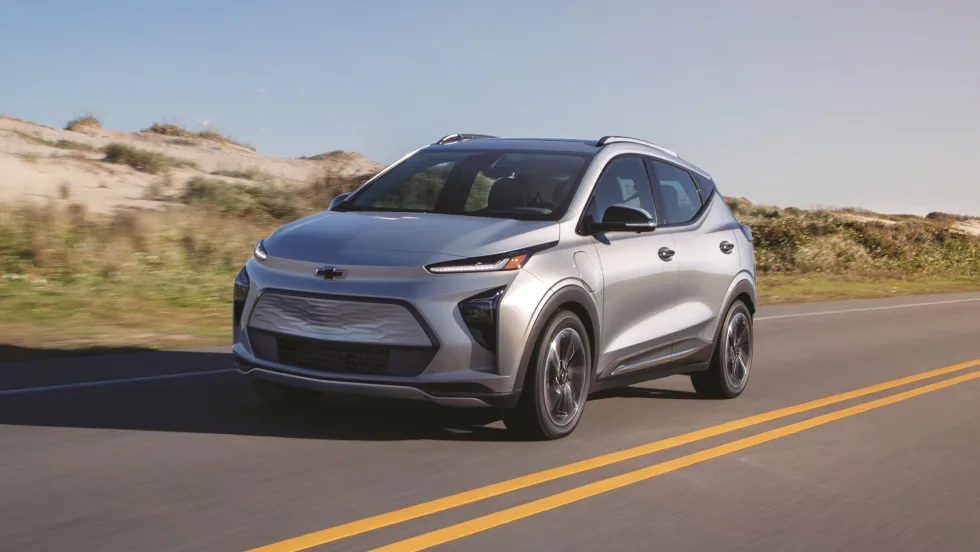
The 2022 Bolt EUV Lowers TCO While Meeting Sustainability Goals
The 2022 Bolt EUV expands Chevrolet’s EV lineup as a utility-type vehicle with a range of 250 miles on a full charge. It will be sold alongside the 2022 Bolt EV model. The Bolt EUV is approximately six inches longer than the Bolt EV.
Read More →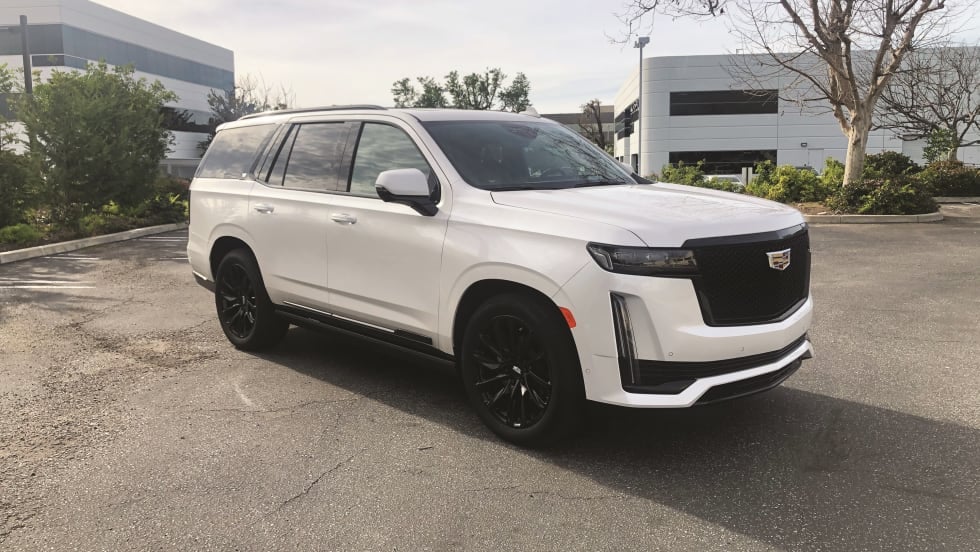
2021 Cadillac Escalade is C-Suite Material
The 2021 Cadillac Escalade 4WD Sport Platinum is the most expensive model sold by General Motors. But its brand cachet makes it the ideal pinnacle fleet vehicle to help retain high-value senior execs with a high-value luxury SUV.
Read More →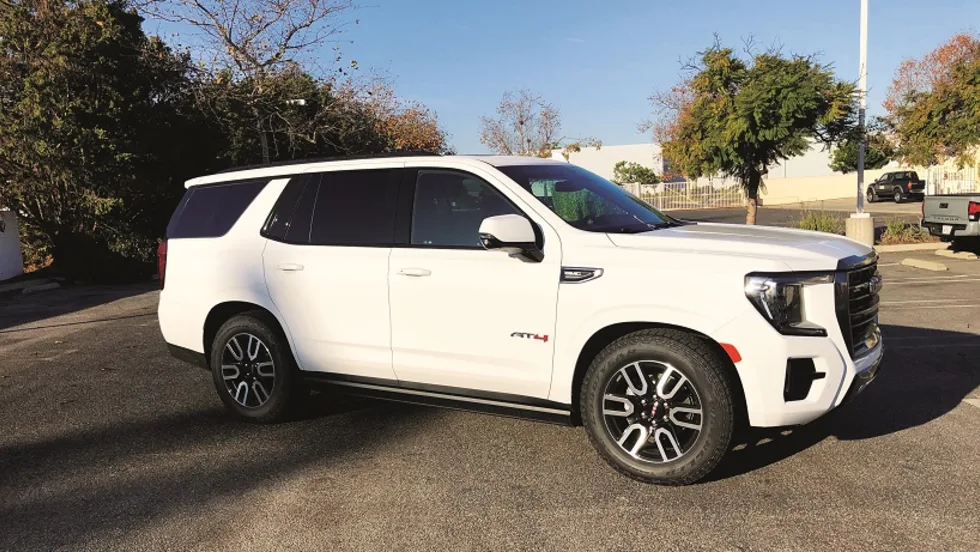
2021 GMC Yukon AT4 Excels as an Off-Road Crew Vehicle
Powered by a 5.3L V-8, generating 355 horsepower and 383 lb.-ft. of torque, the engine is paired to a10-speed automatic transmission. It is ideal for off-road work applications and can transport an eight-person work crew with tools and equipment.
Read More →