Automotive Fleet
MenuMENU
SearchSEARCH

Mike Antich

Former Editor and Associate Publisher

Mike Antich covered the fleet management and vehicle remarketing markets for over 20 years. Mike has written or edited over 5,000 articles on fleet management, manufacturer fleet activities, the fleet leasing industry, and vehicle remarketing during this period.

Mike was the editor and associate publisher for Automotive Fleet magazine. 

Mike was also actively involved with a variety of fleet and remarketing industry associations and was a long-time member of the board of directors for the Automotive Fleet & Leasing Association (AFLA). He served as AFLA's president from 2008-2009 and was reelected AFLA president in 2021-2022. He was also the chairman of the AFLA Globalization Committee, where he was instrumental in creating the first-ever Global Fleet Networking Consortium comprised of five international fleet associations.

He was also a member of the board of directors and an officer for the International Automotive Remarketers Alliance (IARA). He was the Alliance's long-time secretary and chaired its public relations committee. In addition, he was the past chairman of the IARA certification task force, which developed the industry's first-ever certification program for vehicle remarketers. 

In 2010, Mike was inducted into the Fleet Hall of Fame and inducted into the Global Fleet Hall of Fame in 2022. He also won the Industry Icon Award, presented by the IARA and NAAA.

Mike was an international speaker and has spoken at numerous industry conferences, client advisory councils, and fleet sales meetings.

He passed away on Dec. 19, 2025. 

Market Trendsby Mike AntichJune 2, 2009

Fleets Stand Behind GM in Chapter 11, But Questions Linger

Automotive Fleet magazine conducted a survey of General Motors' largest commercial fleet customers, immediately following its June 1 announcement that it filed for voluntary Chapter 11 bankruptcy protection. Here's what these commercial fleet managers had to say.

Read More →
Market Trendsby Mike AntichMay 26, 2009

Short-Sighted Management: What Not to Do in a Recession

I am dismayed at the number of fleet managers who have lost their jobs due to corporate cutbacks. Similarly, I am amazed at the short-sightedness of today's senior management making these decisions without regard to the implications of lesser-qualified individuals managing one of their largest asset classes. I predict that companies that downgrade the expertise of their in-house management will be on the wrong side of history and will be the poster children of what not to do in a recession.

Read More →
Market Trendsby Mike AntichMay 19, 2009

OEM Parts Prices Increase as Parts Availability Decreases

Slow retail sales have prompted not only closure of assembly plants, but also component factories, which is delaying parts deliveries. OEMs are also hiking parts prices, with some experiencing double-digit percentage increases.

Read More →
Ad Loading...
Market Trendsby Mike AntichMay 12, 2009

The Dangers of Extending Replacement Cycles

Vehicle replacement policy is one of the most critical aspects of fleet management. Nearly all fleet-related expenses, both fixed and operating, are influenced by when a vehicle is replaced. In a recessionary economy, senior management demands expense reductions and there is pressure to defer vehicle replacements. However, such a policy change could actually prove to be counterproductive to the intended goal.

Read More →
Market Trendsby Mike AntichMay 4, 2009

Put Your Fleet on a Diet

Vehicles get better fuel mileage when not loaded with unnecessary weight. An extra 100 lbs. in a vehicle could reduce mpg up to 2 percent. Typically, the chief culprit responsible for accumulating unnecessary weight is drivers. Over the course of a vehicle assignment, drivers accumulate a "cargo" of dated sales materials, point of sale demos, and seldom-used tools carried in trunks, storage bins, and back seats. You'd be surprised how quickly lbs. add up.

Read More →
Articlesby Mike AntichMay 4, 2009

9 Mistakes to Avoid When Playing 'Musical Cars'

Many of those millions laid off during this recession’s corporate downsizings drove company cars. The process of reassigning vehicles retrieved from terminated employees can lead to errors. Here’s how to avoid them.

Read More →
Ad Loading...
Articlesby Mike AntichApril 22, 2009

Medium-Duty Operating Costs Increase in 2008-CY

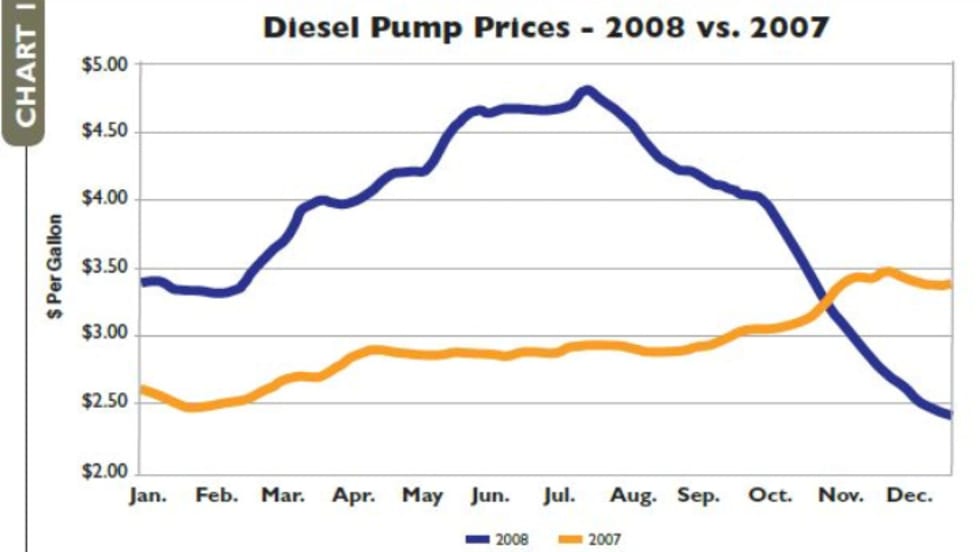
The biggest factor behind the spike in medium-duty operating costs was the increase in diesel prices, which jumped 32 percent from the then-historical high in 2007. Other factors included increased labor rates and higher taxes.

Read More →
Market Trendsby Mike AntichApril 21, 2009

10 Traits of Successful Commercial Fleet Managers

Show me a well-run fleet and I will show you a top-notch fleet manager. A fleet manager validates his or her importance by cost-effectively managing corporate assets and controlling the expenses associated with operating these assets. Although each fleet is unique, there are common traits found among successful commercial fleet managers. Here are 10 management traits that ensure a fleet is operating at the optimum level.

Read More →
Market Trendsby Mike AntichApril 13, 2009

Medium-Duty Operating Costs Increase in 2008-CY

Key factors that influenced medium-duty truck operating costs in 2008 were the price of diesel, increased repair costs related to new truck technologies, higher labor rates, and decreased utilization. However, fuel was the primary driver behind higher operating costs in the 2008 calendar-year.

Read More →
Ad Loading...
Market Trendsby Mike AntichApril 6, 2009

Dual Sourcing Re-examined as Supplier Reliability Comes into Question

The jaw-dropping events of the past six months have made an indelible impression on many fleet managers. The very real possibility that two of the Detroit 3 could quickly (and unexpectedly) enter into Chapter 11 bankruptcy protection, along with some fleet management companies not accepting new-vehicle orders, has caused some corporations (especially those sole sourcing) to reassess sourcing strategies.

Read More →