




What’s the Next Evolution of the Work Van?
Inside the Mercedes-Benz Vans Future Transportation North America workshop, Nick Tempelhoff has some thoughts.

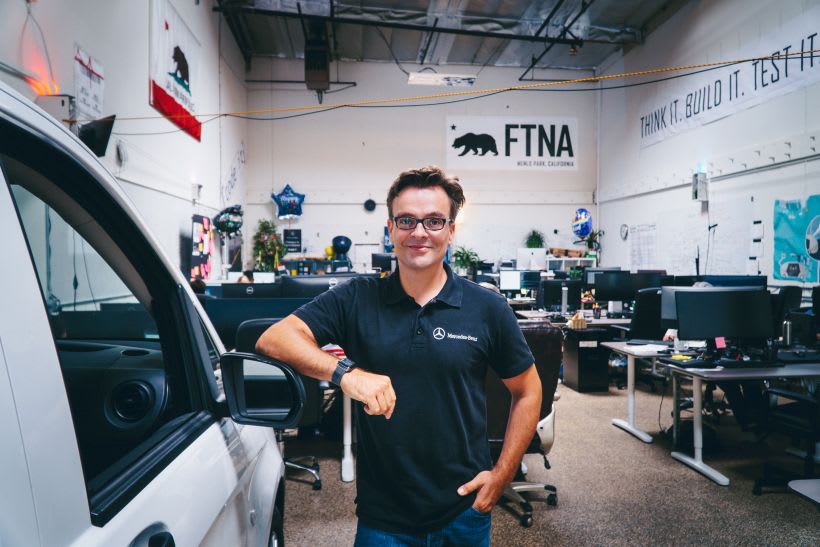
Nick Tempelhoff, head of Mercedes-Benz Vans Future Transportation North America, and his team of engineers are tasked with creating a modern work van that integrates with telematics, ERP systems, and peer-to-peer sharing models to drones completing “last-meter” deliveries. “It’s not enough to have a box on wheels anymore, we need to think beyond just selling a van,” Tempelhoff says.
Photo courtesy of Mercedes-Benz.
This is not your typical automaker’s office environment. Walking up from the parking area, the nondescript row of loft-garages could be any suburban office park in America. But this is Menlo Park in Silicon Valley, where history tells us never to underestimate what comes out of a garage.
For Nick Tempelhoff, that’s the point — this is where Mercedes-Benz Vans Future Transportation North America needs to be. Some three years ago, “We came out here because a lot of these technologies, and a lot of the talent, are coming from this part of the world,” he says.
Tempelhoff’s team of 30 engineers is tasked with “merging AI (artificial intelligence) into sheet metal in a fairly traditional industry,” as he puts it.
For parent company Daimler AG, the mission extends beyond designing and building Mercedes-Benz Sprinter and Metris vans. The van itself is becoming a hub in an ecosystem that integrates with everything from telematics, ERP systems, and peer-to-peer sharing models to drones completing “last-meter” deliveries. “It’s not enough to have a box on wheels anymore, we need to think beyond just selling a van,” Tempelhoff says.
Inside, the lab has the chaotic feel of a startup crossed with a Popular Mechanics workshop. Project vans are nestled next to work stations, where vehicle parts, motherboards, and electronic components are tinkered with and set aside for future hacking, testing, and rigging.
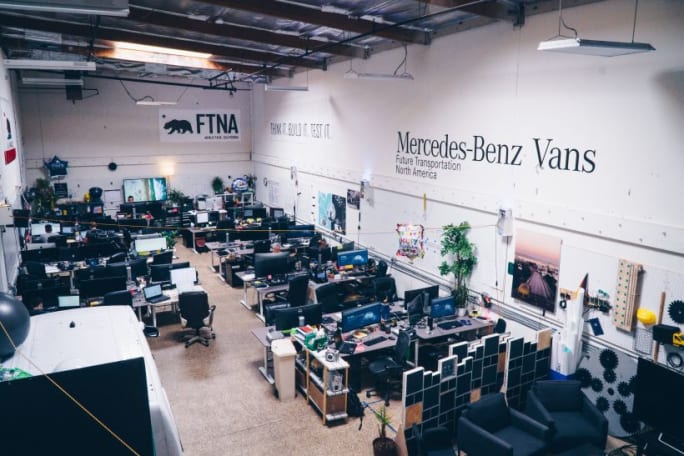
The Mercedes-Benz Vans Future Transportation North America headquarters in Menlo Park, Calif. intersects the tech world of Silicon Valley with major automotive manufacturer product development.
Photo courtesy Mercedes-Benz.
In designing tech systems for the vans, all the new buzzwords come into play: autonomous technology, Big Data, Internet of Things (IoT), AI, and machine learning. But Tempelhoff is quick to point out that technology implementation needs to deliver a tangible ROI, especially in the field of commercial vehicles and if it comes to big fleets.
“Our job is to produce solutions that are not looking out 15 to 20 years from now, or even six years, but those that will happen in the near future,” he says.
The design-to-implementation process in automotive tech is traditionally fragmented, with teams handing off projects from incubation to implementation.
Not so in the Future Transportation Lab: “We’re given the liberty to invent, build out a product, and work with the end customer,” he says. “We’re testing technologies only weeks after we’ve come up with the ideas. We’re working with the drivers, couriers, and dispatchers to verify the product is contributing to their operations and to make sure we’re developing the right thing.”
While the lab’s mission may not be as splashy as that of Facebook, its crosstown neighbors, it is critical. The logistics industry is at a crossroads in which technology has not yet kept up with the exponential growth rate of courier, express, and parcel services, which contributed to the Christmas package delivery debacles in the U.S. in 2013 and the U.K. in 2017.
Highlighting that point, the visit is punctuated by a rotation of couriers arriving at the lab with packages.
With this urgency, the lab is finalizing technology that will “change the game” in last-mile logistics. The system turns the van into an intelligent and connected cargo space — yet the program is still so closely guarded that further details can’t be divulged here.
Tempelhoff will deliver a plenary session at the 2018 Fleet Forward Conference, where he’ll address these big picture trends, challenges, and solutions for fleets when it comes to last-mile logistics. As well, for the first time in North America, Mercedes-Benz Vans Future Transportation North America will reveal and demonstrate this new technology for attendees.
"Logistics is often undervalued and overlooked, but there are really exciting applications for this technology,” Tempelhoff says. “Every second you eliminate from a particular process through automation, you provide millions of dollars of savings to these large companies. That’s where the ambition is.”
The Fleet Forward Conference, dedicated to mobility solutions for fleets, convenes Oct. 8-10 at The Pearl in San Francisco.
More Vehicle Research
2027 Toyota Camry Offers Hybrid Powertrain Across Five Grades
The 2027 Toyota Camry is a carryover with new pricing.
Read More →
Chevrolet Updates 2027 Trax and Trailblazer with More Standard Safety Features
Chevrolet is updating two of its smallest SUVs with added driver-assistance technology, redesigned interiors, and revised trim options. The changes could add more safety equipment as standard for commercial fleets, while a new Trailblazer configuration adds another all-wheel-drive option.
Read More →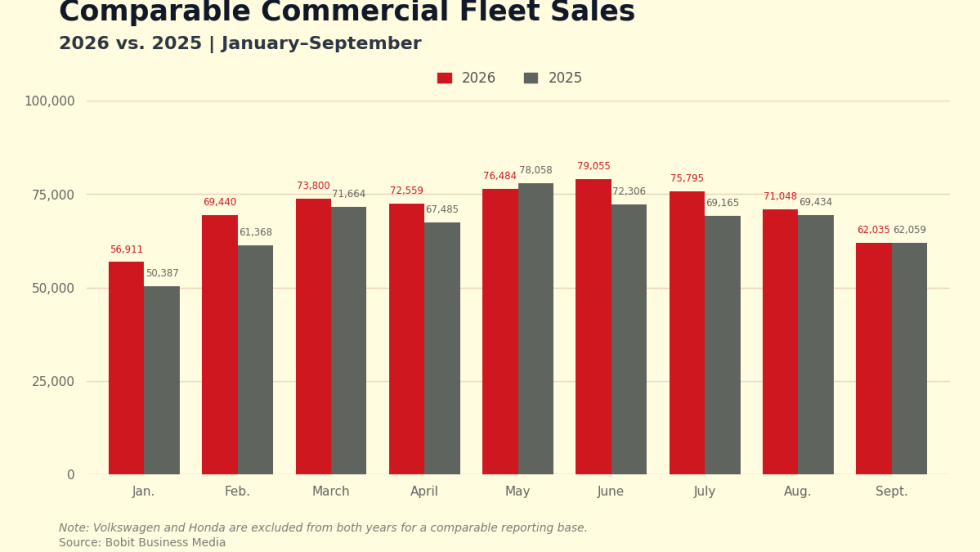
Commercial Fleet Sales Rise 5.8% Through September 2026
September commercial fleet sales were essentially unchanged from a year earlier, slowing year-to-date growth while keeping volume ahead of 2025.
Read More →
Hall of Fame Inductee: John Dmochowsky
The longtime Mondelēz International fleet executive joins the Automotive Fleet Hall of Fame.
Read More →
Hall of Fame Inductee: Lee Miller
After more than four decades at Boehringer Ingelheim, Lee Miller leaves a legacy built on fleet expertise.
Read More →
Hall of Fame Inductee: Mark F. Petersen
From managing fleets of thousands of vehicles to advancing safety and mentoring fellow professionals, Mark F. Petersen made his mark across both the corporate and supplier sides of fleet.
Read More →
When Charger Downtime Becomes a Fleet Availability Problem
As EV deployments move beyond pilot programs, charger reliability can directly affect vehicle readiness, driver productivity and route scheduling.
Read More →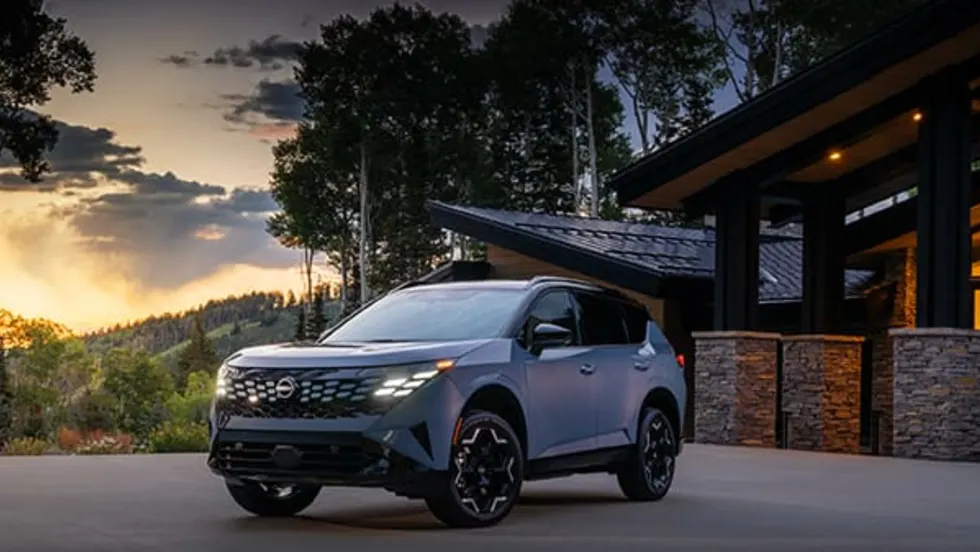
2027 Nissan Rogue Hybrid Adds e-POWER, Standard AWD
The new Rogue Hybrid uses Nissan’s e-POWER system with dual electric motors, offers an estimated 40 mpg and starts at $35,490.
Read More →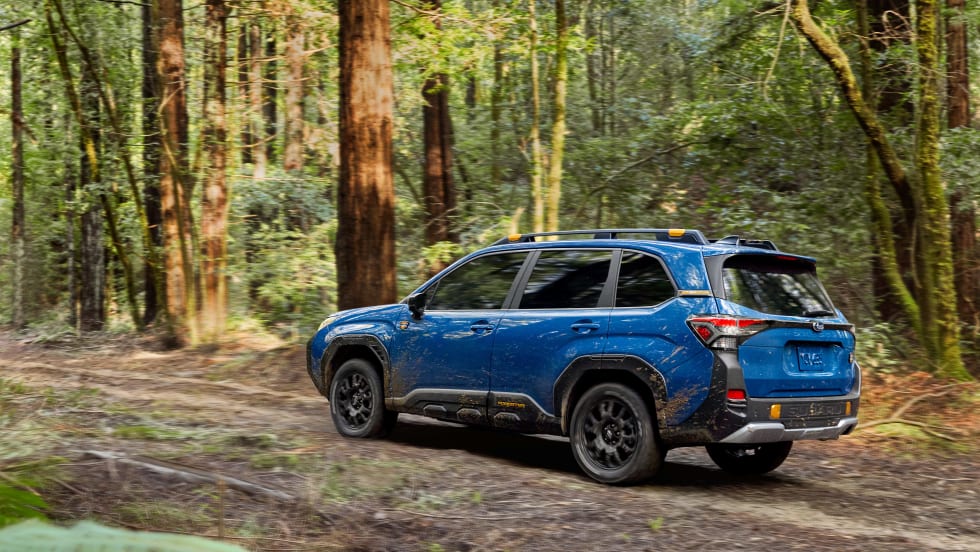
2027 Subaru Forester Adds First Wilderness Hybrid
The 2027 Forester lineup starts at $29,995 and adds a Wilderness Hybrid with 194 combined horsepower and 9.3 inches of ground clearance.
Read More →
EV Realty Names Henrik Holland President as Charging Platform Expands
The former Prologis Mobility and Shell executive will help expand EV Realty’s truck charging business and move its power-first infrastructure model into autonomous vehicle depots and other fleet sectors.
Read More →