





Dig Deeper: More Than Half of U.S. Trucks Use Advanced Diesel Technology
What's the Early Report on the New 2008 Diesel Engines?
Questions linger regarding the reliability and serviceability of the new powertrain’s emissions systems. However, the technology isn’t all that new; with a proven history of reliability, it is designed to minimally impact drivers and serviceability.
May 1, 2007

Reports on diesel engines for 2008 covers new tech and complexities.
Photo: Work Truck/Canva
8 min to read
New 2008-model diesel truck sales have gotten off to a slow start, with many fleets still having little or no experience with the trucks’ sophisticated new emissions systems. As a result, questions and concerns regarding the new powertrains continue to linger in many fleet operators’ minds.
Typically, the queries relate to the reliability/durability and serviceability of the new powertrains, as well as their impact on drivers. Still, as fleets come to grips with the new models, they’re apt to find their concerns largely overstated.
The new emissions technology, for example, isn’t all that new. It has a proven history of reliability. And it is designed for minimal impact on drivers and serviceability.
2004 Experience Raises Quality Issues
To be sure, this year’s emissions technology is fairly complex. With minor variances, it is pretty much the same for light- and medium-duty diesels, which all must meet the same regulations. Light-duty engines also have unique onboard diagnostic (OBD) requirements.
Along with a diesel particulate filter (DPF), which captures and burns off soot, various sensors also are used to monitor exhaust before it reaches the filter, as well as afterward, to ensure the engine is operating properly to protect the after-treatment system from damage.
An engine control system monitors the pressures and temperatures across the filter and, at the appropriate time, creates the conditions necessary to initiate and control “regeneration” or filter cleaning, according to Don Altermatt, director of diesel engine engineering at the Chrysler Group, Auburn Hills, Mich.
Such complexity is enough to give pause to many fleet managers — particularly those who endured reliability problems resulting from emissions changes on 2004 and later-model vehicles.
As one major beverage fleet operator said, “We had a myriad of issues with different manufacturers regarding the performance of components such as turbochargers and exhaust gas recirculation (EGR) systems in the wake of ’04.”
Most of these issues centered on Class 6 and higher truck engines, but they also included some light-duty vehicles.
“The manufacturers somewhat rushed the technology to market in 2004, the beverage fleet operator added. “I wonder how the reliability and performance of 2004 technology will impact 2007.”
In addressing such concerns, company officials point out that the after-treatment technology used in 2008 models isn’t new, and they’ve had ample time to validate its reliability and durability.
International Truck & Engine Group, headquartered in Melrose Park, Ill., for example, has used particulate filters as part of its “green diesel technology” in school buses since 2002, according to company officials.
“We feel very confident with the use of filters,” said Geoff Stigler, the company’s director of sales and marketing.
For the most part, this year’s engines, although they include some updated designs, are also “basically the same” as last year, as Alan Hertzog, director of technical training for the North American Institute, pointed out.
The big change is in the aftertreatment systems, he added.
The North American Institute trains mechanics for Mack Trucks Inc., and Volvo Trucks North America.
As key elements of their design, the new powertrains continue to use variable geometry turbochargers and exhaust gas recirculation (EGR) systems — components the industry has spent the past three years refining and improving.
As International’s Stigler noted, “They’re considerably more reliable than they have been in the past.”
New powertrains are also subject to considerably more extensive testing than ever before, according to manufacturers such as Portland, Ore.-based Freightliner LLC, whose 2008 engines were “extensively tested,” according to the company’s spokesperson.
Again, International’s MaxxForce 7 engine, for example, has undergone 80,000 hours of dynamometer testing — more than twice the norm — and 6 million miles of on-road testing, said Stigler.
OEMs Address Operating Concerns
As indicated, a key feature of the new particulate filters is that they must burn off soot accumulated during a process of regeneration/cleaning.
In 99 percent of applications, the process occurs automatically, requiring no driver intervention.
Basically, the filter is regenerated automatically by the heat or elevated temperatures produced in the truck’s exhaust system during normal city or highway driving.
The Chrysler Group, for example, says the particulate filter used with the Cummins 6.7L B-series six-cylinder diesel in its various Dodge trucks is designed to clean itself automatically.
“We engineered the DPF to last the life of the vehicle and do not expect our customers to require any cleaning process,” said Altermatt.
“The regeneration recovers filter performance automatically. The filter is designed to accommodate the very low levels of ash trapped in the filter and not burned during the regeneration process,” Altermatt concluded.
The Cummins 6.7L is available in Dodge Ram 2500, 3500, 3500HD, 4500, and 5500 series models.
International Truck & Engine said that as a result of the extremely varied and wide-ranging applications for which its light and medium-duty diesels are used, the company provides a manual regeneration button for drivers.
“It’s really only in about 1 percent of applications that drivers may have to use it,” Stigler said.
This includes very low-speed applications, including refuse vehicles, and stationary applications, such as tree-trimming, where the truck sits and idles all day long. It could also include utility vehicles, depending on where they work and how long they idle.
Drivers are alerted that the filter is beginning to fill with unburned soot. Engines operated in cooler climates, on shorter routes, or for lighter applications, also may require more frequent active regeneration, which reduces fuel economy.
J.J. Keig, fleet administrator for RentWay Inc., said he’d done a “pretty good pre-buy” of trucks in advance of this year’s models and wouldn’t be able to properly gauge the impact of the regeneration process on fuel economy “until the rubber meets the road.”
But he sees it as another reason why fleets need to leverage every opportunity they can to improve economy — from careful vehicle spec’ing to using synthetic lubricants.
Warnings Allow Time for Manual Regeneration
When alerted to do so, drivers must stop the truck and manually regenerate the filter with a control button on the dash. Some fleet concerns still linger about how this operation will affect drivers.
For example, Milton Reid, general services director for the City of Gainesville, Fla., worries about drivers responding to the warnings in time.
Jon Crull, CAFM, fleet management & maintenance manager for the City of Daytona Beach, Fla., expressed concern about drivers’ inability to operate their vehicles during the time it takes to regenerate the filter.
In reality, the filter warnings are designed to allow ample response time. Manufacturers have standardized the way the alerts work to simplify their use for operators:
An initial flashing yellow light. Like subsequent warnings, it is accompanied by a series of audible alerts. Drivers can continue operating their vehicles for several hours or more before the next alert.
A second, more serious solid yellow light, again allowing several hours before the next alert. But the engine is moderately de-rated, i.e., reducing power output, to encourage the driver to manually regenerate the DPF. Manual operator regeneration during these first two stages takes about 15 minutes.
The final warning: a red light. Here, the operator must pull the vehicle over to regenerate the filter. At this stage, the engine is severely de-rated. The particulate filter may require dealer service at this point. With the red light, regeneration takes about 25 minutes. If a driver ignores the red light for too long, the engine will de-rate itself so that the truck must be taken in for servicing.
Regeneration simply requires drivers to put the truck in park, set the parking brake, and push the regeneration button.
“The big message is you don’t have to pull over right away,” said International’s Stigler.
“The warnings are designed to allow drivers to regenerate the filter when it’s convenient for them, rather than forcing them to pull over immediately,” he added.
Filter Cleaning and Proper Fluid Service Concerns
Some manufacturers, such as International, have also been working with dealers to set up an exchange program, allowing relatively quick replacement of clogged filters.
Removing, cleaning, and replacing such a filter take a little more than an hour. If the filter is clogged with soot, the process requires 5-6 hours of machine baking to clean the filter.
For fleet operator, Bernie Cassetori, vice president of fleet management for U.S. Foodservice, normal filter maintenance costs are also a key concern.
Typically, the particulate filters must be cleaned at 150,000-mile intervals. Costs, depending on the dealership, are expected to average about $250-$400.
For large fleets, which might be inclined to purchase their own filter cleaning machine for in-house servicing, machine costs are estimated at $8,000-$10,000.
The filters themselves are designed to last the vehicle’s lifespan — at least 300,000-400,000 miles for a light-duty vehicle and a minimum of 500,000 miles for a medium-duty.
The filters can also be recycled. If damaged, the cost of a particulate filter runs $3,000-$4,000.
Cleaning the filter, along with using the proper fuel and oil, are the only major new servicing requirements.
Ultra-low sulfur diesel fuel is a requisite for new engines, along with low-ash lube oil, identifiable throughout the industry by its “CJ-4” designation.
Using low, rather than ultra-low sulfur diesel fuel, for example, or any oil other than CJ-4 lube oil, will damage the particulate filter or shorten its 150,000-mile maintenance interval. At the same time, such use may also void the manufacturer’s warranty.
Overall, truck manufacturers and dealers have been conducting their most comprehensive training programs to service the new technology.
Freightliner LLC, for example, used a combination of Web-based and instructor-led training to achieve what Kevin Holland, the company’s manager of technical training, describes as its “most successful-ever training launch.”
“By putting training out early, we were able to train more technicians more quickly and have, by far, the most successful training-introduction we’ve ever had,” Holland said.
Similarly, International has conducted Web-based training for service and maintenance and has also been holding live training at various dealer locations around the country.
Topics:Diesel EnginesDiesel Particulate FilterMedium-Duty TrucksDiesel EmissionsLight-Duty VehiclesDPFEGRVehicle ResearchOperations
Originally posted on Work Truck Online
Subscribe to Our Newsletter
More Vehicle Research
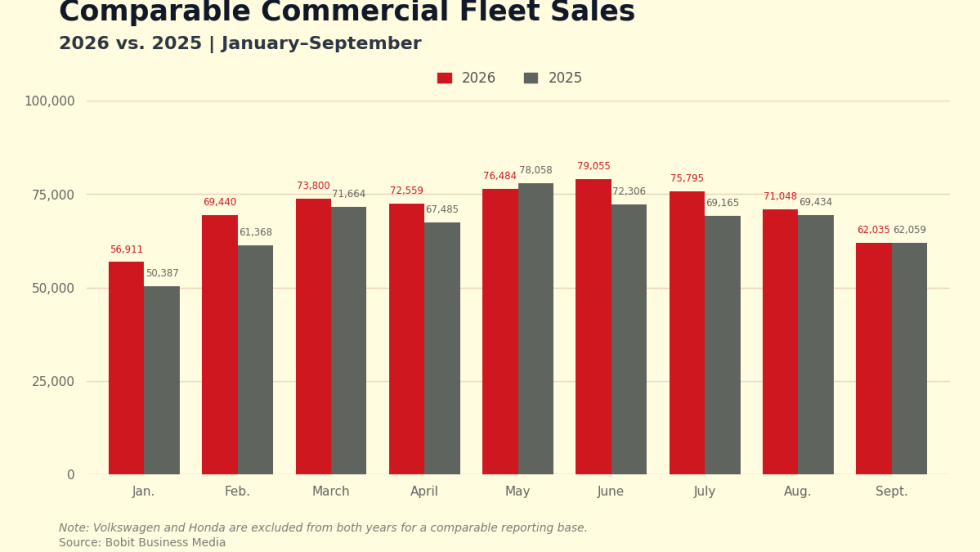
Commercial Fleet Sales Rise 5.8% Through September 2026
September commercial fleet sales were essentially unchanged from a year earlier, slowing year-to-date growth while keeping volume ahead of 2025.
Read More →
Hall of Fame Inductee: John Dmochowsky
The longtime Mondelēz International fleet executive joins the Automotive Fleet Hall of Fame.
Read More →
Hall of Fame Inductee: Lee Miller
After more than four decades at Boehringer Ingelheim, Lee Miller leaves a legacy built on fleet expertise.
Read More →
Hall of Fame Inductee: Mark F. Petersen
From managing fleets of thousands of vehicles to advancing safety and mentoring fellow professionals, Mark F. Petersen made his mark across both the corporate and supplier sides of fleet.
Read More →
When Charger Downtime Becomes a Fleet Availability Problem
As EV deployments move beyond pilot programs, charger reliability can directly affect vehicle readiness, driver productivity and route scheduling.
Read More →
2027 Nissan Rogue Hybrid Adds e-POWER, Standard AWD
The new Rogue Hybrid uses Nissan’s e-POWER system with dual electric motors, offers an estimated 40 mpg and starts at $35,490.
Read More →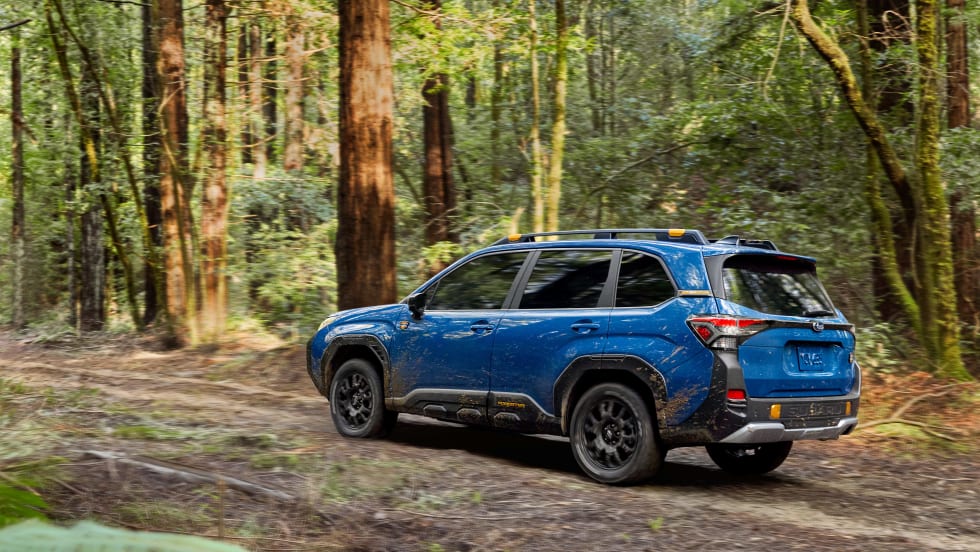
2027 Subaru Forester Adds First Wilderness Hybrid
The 2027 Forester lineup starts at $29,995 and adds a Wilderness Hybrid with 194 combined horsepower and 9.3 inches of ground clearance.
Read More →
EV Realty Names Henrik Holland President as Charging Platform Expands
The former Prologis Mobility and Shell executive will help expand EV Realty’s truck charging business and move its power-first infrastructure model into autonomous vehicle depots and other fleet sectors.
Read More →
Mercedes-Benz Introduces Electric GLC With Up to 350 Miles of Range
The GLC 400 4MATIC Electric features an 800-volt architecture, 330-kW DC fast charging and a 94-kWh battery, along with Mercedes-Benz's new MB.OS operating system.
Read More →
Fleet Has a Talent Pipeline Problem, not a Talent Problem
Where will the next generation of fleet leaders come from, and what does the industry need to do differently to find them?
Read More →