




What’s Happening to Carsharing?
With high-profile closures and pullbacks in 2019, the North American carsharing market looks to new market opportunities. But can it grow past its traditional base?

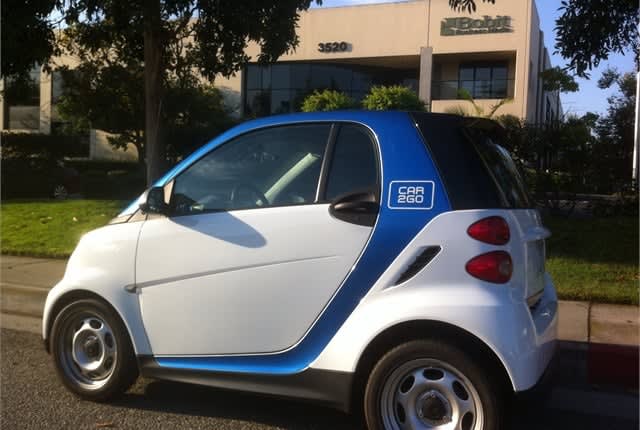
This car2go smart car was often stationed in front of the Torrance, Calif. offices of Auto Rental News. The service was in the South Bay Cities near Los Angeles for less than a year.
Photo by Chris Brown.
What’s happening to carsharing? To begin to answer that question, I harken back to a town hall meeting I attended in Bobit’s headquarter town of Torrance, Calif. in 2014. The meeting addressed residents’ concerns over the implementation of car2go’s free-floating carsharing service in the South Bay Cities of Los Angeles County.
In the meeting, residents complained that car2go’s blue-and-white smartcars were taking up spaces that should be left for private citizens’ cars. Meanwhile, car2go proponents said there weren’t enough smartcars and it took too long to get to them.
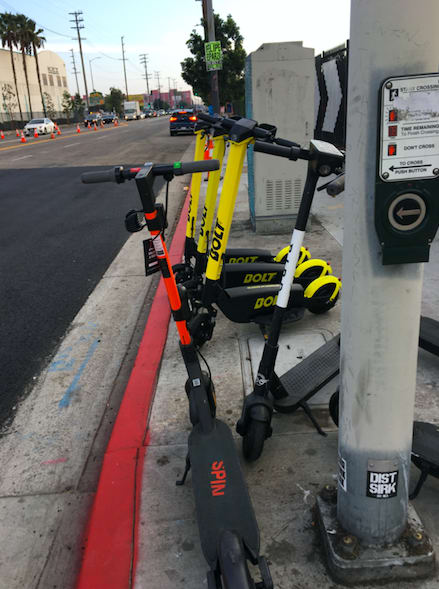
When carsharing was gaining steam, few predicted the phenomenon of micro-mobility in the form of electric scooters, which ate into a percentage of carsharing trips of two to five miles.
Photo by Chris Brown.
One resident, after witnessing the smartcars parked in front of the bars on Hermosa Beach’s Pier Ave., questioned if car2go would have any liability in a drunk driving incident. Another marveled at watching car2go employees on her street jockeying the smartcars to comply with parking restrictions, though few were actually renting the cars.
Daimler ended the service in the South Bay less than a year later. In 2018, Daimler merged car2go with BMW’s sharing schemes under the Share Now umbrella, but by the end of 2019 the service announced it would pull out of North America entirely. This followed a string of high-profile carsharing service terminations, such as GM’s Maven in eight U.S. cities, BlueIndy in Indianapolis, and scooter giant Lime’s LimePod service in Seattle.
Sure, you can question car2go’s initial choice of using diminutive smartcars. But when Avis Budget Group bought Zipcar in 2013, the sky seemed bright for carsharing in general. Yet since then, the total number of carsharing vehicles in the U.S. has fluctuated between 19,000 and 25,000 units and has even declined in the past couple of years. (We’ll stick to owned fleets in station-to-station or free-floating systems and leave peer-to-peer carsharing for another conversation.)
Operational Challenges
Operating a carsharing service is challenging. Cities are hesitant to give up parking spaces for $108 per unit, per year as they did for car2go in the South Bay in 2014. In fact, a yearly parking fee of $3,000 per car in a free-floating service isn’t unreasonable, which equates to an $8-per-day hit before the user gets in the car.
Add to that high insurance rates, fuel paid by the service instead of the user, and the extra labor to service remote units and rebalance them between demand hotspots, and profit margins thin before our eyes.
It also seems that technology has yet to satisfactorily solve fraud and security issues, as evidenced by the theft of 75 car2go Mercedes GLA and GLC models in Chicago. As well, Enterprise CarShare shut down its Chicago service because of “high incidents of theft, vandalism, and fraud.”
For automakers who got into carsharing because they saw the future of their traditional revenue model of manufacturing and sales evolving, they learned just how ornery managing a carsharing fleet can be. It gets harder amid ever-changing senior management priorities that now see the path to true autonomy — when shared mobility is inevitable — stretching even farther into the future.
Carsharing has always made sense in cities with good public transportation and urban residents (not just buildings) who need wheels to exit the city. These conditions exist in some major U.S. markets, yet overall, population density in the U.S. is comparatively low, while car ownership is still cheap.
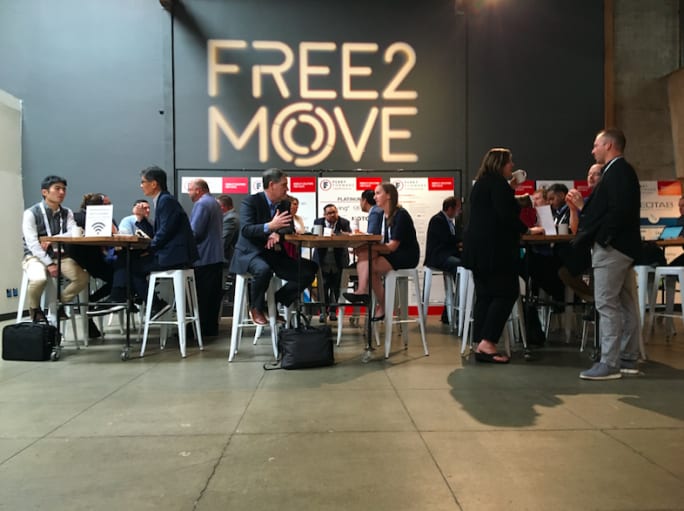
Free2Move, part of Groupe PSA’s relaunch in the North American market, represents the new wave of shared mobility. Dubbed a mobility aggregation platform, the Free2Move app allows users to compare the location, characteristics, and operating costs of available transportation options. (Free2Move sponsored the 2019 Fleet Forward Conference, seen here.)
Photo by Tabrizi Productions.
Our highway system was built for private vehicle ownership, not for public transit that would foster alternative modes such as carsharing when needed. But this paradigm is nothing new — seven years ago, we were expecting carsharing to expand in this natural habitat and grow into new ones.
Ride-Hailing Impacts
And then came Uber and Lyft. Ride-hailing’s impact on taxis, chauffeured transportation, public transit, and to some extent car rental are well known, yet its impact on carsharing cannot be underestimated as well. Micro mobility in the form of e-scooters and e-bikes arrived a bit later, taking a portion of demand for two- to five-mile trips with it.
Seven years ago, the full impact of the ride-hailing phenomenon hadn’t yet unraveled. Those car2go users in the South Bay now summon Uber or Lyft to get to the bars and shopping on Pier Ave. in Hermosa Beach. They don’t have to find a carsharing car and walk to it; an Uber comes to them in minutes. They don’t have to find and pay for parking or pay for the car to sit while they’re in a restaurant. And they don’t have to worry about driving while impaired.
There are a few North American success stories, such as AAA-owned Gig in Oakland and Evo in Vancouver (which is only just beginning the process of allowing Uber and Lyft). Communauto in Canada is oft cited as a well-run, profitable organization. Zipcar and Enterprise CarShare have found success in niche markets such as colleges and universities, though Zipcar isn’t mentioned as much in Avis’ quarterly conference calls as it was in the first years after the purchase.
The North American market isn’t static: Last year, Penske launched Penske Dash in Washington, D.C. and Arlington, Va. As part of a broader mobility initiative, Hyundai has launched Mocean carsharing in downtown Los Angeles with a small fleet of electric vehicles. With a fleet of all-electric vehicles, Envoy has made inroads as a residential amenity. Expect at least three major new launches in North America this year.
Moving Forward
From here, what forces will jumpstart the market to give carsharing traction moving forward?
Every major city across the globe is reexamining the movement of people and goods with an eye to the future of autonomous transport, whenever that will be. As part of this push they’re attacking congestion, quality of life issues, and environmental sustainability more intensely than ever before.
Under the broader concept of shared mobility, government jurisdictions are rolling out partnerships with public transportation and on-demand shuttle services, ride hailing (hopefully shared), and micro-mobility options.
Carsharing is part of these smog- and congestion-reducing initiatives, particularly with electric vehicle fleets, which receive incentives in the form of cheaper access to parking and charging.
Cities such as Los Angeles are encouraging public transit options by allowing denser developments near train stations while lifting minimum parking requirements. Developers are turning to carsharing as an amenity as a result — especially if they can avoid building another level of parking.
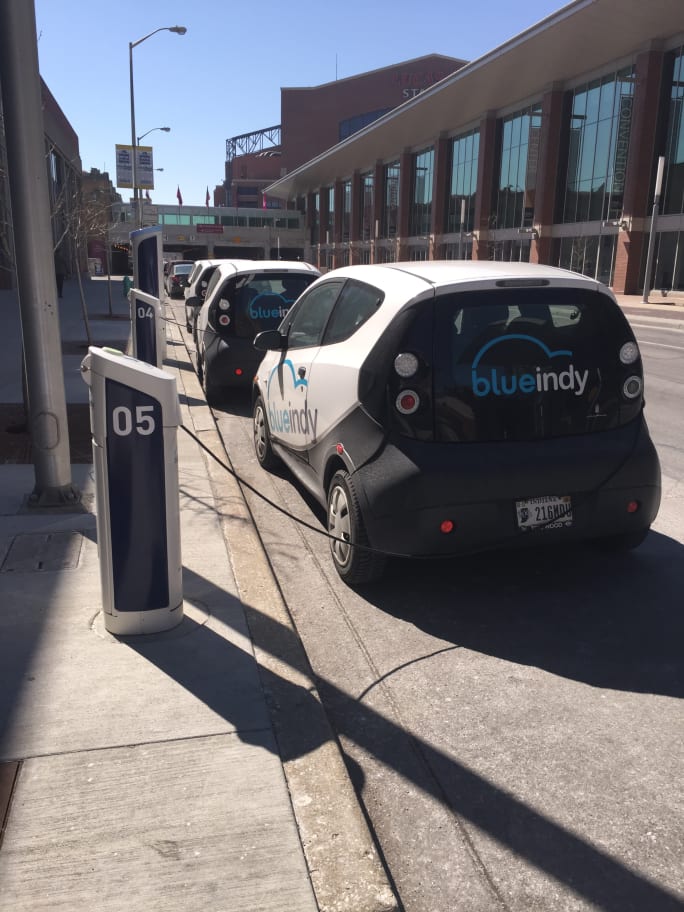
Backed by logistics company Bollore and billionaire Vincent Bollore, BlueIndy launched in September 2015, but by 2017 the service had a deficit of $22 million. It ceased operations in 2019.
Photo by Chris Brown.
Outside the U.S., many municipalities have implemented congestion charging schemes, while some in India, Europe, and Asia are moving toward complete bans of internal combustion engines in city centers. New York is the only U.S. city with concrete congestion charging plans, but others are at least considering them.
Some U.S. cities, including New York and Chicago, are acting on studies that show the congestion impacts of ride hailing. They’re thus looking into capping the number of ride-hailing vehicles, which would also open the door to carsharing.
The Valhalla for city transportation is to organize options into one app and seamless payment under Mobility-as-a-Service (MaaS), though organizing various types of providers in a single plan has proven harder than anticipated.
Meanwhile, new transportation giants (i.e. Uber and Lyft) are seeing the need to diversify from their creating their original models as well. They’re building their own transportation ecosystems that include car rental and scooters in the same app. Could carsharing grow here?
Speaking of ride-hailing and micro-mobility, those same providers realize that cities no longer accept the original “ask for forgiveness, not permission” attitude. And they can’t subsidize 40% of their rides forever. When riders pay the real cost of those trips, will some migrate back to carsharing?
On the business-to-business end, commercial and corporate fleets are on an unending hunt to increase efficiencies and right size fleets. Carsharing is being used to update traditional government fleet pools, while sharing in commercial and corporate fleets has only just begun to be tested.
To some, the term carsharing itself feels anachronistic in today’s lexicon of “shared mobility,” though the definitions are essentially the same: “using technology to give access to decentralized vehicles on demand in varying time increments.”
Reinventing how we get around takes time. Seven years ago, we were just starting to have these conversations. Today, we seem a little further along — but they’re still mostly conversations, as the static number of carsharing units can attest.
Originally posted on Auto Rental News
More Fleet Forward

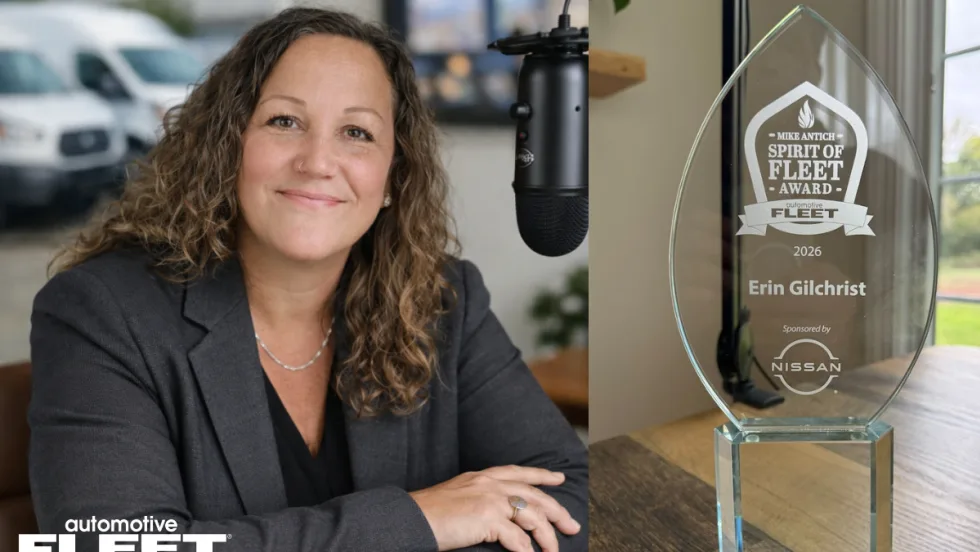
Erin Gilchrist Receives Mike Antich Spirit of Fleet Award
Last week at AFLA in Vegas, Erin Gilchrist received the inaugural, brand-new Spirit of Fleet Award.
Read More →
Dominika Leja Named the 2026 Fleet Manager of the Year
The AstraZeneca associate director of fleet was recognized for her leadership in fleet electrification, cost savings, and operational transformation.
Read More →
Jamie McKay Named the 2026 Fleet Visionary Award Winner
The Aptive Pest Control fleet manager was recognized for her approach to operations, data, lifecycle management, and driver needs.
Read More →
Fleet Forward Conference Introduces One-Day Passes for 2026
New one-day registration gives fleet professionals the flexibility to attend Tuesday, Wednesday, or Thursday, with passes available for $199 through Sept. 18.
Read More →
Vibe Coding: When Fleet Managers Become Software Builders
Five fleet professionals — none with programming skills — discuss how they’re using AI to build fleet solutions in-house and in a fraction of the time.
Read More →
Fleet Forward Conference Tackles Fleet Industry’s Growing Leadership Gap
This session will examine succession planning, knowledge transfer, and the skills the next generation of fleet leaders will need as veteran professionals leave the industry.
Read More →
2026 Fleet Manager of the Year Finalists Announced
Who are the 2026 Fleet Manager of the Year finalists?
Read More →
John Rossant to Deliver Opening Keynote at 2026 Fleet Forward Conference
The CoMotion founder will draw on developments across Europe, China, the Middle East, and other international markets to identify trends that could influence how U.S. fleets plan for the coming decade.
Read More →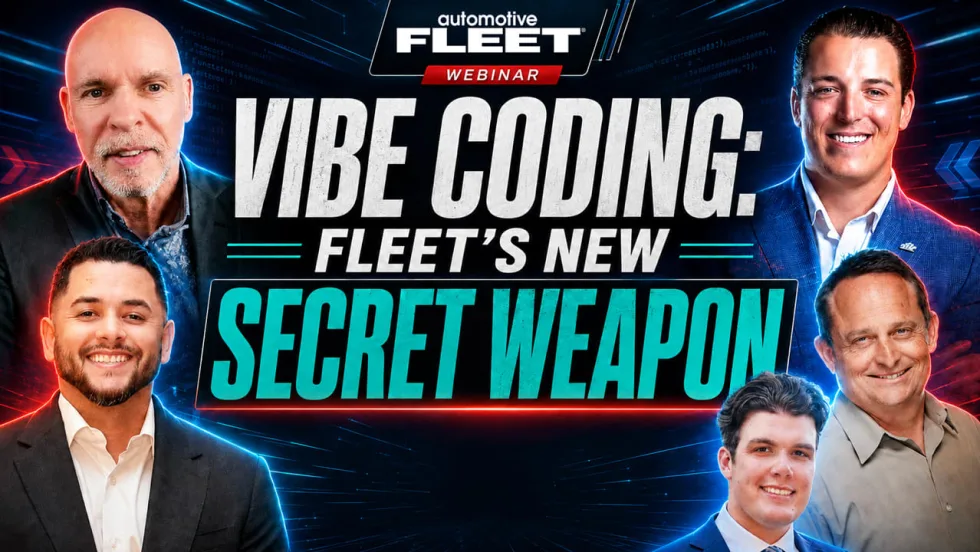
How to Build Custom Fleet Tools With AI and Vibe Coding [Webinar]
A new Automotive Fleet webinar explores how fleet managers are using AI and vibe coding to automate routine work and create simple operational tools without traditional programming skills.
Read More →