How a journey to Thailand helped shape one man's perspective on fleet management, his future, and himself.
Jordan Wiklund・Former Senior Editor
August 31, 2022
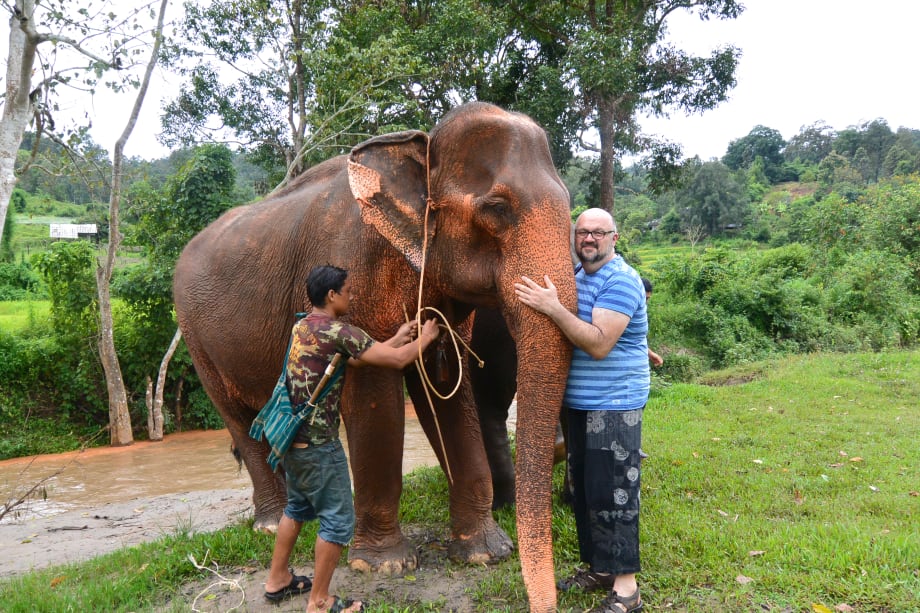
Schäfer says fleet managers need to get their stakeholders, staff, and companies to trust them, no different than how the mahouts led his group of adventurers to the elephant herd.
Photo: Axel Schafer
4 min to read
About 10 years ago, Axel Schäfer was recovering from surgery when he learned about a fellow German who had been living in Thailand and making a living—and living among—Asian elephants.
Ad Loading...
“He looked a little bit crazy,” Schäfer says, “but it was fascinating!”
Ad Loading...
The German ex-pat still lives there, inviting those who would listen to join him in Thailand, meet the elephants, and get their elephant “driving” license.
That sounds good, Schäfer thought at the time and sitting up a little straighter in bed, I should do that.
So he booked a ticket to Thailand.
Welcome to the Jungle
“Mobility is a fundamental right for people,” Schafer says. And for local wildlife?
Photo: Axel Schafer
“An elephant is not like a dog,” Schäfer says, “it’s a wild animal living with people—it’s not domesticated.”
Elephants are sacred in Thailand. They symbolize intelligence and strength, which is needed to get through the drought season—elephants have long been used as beasts of burden to till the land and help the logging industry move that heavy Thai timber.
Ad Loading...
This was the first lesson he learned from his mahout, or elephant trainer. Schäfer found himself one hour away from Chiang-mai, the northwestern state of Thailand, directly west of Laos and a world away from everything he knew. Schäfer is lead of the nonprofit FMFE (Fleet and Mobility Management Federation Europe), a network of European fleet and mobility management associations and organizations, and he was about to embark on an all-new type of mobility—the kind that lives, breathes, weighs more than four tons, and eats 300 pounds of food per day.
Schäfer describes the awe, curiosity, and more than a little bit of nerves one experiences meeting quasi-domesticated elephants. As the elephants and mahout approached his group, they were told to stay in place—don’t move, and certainly don’t run.
“You must trust them,” he says, “because if you don’t have the nerves to trust them, it will be impossible to work with them.”
Speaking to Schäfer (on pachyderms and fleet), one fact becomes evident very quickly—Schäfer is an adventurer. He keeps a framed photo of Don Quixote and Sancho Panza in his office to remind him that, “To change peoples’ minds is a crazy act.” But he says that’s one of the best parts of his job.
To do so, Schäfer relies upon the same quality the elephants needed—trust. Schäfer says fleet managers need to get their stakeholders, staff, and companies to trust them, no different than how the mahouts led his group of adventurers to the elephant herd.
Ad Loading...
“In the early years, you need to fight against the windmills,” he says, as Quixote did.
“Don Quixote is a little bit crazy. But if you see a big shadow of a dragon, as he did, you’re not actually seeing the real thing - you need to think about what you’re doing.”
“Mobility is a fundamental right for people,” he says, “and we need alternatives to offer to people to achieve it. It’s a huge economic factor for most companies—without mobility, how would they exist? Mobility is not only using a company car. It’s a mistake to say ‘we need to change mobility.’ We need to ask what are we doing, where are we driving, and what are our needs?”
“We need to achieve a model of mobility that’s both economical and ecological,” he says, “they go hand-in-hand. We need to achieve a balance, and change will only work for companies if it’s economical as well. Yes, fires are burning”—the windmills are turning, if you will—“but companies won’t change unless they earn money.”
It’s not so similar from where we are in fleet; across the globe, fleet managers are scrambling to solve electrification, the supply chain shortage, and how to keep their people safe and their companies profitable.
Ad Loading...
In other words, a job for a slightly crazy person.
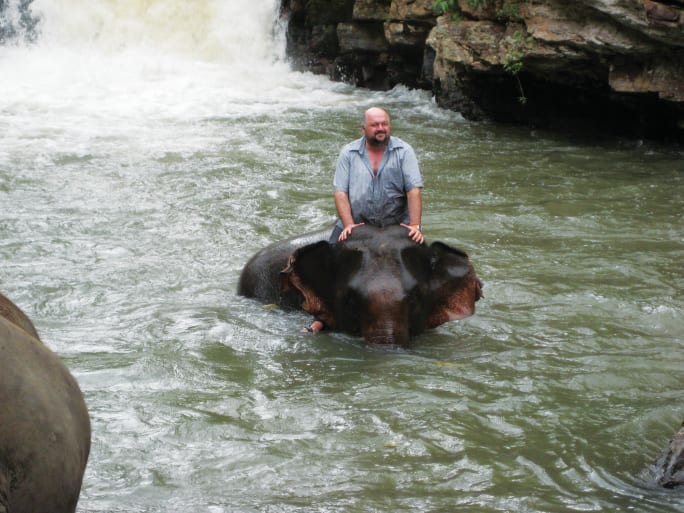
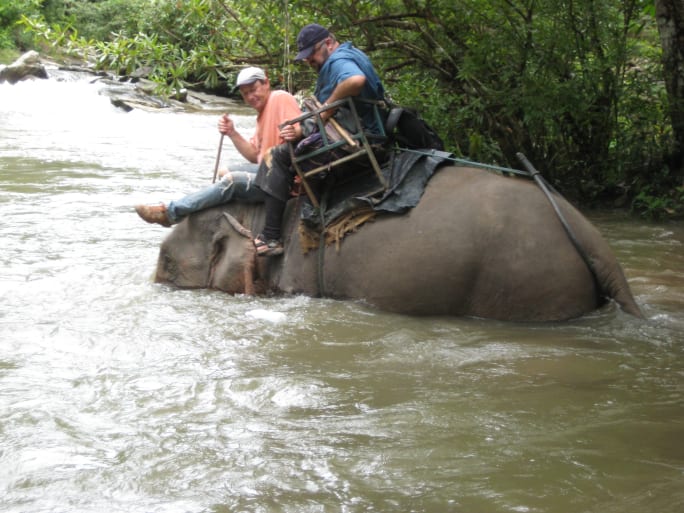
Rule No. 10 in the elephant fleet manager handbook: Don’t put chains on yourself. You cannot limit yourself by what’s only beneath you - you must be able to pivot (or swim) when it’s time to cross the river.
Photo: Axel Schafer
“You have to take people with you,” he continues, “you need to extend a hand and say, ‘Come with me, I will show you the future.’ ”
That’s what change requires; trust. Schäfer would tell you that’s what elephants require, too, and look how much he’s learned from them.
10 Elephant Rules to Live By
Fleet managers can learn a lot from elephants (and a knowledgeable mahout to help guide them). Here are a few tips as you stampede toward a more efficient career, fleet, and future.
Provide the right environment and everyone will prosper. The fleet manager oversees rules and processes—it should be like clockwork, with each gear working together. Every elephant in the herd knows its job.
Acquire knowledge to walk difficult paths. You’ll never find a better place without the will (and willingness to stumble) to get to a better place.
Do it yourself, but do not relieve others of their responsibilities. On trail, if the elephants suffer a setback, it’s the mahout’s job to figure it out—no one else.
If you expect trust, trust yourself. Elephants need to see you, smell you, and hear you. Only when you’ve demonstrated the ability to hold still and trust the elephant will the elephant return the favor.
Stay alert—trust should not beget complacency. Elephants know they’re stronger than you, and fleet managers need to stay alert to keep ahead of the large-scale challenges that threaten to overwhelm them.
If you want to cross a river, make sure it’s safe. Not all risks are created equal. Be sure you know how deep the water is before deciding to step off shore.
Keep things in order. Follow a routine every day. Elephants need to eat, sleep, drink, and make more elephants. A good mahout sets their animals up for success by keeping a routine.
Use tools to control your elephant. You cannot assume those under your employ (or vehicles in your fleet) will automatically do the obvious thing every time. Use the tools at your disposal to make everyones’ lives safer, more efficient, and more reliable.
Take small steps but don’t lose sight of your goal. The horizon is far and the only way to get there is to take it one step at a time. Make a plan and be deliberate every step of the way.
Don’t put chains on yourself. A wise mahout is an untethered mahout. You cannot limit yourself by what’s only beneath you—you must be able to pivot (or swim) when it’s time to cross the river.
Photo: Axel Schafer
Axel Schäfer has a rich history in fleet leasing and management. A noted speaker, author, entrepreneur, and mobility thought leader, Schäfer co-founded the German Fleet Management Association (now the German Association for Corporate Mobility), where he is managing director and board member. He also represents the European Fleet and Mobility Management Federation (FMFE), founded in 2018.
Geofencing is a familiar fleet tool today, but its early adoption marked a major shift in vehicle tracking, route monitoring, and the debate over employee privacy.
Holman is bringing its Mexican fleet management operation fully under its own brand after more than 30 years as a joint venture. The change gives multinational fleet customers a single Holman operation across the U.S., Canada, and Mexico.
Regular tire checks can do more than extend tread life. These five maintenance practices can help work truck fleets catch problems early, reduce costs, and prevent downtime.
Part Two: Commercial auto remains one of the most challenging and costly lines of coverage for fleet operators and insurers alike. Continue learning more about how to effectively address these issues from Onur Aksan, Enterprise Business Development Executive, Geotab
Commercial auto remains one of the most challenging and costly lines of coverage for fleet operators and insurers alike. Learn more about how to effectively address these issues from Onur Aksan, Enterprise Business Development Executive, Geotab.
Fleet leaders are under pressure to reduce costs, adapt to economic uncertainty, and make smarter decisions. See how peers across North America are responding with real data, proven strategies, and forward-looking insights. Download the 2026 Market Pulse Report to benchmark your strategy and uncover where you can gain an edge.