




What are Preventable vs. Non-Preventable CMV Crashes?
Realizing some crashes are beyond a CMV driver’s control, the Federal Motor Carrier Safety Administration (FMCSA) created its Crash Preventability Program. But, what's considered preventable?

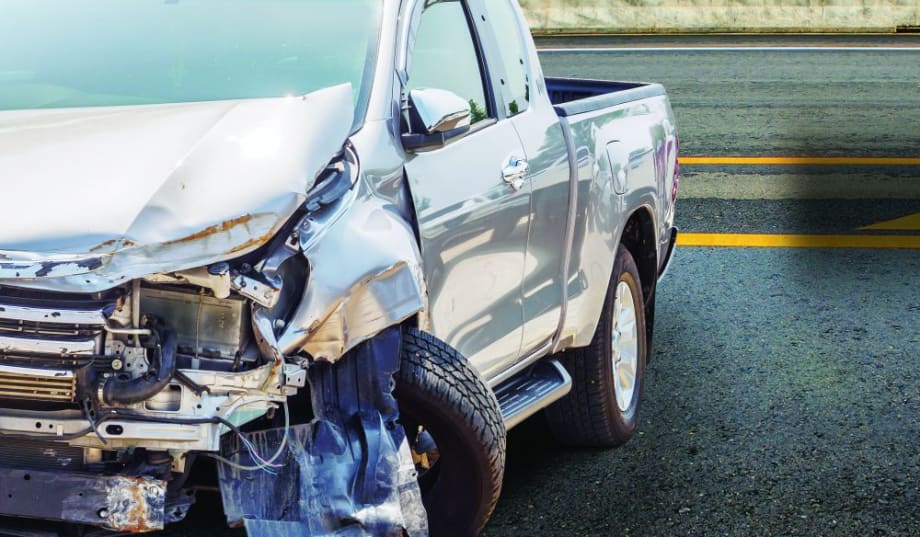
The FMCSA identifies several crash types as non-preventable.
Photo: Getty Images
The designation of a commercial motor vehicle (CMV) crash has serious implications. If the event appears as preventable, it impacts a motor carrier’s CSA Crash Indicator BASIC score and Accident Factor in the event of a compliance review.
Realizing some crashes are beyond a CMV driver’s control, the Federal Motor Carrier Safety Administration (FMCSA) created its Crash Preventability Program. In this program, the status of the crash can be challenged by motor carriers, drivers, or other parties by submitting a Request for Data Review (RDR) through the agency’s DataQs portal.
Qualifying Crashes
The FMCSA identifies several crash types as non-preventable. CMV crashes meeting the specific criteria and occurring on or after August 1, 2019, are eligible for consideration.
An eligible CMV crash involves being struck:
In the rear or side at the rear;
By a motorist driving in the wrong direction or making a U-turn or illegal turn;
When legally stopped at a traffic control device or parked;
By a vehicle failing to stop or slow in traffic or stop at a traffic control device;
By a driver operating a motor vehicle under the influence, according to state law, or by another motorist who was involved in such a crash;
By a driver who experienced a medical issue contributing to the crash;
By a driver who admitted falling asleep or being distracted;
By cargo, equipment, or debris, or as the result of an infrastructure failure;
By an animal; or
By an individual committing or attempting to commit suicide.
Another eligible crash category involves accidents that seldom occur and don’t meet another eligible crash type, such as being struck by an airplane or skydiver or being struck by a deceased driver.
Be Prepared to Prove Your Case
When using DataQs to challenge the preventability of a crash, the burden of proof is on the RDR submitter. The party must provide compelling evidence that the crash meets the criteria.
The RDR must be accompanied by a police accident report. For fatal crashes, the request must include drug and alcohol test results or explain why a test was not performed.
Submitters are encouraged to provide other supporting documents with their request, including videos, photographs, and court documents.
If the crash does not meet one of the eligible crash types, the RDR will be closed.
When the RDR is Successful
If a crash is deemed non-preventable, the FMCSA will:
Remove the crash from the carrier’s Crash Indictor calculations and indicate in the Safety Management System that the crash was not preventable; and
Add a note to the Pre-Employment Screening Program (PSP) to indicate that the crash was not preventable, reducing the odds that the driver involved wouldn’t be hired due to crash history.
Note that the crash must remain on the motor carrier’s accident register even though it is considered non-preventable. In the event of an audit, the motor carrier would alert the investigator that the specific crash was determined to be non-preventable, so it is not included in the accident rate.
Originally posted on Work Truck Online
More Safety

Does Your Fleet's Culture Encourage Distracted Driving?
What happens when the people responsible for enforcing safety rules are the ones setting the wrong example? The answer may reveal why some of the biggest risks to fleet drivers have little to do with what's written in the employee handbook.
Read More →
Fleet Manager’s Ultimate Playbook: Navigating the New Standard in OEM Connectivity
Rising operating costs, driver safety concerns, and unplanned downtime are putting unprecedented pressure on modern fleets. Discover how fleet managers use embedded OEM connectivity and real-time vehicle data to cut TCO, prevent downtime, and protect drivers without aftermarket telematics hardware.
Read More →
From Driver Well-Being to EV Charging | AF News Recap
Mental health belongs in the fleet safety conversation. This week, we’re looking at five ways fleets can support employee well-being before a crisis, plus Holman’s expansion in Mexico, new one-day Fleet Forward passes, and why EV charging demand is outpacing infrastructure growth.
Read More →
Nexar-Nauto Merger Aims to Give Fleets Better Safety Intelligence Through Larger Driving Dataset
Stefan Heck tells Automotive Fleet that combining more than 10 billion miles of driving history with Nexar's AI models will give fleets deeper insights into driver risk and roadway conditions than either company could provide independently.
Read More →
Don't Wait for a Crisis: 5 Ways to Build Mental Health Into Your Fleet Safety Program
For Suicide Prevention Month, fleet and safety leaders have an opportunity to put mental health where it belongs: at the center of workplace safety.
Read More →
How Camera Data Can Strengthen a Fleet’s Insurance Renewal
Insights from a commercial insurance carrier and a broker show how fleets can turn video telematic data, driver coaching, and improved claims results into a stronger case at insurance renewal.
Read More →
The Safest Fleets Aren’t the Ones with the Most Technology
You’ve made the telematics investment. Here’s how to capture the other half of its value and build the safest fleet on the road.
Read More →
Hidden in Plain Sight: Fleet Compliance Risks
Fleet compliance isn't just about having policies — it's about consistently enforcing them. This practical guide reveals six hidden compliance risks common in public sector and shared fleet operations and outlines proven strategies to improve visibility, accountability, and audit readiness
Read More →
NETS Sets 2026 Fleet Safety Benchmark Conference for Indianapolis
The Sept. 15–17 program will feature fleet benchmarking data, case studies, emerging technologies, and implementation strategies while running alongside the NSC Safety Congress & Expo.
Read More →
Off-the-Job Crashes Account for 43% of Employers’ $61.7 Billion Crash Burden
NETS quantifies costs dispersed across fleet, risk, HR, and other departments while providing new per-crash benchmarks for employers.
Read More →