





Related: Hot Takes: Understanding CARB’s Commercial EV Moonshot
Unpacking the Consequences of California’s 2035 Zero-Emissions Moonshot
History can guide us as to whether the mandate will actually be met. But can we still achieve the benefits of the attempt, even if we don’t have all zero-emissions vehicles on the road by then?
October 13, 2020
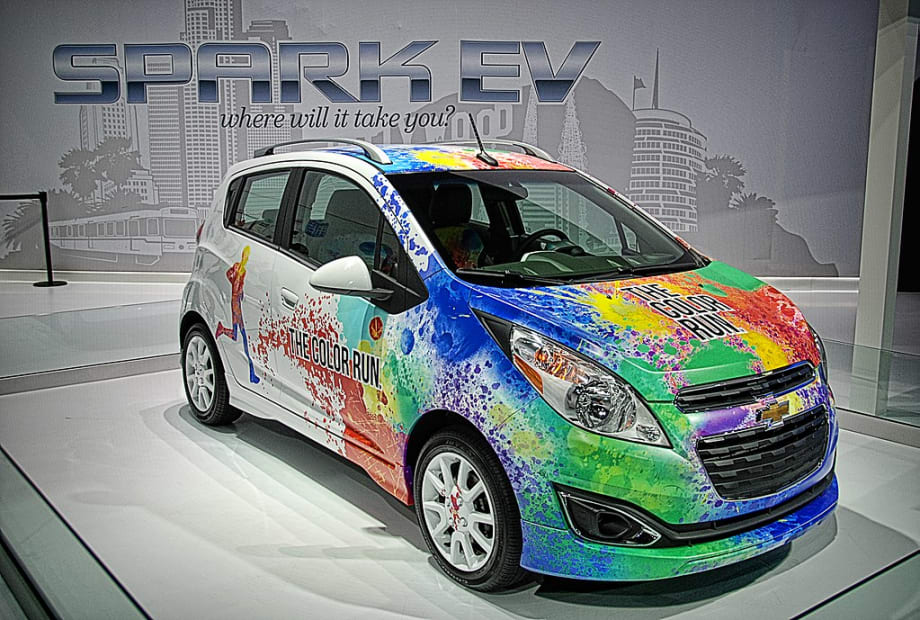
The Chevy Spark EV was produced to satisfy California’s emissions standards and only sold 7,400 units in its short lifetime. But did it spur GM’s future electrification initiatives?
Photo via Wikimedia.
5 min to read
California is backing away from a requirement that within two years 2% of all cars sold in the state be electrically powered. … Air quality advocates and members of the emerging electric car industry criticized the move, which they called a capitulation to the automobile and oil industries. But some automobile experts said the change in the law was a practical one, because today's technology cannot produce an electric vehicle that customers would want to buy.
This news report from last week shows the difficulty of mandating targets for emissions and alternative-powered vehicles. Except the statement isn’t from last week, it’s from 1995. It’s a response to California’s original Zero Emission Vehicle (ZEV) program, instituted in 1990.
Ultimately, the California Air Resources Board dropped the 2% requirement and proposed instead to increase production of zero emission vehicles gradually to 10% in the state by 2003. All mainstream automakers were required to comply.
Of course, that goal was not met either. CARB has revised its rules at least four times since, each time reducing the number of ZEVs on the road, and each time, invoking the ire of electrification advocacy groups.
And so we come to California Gov. Gavin Newsom’s proposal last month requiring the sale of all new passenger vehicles in the state to be zero-emission by 2035. This is a lofty and worthy goal, yet 2035 seems so far into the future that we can’t realistically tell Newsom it’s not going to happen. Or is it?
It seems we may repeat the cycle again. At what point will California relax these rules, as it has consistently in the past? The greater question is, what are the consequences of shooting for seemingly unrealistic goals?
From 1990 and 20 years after, the reality was that electric vehicles were simply not yet ready for prime time. Those attending car shows and automakers’ events in the EV Dark Ages will remember EV models such as the Mitsubishi i-MiEV and Chevy Spark EV, which OEM reps next to the vehicles would readily admit they were only built to satisfy California’s rules.
With no substantive charging infrastructure to support the nascent EV industry, General Motors had to produce a car that had zero chance of viability. And yet, here we are in 2020 and the electrification of automobiles is now an inevitability.
One can reason that CARB’s impossible goals drove innovation, spurring the development of Nissan Leaf, Tesla, Chevy Bolt, and the electric commercial vehicles on the horizon, while forcing the expansion of smart infrastructure. With CARB’s series of carrots and sticks, it’s hard to imagine the EV market would’ve progressed this far without them.
The electrification of commercial vehicles is the new frontier. Mike Roeth, executive director of the North American Council for Freight Efficiency (NACFE), puts this into realistic perspective from a product planning standpoint:
“NACFE has come to really understand how new products are adopted. End-user innovators start using a new thing, which leads to early adopters, then early and later majority and finally the laggards purchase. The innovator buyers help advance a new idea to make it more useful, simply to perform, and then early adopters help mature it to an acceptable payback or total cost of ownership by the manufacturer to then scale with early and later majority users.
This whole process is formally known as product diffusion. In trucking we have many examples of incentives assisting the early adopters to help manufacturers reach an acceptable payback and then regulations drive the early and later majority. Moving too fast with regulations can cause technologies to be pulled into use before they are ready. Not a good thing. A very tricky balance for everyone.”
Returning to the 2035 “moonshot,” is this another unrealistic goal, or is electrification viable enough to to be spurred even further? Author and mobility expert Lukas Neckermann shares his perspective on Newsom’s pledge:
“Frankly, 2035 will feel like a lowball target when all is said and done. If someone had told you 15 years ago that you wouldn’t have a telephone landline and would be tapping on a glass screen to communicate, it might have been considered a ‘moonshot,’ but here we are.
What ‘2035’ does do, it sets a — however modest — target for the industry. We are talking 15 years, or more than two entire product cycles in the auto industry. Many have already committed to ending the development of ICE, and 2035 is plenty of time even for laggard OEMs to slowly get going (assuming they survive).
California is — on its own — the world’s 5th largest economy, and a top-15 car market. Its emissions policies are followed by more than a dozen other states. U.S. OEMs shouldn’t be distracted by this. Rather, they should focus on this and ignore those states that don’t follow suit.”
It’s easy to complain about the extra cost associated with new technologies. In these conversations, the considerable financial burdens of new mandates placed on fleets is often lost. On the flip side, the societal costs of emissions in diesel corridors cannot be minimized either.
However, once those technologies are entrenched in mainstream processes, we’re not going back. Even with the maintenance hassles of today’s diesel emissions controls, but does anyone really want to abandon them for the previous generation’s higher carbon-emitting trucks?
We still have a long way to go before ZEVs outpace internal combustion engines. Let’s reconnect in 15 years to see if the ZEV moonshot was achieved.
Subscribe to Our Newsletter
More Fleet Forward

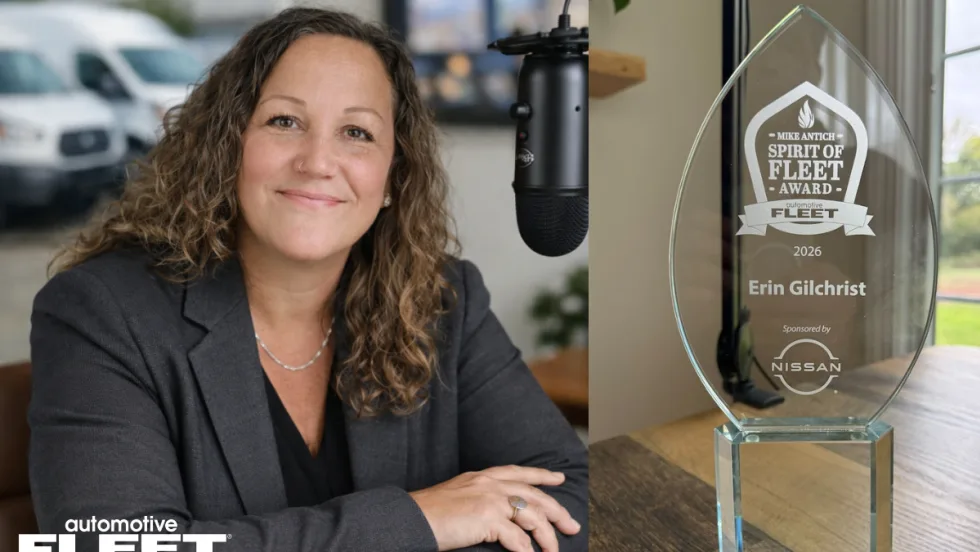
Erin Gilchrist Receives Mike Antich Spirit of Fleet Award
Last week at AFLA in Vegas, Erin Gilchrist received the inaugural, brand-new Spirit of Fleet Award.
Read More →
Dominika Leja Named the 2026 Fleet Manager of the Year
The AstraZeneca associate director of fleet was recognized for her leadership in fleet electrification, cost savings, and operational transformation.
Read More →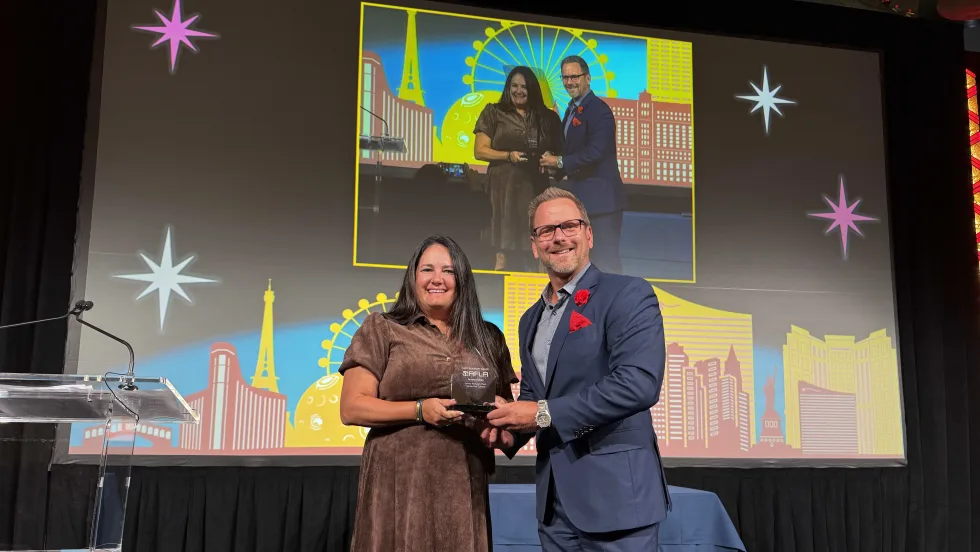
Jamie McKay Named the 2026 Fleet Visionary Award Winner
The Aptive Pest Control fleet manager was recognized for her approach to operations, data, lifecycle management, and driver needs.
Read More →
Fleet Forward Conference Introduces One-Day Passes for 2026
New one-day registration gives fleet professionals the flexibility to attend Tuesday, Wednesday, or Thursday, with passes available for $199 through Sept. 18.
Read More →
Vibe Coding: When Fleet Managers Become Software Builders
Five fleet professionals — none with programming skills — discuss how they’re using AI to build fleet solutions in-house and in a fraction of the time.
Read More →
Fleet Forward Conference Tackles Fleet Industry’s Growing Leadership Gap
This session will examine succession planning, knowledge transfer, and the skills the next generation of fleet leaders will need as veteran professionals leave the industry.
Read More →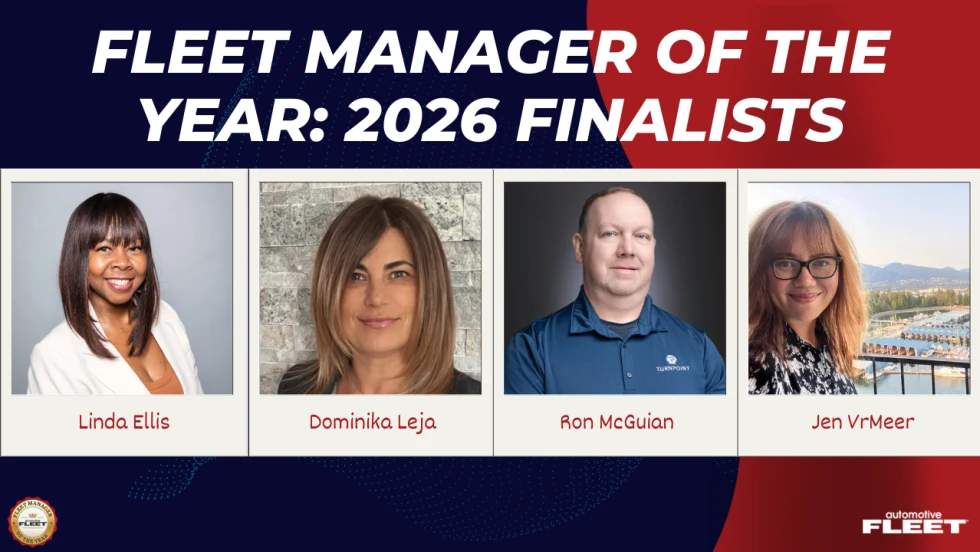
2026 Fleet Manager of the Year Finalists Announced
Who are the 2026 Fleet Manager of the Year finalists?
Read More →
John Rossant to Deliver Opening Keynote at 2026 Fleet Forward Conference
The CoMotion founder will draw on developments across Europe, China, the Middle East, and other international markets to identify trends that could influence how U.S. fleets plan for the coming decade.
Read More →
How to Build Custom Fleet Tools With AI and Vibe Coding [Webinar]
A new Automotive Fleet webinar explores how fleet managers are using AI and vibe coding to automate routine work and create simple operational tools without traditional programming skills.
Read More →