




Related: Uber Vehicles and Open Recalls
Traditional and Peer-to-Peer: Let's Work Together for Better Regulation
Peer-to-peer carsharing companies and traditional car rental should play by the same rules. Together, let's work to modify regulations that are unfair to our businesses and customers so we all can compete for business.
by American Car Rental Association
November 6, 20153 min to read
Technology is driving many changes in the world, including the car rental world. Generally, that is a very good thing. It’s good for our companies, employees and, most importantly, our customers. What about technological and mobility advancements that have created this so-called “sharing economy”?
It’s all the rage now. It has disrupted the taxi world with the likes of Uber and Lyft. It’s disrupted the hotel industry with Airbnb. It’s disrupting the restaurant world with food-sharing. Yes, that’s right, food-sharing — sharing leftovers from your dinner table at home.
This technology is connecting non-traditional providers of goods and services, aka average citizens, with other average citizens. It is an efficient way for consumers to obtain what food they want, when they want it — through a smartphone, a tablet or a computer.
But in all seriousness, there’s already carsharing, so how can the new “sharing economy” impact the car rental world? True, carsharing — the incremental or hourly car rental business line — has existed for many years now.
But in this case, we’re talking about “peer-to-peer” sharing. In car rental, this is where someone puts up his or her own personal car for rent through a website, an app or another type of electronic platform. Then another person uses the website or app to rent that vehicle and the service provider takes its cut.
As an industry, we should continue to support and invite competition, as robust competition is good for all of us, especially our customers. However, all industry participants must play by the same rules.
Therein lies the potential problem: Those who are operating these new “sharing” services position themselves as “tech companies” — or they say they are just an “app” connecting providers and customers — therefore the current rules, regulations and taxes should not apply to them. Hogwash. Public policy should regulate the service being provided, no matter how consumers gain access to that service.
It’s still a car rental transaction, so the renter or the service should be required to follow the same regulations governing disclosures, insurance, liability and recalls, as well as pay the same taxes as the rest of us.
In order to not be accused of being out of touch with the reality of the times, the rental car industry should position itself differently than the taxi industry did in its conflict with Transportation Network Companies (TNCs), such as Uber and Lyft.
The taxi industry came out vehemently against this new business model and insisted for the need to regulate it exactly as taxi transportation has been regulated for decades. This isn’t a great argument to affect the influencers who are bombarded daily with Uber customers craving for the service to come to their town.
Public officials are riding the peer-to-peer wave and the national politicians are weighing in, usually in support of this new “sharing economy.” How our members, who are mainly more traditional car rental providers, respond will be the key to ACRA’s success.
We welcome these new entrants into the marketplace, but we also believe all providers should play by the same rules. However, if there are laws that currently act as barriers to entry into the car rental market — or work to the detriment of our customers rather than help them — we should drive a conversation about that together.
Let’s work together to modify those laws so that all of us — traditional car rental companies and newer competitors — can play by them and compete for business. That’s the American way.
Stay tuned. There’s much more to come on this front. It’ll be fun!
Originally posted on Auto Rental News
Subscribe to Our Newsletter
More Global Fleet
Holman Takes Full Ownership of ARIZA in Mexico
Holman is bringing its Mexican fleet management operation fully under its own brand after more than 30 years as a joint venture. The change gives multinational fleet customers a single Holman operation across the U.S., Canada, and Mexico.
Read More →
Proven Ways to Reduce Work Truck Downtime
The age-old problem of downtime will always be a reality, but with new strategies at hand, fleets have more ways to keep trucks on the road longer.
Read More →
Sponsored•July 23, 2026
The Top 300 Commercial Fleets
The Top 300 Commercial Fleets: See the List
Read More →

Cameras, Safety and Insurance: From Reactive Claims to Real-Time Prevention (Part 2 of 2)
Part Two: Commercial auto remains one of the most challenging and costly lines of coverage for fleet operators and insurers alike. Continue learning more about how to effectively address these issues from Onur Aksan, Enterprise Business Development Executive, Geotab
Read More →
Cameras, Safety and Insurance: From Reactive Claims to Real-time Prevention
Commercial auto remains one of the most challenging and costly lines of coverage for fleet operators and insurers alike. Learn more about how to effectively address these issues from Onur Aksan, Enterprise Business Development Executive, Geotab.
Read More →
Sponsored•May 6, 2026
Fleet Costs Are Rising: Here’s How Leaders Are Responding
Fleet leaders are under pressure to reduce costs, adapt to economic uncertainty, and make smarter decisions. See how peers across North America are responding with real data, proven strategies, and forward-looking insights. Download the 2026 Market Pulse Report to benchmark your strategy and uncover where you can gain an edge.
Read More →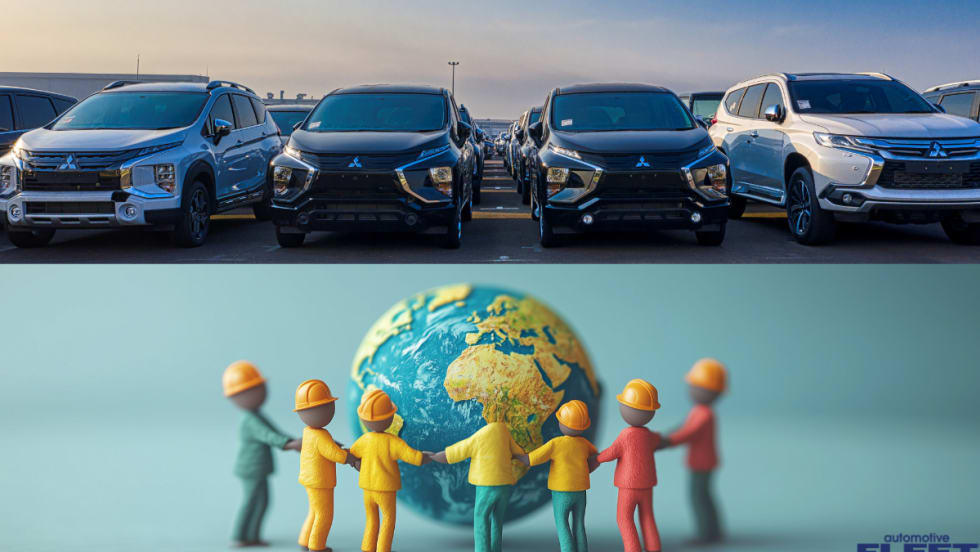
Enterprise Fleet Management Surpasses 900,000 Vehicles in U.S. & Canada
Enterprise Mobility connects with mobility solutions around the globe
Read More →
Sponsored•October 14, 2025
Automotive Fleet's Guide to Fleet Electrification
Unlock the secrets to a successful transition to electric fleets with Automotive Fleet's comprehensive Fleet Electrification Guide!
Read More →
Sumitomo Rubber Industries to Acquire Viaduct
Viaduct will join Sumitomo as an independent subsidiary. Partnership strengthens global reach and accelerates AI-driven innovation for fleets and manufacturing.
Read More →