




The Urban Maze: Making Deliveries Count in NYC
Operating its chain of drug stores in the tight spaces of New York City, Duane Reade has engineered a new concept in inventory management while optimizing its fleet for electrification.

Photos courtesy of Duane Reade.
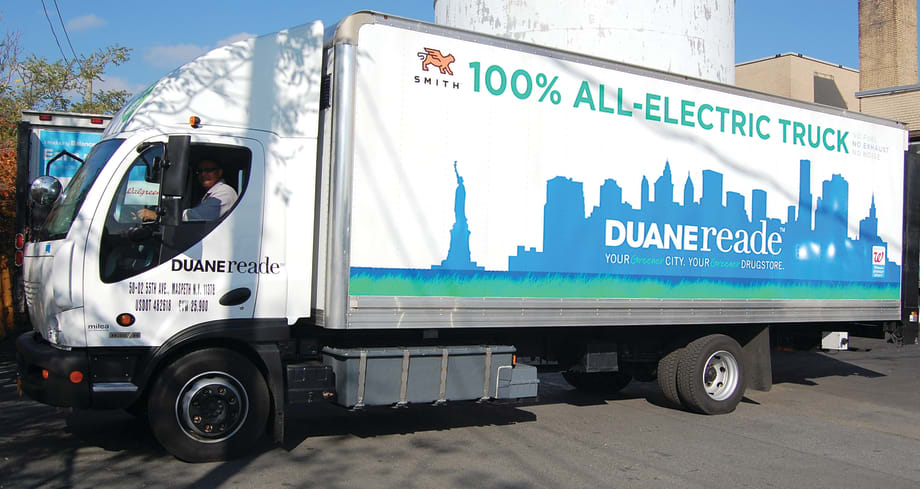
Duane Reade’s all-electric trucks are from Smith Electric. Duane Reade chose the 80-kWh battery-electric Newton 24-ft. box truck.
Photos courtesy of Duane Reade.
Duane Reade’s all-electric trucks are from Smith Electric. Duane Reade chose the 80-kWh battery-electric Newton 24-ft. box truck.
With no back doors, no loading docks and busy sidewalks to push deliveries through, how does a delivery fleet in New York City survive? Operating for more than 50 years, Duane Reade, a New York City-area drug store with about 255 stores in total, has a few tricks to moving fleet in this tight urban space.
Michael Fowles, Duane Reade’s fleet manager, says that toll roads and parking regulations in general can have a significant impact on the company’s transportation costs, so keeping those to a minimum is a top priority.
Twenty-five percent of Duane Reade’s fleet is comprised of Smith Electric Newton box trucks. Rounding out the fleet are other similarly sized diesel box trucks and tractors with customized trailers that are made to meet local regulations.
An All-Wheels, As-Needed Delivery
Due to the antiquated buildings and other space constraints, Fowles says Duane Reade’s delivery workers must enter and exit the same door as customers. And so, instead of using pallets or other traditional forms of delivery, the company fills plastic totes with inventory back at the warehouse.
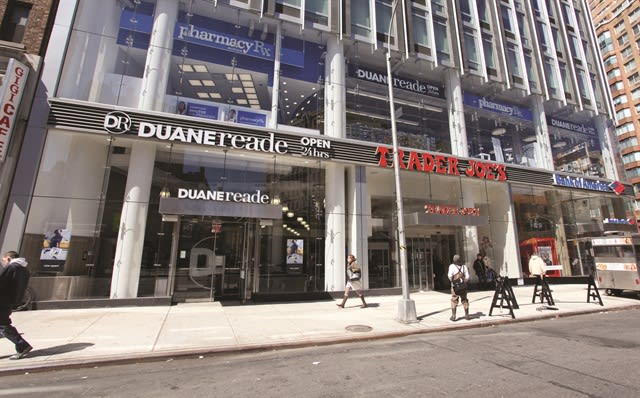
Without back doors or loading docks, Duane Reade’s stores can’t accommodate much extra inventory, which has forced the company to implement a unique delivery style.
About 10-12 totes are strapped together onto a dolly, while bulky items are put onto a wheeled cart with flexible siding. Fowles says the company calls it the “wheeled delivery” concept.
Another restriction due to the old buildings is that most Duane Reade stores have very little storage room in back, if there’s a back room at all. Because of this, stores make orders from the Duane Reade warehouse — located in Queens — on an as-needed basis. “Instead of sending a full case of Snickers, we’ll just send whatever the demand is,” Fowles says, adding that this is why the totes work.
Before making deliveries on these “glorified skateboards,” as Fowles calls them, the process took three or more hours. But now that the inventory is quickly wheeled from the truck’s lift gate and into the store, deliveries take less than 30 minutes.
Upon delivery, the equipment and totes are left there. “That’s been a huge benefit,” he says. “But the one downside is it forces us to stop back at that store and pick up the equipment.” This extra pickup means that the trucks are making more stops than they did before. But with stores operating in a concentrated area, Fowles says the costs of adding stops have been incremental and worth the time saved in deliveries.
“We’re still well under the delivery time compared to delivering on pallets,” he says. The trucks also load any recyclables that have been dropped off at stores by customers, per New York’s cash refund laws.
And though it now takes more time to pack the truck at the warehouse, Fowles says that from an inventory management perspective the process is “pretty slick.”
Concerns in Urban Routing
Routing software is a must for Duane Reade because of the Big Apple’s notorious toll roads and traffic. And with the delivery approach the company has taken, at times the warehouse will even run out of the new delivery equipment, according to Fowles.
“Our trucks and our trailers are somewhat of a mobile extension of our warehouse,” he says. “Sometimes we might actually run out of equipment because of the number of vehicles we can have out delivering combined with those being loaded.” This means that proper routing can go a long way in getting the totes and specially designed carts back in a timely manner.
For routing and tracking Duane Reade uses a routing software that offers a mix of GPS, driver behavior telematics, remote vehicle shutdown and driver logs for tracking hours of service, among other features.
If the volume goes down on a particular day for a particular store or a group of stores, the routing software allows Fowles to minimize or combine routes to maximize the utilization of each truck and the route.
Fowles adds that due to the delivery style, routes are rarely canceled — even if the store’s order volume is low.[PAGEBREAK]
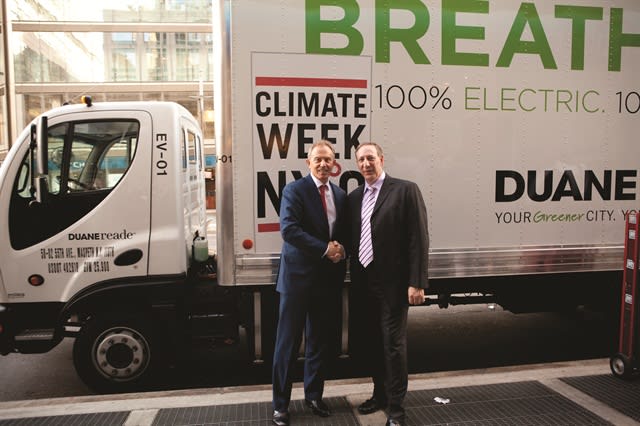
On the left, former UK Prime Minister Tony Blair and Paul Tiberio, Duane Reade senior vice president of merchandising and chief marketing officer, celebrate the NYC Climate Week.
All-Electric on an Urban Terrain
Through full-service leases, Duane Reade has converted a quarter of its fleet over the last year to Smith Electric Newton box trucks.
“We have been so impressed with the technology, and the fact that we can make it relatively cost-neutral to utilize the electric trucks, we are optimistic we will be able to expand the number,” Fowles says.
The trucks were acquired through various local, state and federal grants. He admits the grants helped put the cost of the trucks on par with their gas and diesel counterparts. “But if we could find a way to maximize the miles driven on each truck — and as diesel costs continue to increase — the technology will just look better and better as time goes on,” he says, adding that there is definitely a “delta” between diesel and electric truck pricing.
Fowles describes the grant process as “straightforward,” though sometimes frustrating moments did occur when Duane Reade lacked only one of the qualifying criteria for a certain grant.
With 90% of the stores within 15 miles of its distribution center in Queens and a claimed 100-mile range on the 80-kWh battery-electric Smith trucks, range anxiety is not a factor for Duane Reade. Fowles adds that fleet-wide his vehicles are driving less than 10,000 miles a year.
Moving to electric trucks also works favorably with the altered scheduling and the longer load times at the distribution center. Because it can take several hours to load a truck, the electric trucks’ batteries have more time to fully charge. Each truck takes four to five hours to charge from empty and can make a few runs before having to charge again, according to Fowles.
“I do think we’ll continue to electrify the straight truck portion of the fleet,” he says. “My wish is that technology will improve to the point where batteries will be powerful enough for tractor/trailers because then I could reduce my amount of power units.”
But until that technology gets there, Fowles says the electric trucks Duane Reade is using are “probably as big as you’re going to get.”
The Electric Campaign
Duane Reade recently worked with Mission Electric NYC, a partner of Clean Cities in which the company is a member. The campaign aims at giving customers the opportunity to vote on what stores they would like to see Smith Electric trucks make deliveries.
With an all-electric truck operating quieter than a diesel truck and with noise pollution a regular complaint in New York, “There are a lot of added benefits of this truck,” says Michael Fowles, Duane Reade’s fleet manager.
Fowles says the campaign made for a great way to announce the new technology, while giving customers and nearby residents a voice in the planning process. “We felt it was appropriate to identify how to leverage that technology to help address specific concerns of carbon emissions and the other negative aspects of traditional diesel trucks in specific neighborhoods where they would be most beneficial,” Fowles says.
The people voted and chose seven Duane Reade locations to be serviced by the electric trucks.
Learn more about Mission Electric at http://nyc.missionelectric.org.
You can read more articles from Business Fleet's November/December magazine issue here, and you can see more small fleet profiles at www.businessfleet.com/profiles.
Originally posted on Work Truck Online
More Global Fleet
Holman Takes Full Ownership of ARIZA in Mexico
Holman is bringing its Mexican fleet management operation fully under its own brand after more than 30 years as a joint venture. The change gives multinational fleet customers a single Holman operation across the U.S., Canada, and Mexico.
Read More →
Proven Ways to Reduce Work Truck Downtime
The age-old problem of downtime will always be a reality, but with new strategies at hand, fleets have more ways to keep trucks on the road longer.
Read More →
The Top 300 Commercial Fleets
The Top 300 Commercial Fleets: See the List
Read More →

Cameras, Safety and Insurance: From Reactive Claims to Real-Time Prevention (Part 2 of 2)
Part Two: Commercial auto remains one of the most challenging and costly lines of coverage for fleet operators and insurers alike. Continue learning more about how to effectively address these issues from Onur Aksan, Enterprise Business Development Executive, Geotab
Read More →
Cameras, Safety and Insurance: From Reactive Claims to Real-time Prevention
Commercial auto remains one of the most challenging and costly lines of coverage for fleet operators and insurers alike. Learn more about how to effectively address these issues from Onur Aksan, Enterprise Business Development Executive, Geotab.
Read More →
Fleet Costs Are Rising: Here’s How Leaders Are Responding
Fleet leaders are under pressure to reduce costs, adapt to economic uncertainty, and make smarter decisions. See how peers across North America are responding with real data, proven strategies, and forward-looking insights. Download the 2026 Market Pulse Report to benchmark your strategy and uncover where you can gain an edge.
Read More →
Enterprise Fleet Management Surpasses 900,000 Vehicles in U.S. & Canada
Enterprise Mobility connects with mobility solutions around the globe
Read More →
Automotive Fleet's Guide to Fleet Electrification
Unlock the secrets to a successful transition to electric fleets with Automotive Fleet's comprehensive Fleet Electrification Guide!
Read More →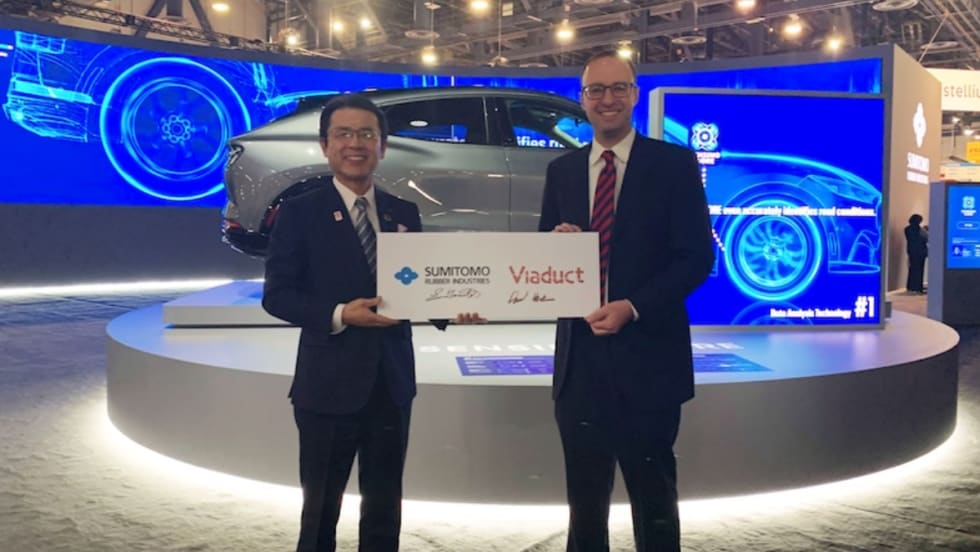
Sumitomo Rubber Industries to Acquire Viaduct
Viaduct will join Sumitomo as an independent subsidiary. Partnership strengthens global reach and accelerates AI-driven innovation for fleets and manufacturing.
Read More →