




The Importance of In-Vehicle Safety Technology
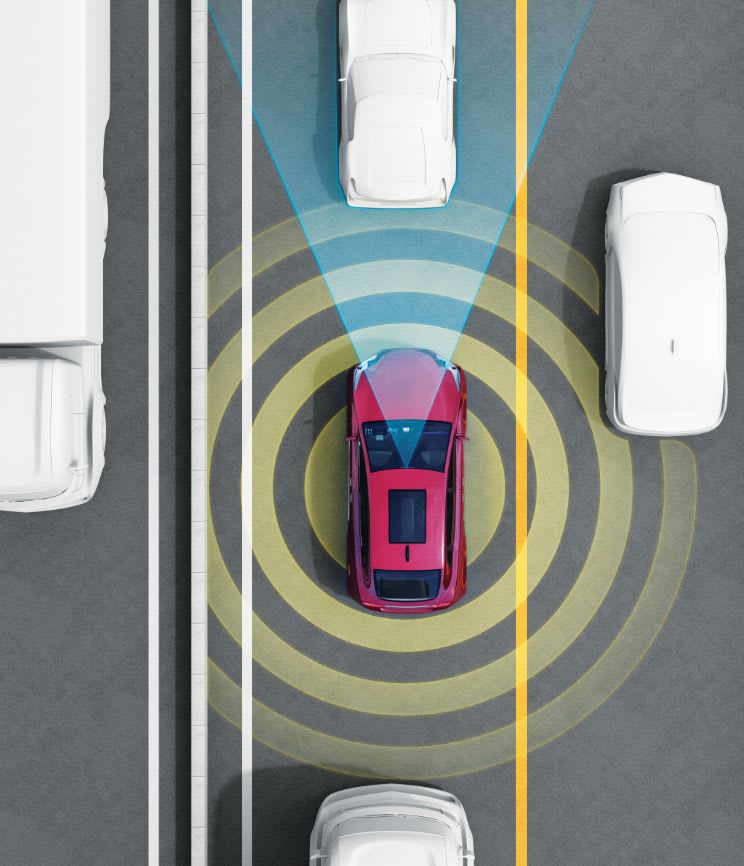
With features such as frontal and radar-based collision avoidance systems, blind spot warning, cross traffic alerts, and rear-view cameras, it is important to educate drivers to rely on their senses.

In 2015, 2.2% of all drivers were observed to be texting or otherwise manipulating hand-held devices, according to data compiled by the Insurance Institute for Highway Safety.
In 2015, 2.2% of all drivers were observed to be texting or otherwise manipulating hand-held devices, according to data compiled by the Insurance Institute for Highway Safety.
Vehicle technology is evolving at a rapid pace. And with this evolution has come a slew of new vehicle safety technologies, such as frontal and radar-based collision avoidance systems, blind spot warnings, cross traffic alerts, and rear-view cameras.
Initially offered as an option to luxury vehicles, crash avoidance technologies have steadily become standard on non-luxury models.
Indeed, the National Highway Traffic Safety Administration (NHTSA) and the Insurance Institute for Highway Safety (IIHS) announced a commitment of 20 major automakers, which represents 99% of U.S. light vehicle sales, to make front crash prevention systems standard on virtually all models by September 2022.
Because the technology is becoming increasingly more commonplace and standard, fleet managers need to dedicate time to educate their drivers on the importance of better understanding the technology for the safety of the driver, the company’s fleet, and the public at large.
Curbing Distractions
It’s no secret that drivers face more distractions on the road than ever before. In fact, each day in the U.S., over eight people are killed and 1,161 are injured in crashes that are reported to involve a distracted driver, according to data from 2013 by the National Highway Traffic Safety Administration.
Luckily the collision avoidance technologies that exist are a helpful means to find a way to decrease this number. Allen Jay, regional sales manager for fleet and OEM at Mobileye Inc., said that because people have so many reasons to be distracted on the road, the crash avoidance technologies can help act as the driver’s “third eye.”
“The reality is everyone is a human being. Everyone has experienced some type of distraction,” said Jay. He said in addition to cellphone usage, distractions on the road can also be related to rubbernecking, eating and drinking , and tuning the radio.
However, education in regards to the technology is key to get the most out of utilizing the technologies.
“There needs to be that conversation from safety managers to their fleet drivers to say ‘Hey, we’re adopting this technology and we need to be safer.’ I think a lot of these companies are trying to be ahead of the curve on safety,” said Jay.
Indeed, these technologies have proven to show results, according to research from the IIHS.
IIHS studied the effectiveness of front crash prevention by analyzing police-reported crash data from 22 states between 2010-14. The institute found that vehicles equipped with front crash prevention are much less likely to rear-end other vehicles than the same models without the technology.
Meanwhile, the study also found that systems with forward collision warning and automatic braking cut rear-end crashes in half, and forward collision warning reduces them by 27%. The autobrake systems also greatly reduced rear-end crashes involving injury, according to the institute.
Driver Complacency
The technology is not only important for drivers that are facing distractions on the road, but also those who are complacent about their behaviors and assume that they do not need the additional support, said Jay.
“It’s very common that drivers are complacent on how they drive until they have understood and been trained on the technology,” he said.
Some of the resistance to using new technology may stem from older drivers who are unfamiliar with the features. Jay also said, for some drivers, there is an Orwellian stigma associated to safety technologies; drivers may feel as though the technology means they are constantly “being watched.”
“Really the challenges are, until they’ve seen the technology work or until they’ve seen the technology demonstrated, I think that will really calm them down on what the collision avoidance systems can do,” said Jay.
More Safety

Fleet Manager’s Ultimate Playbook: Navigating the New Standard in OEM Connectivity
Rising operating costs, driver safety concerns, and unplanned downtime are putting unprecedented pressure on modern fleets. Discover how fleet managers use embedded OEM connectivity and real-time vehicle data to cut TCO, prevent downtime, and protect drivers without aftermarket telematics hardware.
Read More →
From Driver Well-Being to EV Charging | AF News Recap
Mental health belongs in the fleet safety conversation. This week, we’re looking at five ways fleets can support employee well-being before a crisis, plus Holman’s expansion in Mexico, new one-day Fleet Forward passes, and why EV charging demand is outpacing infrastructure growth.
Read More →
Nexar-Nauto Merger Aims to Give Fleets Better Safety Intelligence Through Larger Driving Dataset
Stefan Heck tells Automotive Fleet that combining more than 10 billion miles of driving history with Nexar's AI models will give fleets deeper insights into driver risk and roadway conditions than either company could provide independently.
Read More →
Don't Wait for a Crisis: 5 Ways to Build Mental Health Into Your Fleet Safety Program
For Suicide Prevention Month, fleet and safety leaders have an opportunity to put mental health where it belongs: at the center of workplace safety.
Read More →
How Camera Data Can Strengthen a Fleet’s Insurance Renewal
Insights from a commercial insurance carrier and a broker show how fleets can turn video telematic data, driver coaching, and improved claims results into a stronger case at insurance renewal.
Read More →
The Safest Fleets Aren’t the Ones with the Most Technology
You’ve made the telematics investment. Here’s how to capture the other half of its value and build the safest fleet on the road.
Read More →
Hidden in Plain Sight: Fleet Compliance Risks
Fleet compliance isn't just about having policies — it's about consistently enforcing them. This practical guide reveals six hidden compliance risks common in public sector and shared fleet operations and outlines proven strategies to improve visibility, accountability, and audit readiness
Read More →
NETS Sets 2026 Fleet Safety Benchmark Conference for Indianapolis
The Sept. 15–17 program will feature fleet benchmarking data, case studies, emerging technologies, and implementation strategies while running alongside the NSC Safety Congress & Expo.
Read More →
Off-the-Job Crashes Account for 43% of Employers’ $61.7 Billion Crash Burden
NETS quantifies costs dispersed across fleet, risk, HR, and other departments while providing new per-crash benchmarks for employers.
Read More →
Ram Recalls More Than 1.27 Million 1500 Pickups for Seat Belt Anchor Issue
The recall affects certain 2019-2026 Ram 1500 pickups that may have improperly attached second-row seat belt buckle anchors.
Read More →