




The Call for Competition in Insurance Replacement
One company, Enterprise Rent-A-Car, has more than 85% market share. But competitors and industry software providers are stepping up efforts to challenge the company's dominance.
Now coming to a mini-mall near you: another Hertz Local Edition. In case you haven’t noticed, Hertz Local Edition stores are becoming a staple of suburban shopping districts, right alongside Baskin-Robbins ice cream shops and Subway sandwich stores.
In the past three years, Hertz has nearly doubled its Local Edition facilities to more than 1,100 nationwide. The car rental industry’s airport king is making a serious push to snatch some market share away from Enterprise Rent-A-Car in the local market. For Hertz’s plan to succeed, Local Edition stores need to attract insurance replacement business as well as retail business.
In insurance replacement, rates are lower but rental periods are longer. This segment generated $4.7 billion in 2003. Enterprise’s market share in this segment is more than 85%, according to industry estimates.
From 1998 to 2003, insurance replacement revenues grew 38.4% — more than any other rental segment. Through economic downturns, national security alerts and public health scares, insurance replacement sales have risen steadily. It’s no wonder that Hertz — and to a lesser degree, Cendant Car Rental Group — has made insurance replacement a major part of the company’s expansion plans.
This comes at a time when some of Enterprise’s competitive advantages have diminished in value — most notably, the company’s Automated Rental Management System (ARMS). Enterprise is no longer the only car rental company that can manage rental transactions electronically.
Interconnectivity between a car rental location and a claims adjuster is now available to rent-a-car companies of all sizes, including small independents. TSD Inc.’s EDiCAR and Argo Development Systems’ Insurance Connection Online (ICO) both offer such capability. What’s more, a new software company, ClaimForce, introduced its claim service network this year and is aggressively marketing it to insurance companies throughout the country. Hertz Local Edition is on both the EDiCAR and the ClaimForce systems.
Dennis O’Mahoney, president of ClaimForce in Warrenville, Ill., says many insurance carriers welcome more competition in replacement rentals. “The reason why we got into insurance replacement and built a rental application is because our insurance contacts have told us they need alternative sources,” he says. [PAGEBREAK]
Meanwhile, Rent-A-Wreck has begun spearheading a coalition of car rental operators and consumers advocating anti-steering legislation. Such state laws would prohibit insurance carriers from requiring or recommending a specific car rental company. Several states — California, Louisiana, Maryland, Montana and Minnesota among them — already have laws that prohibit insurers from steering claimants or clients to specific repair shops.
Enterprise has a number of preferred-vendor contracts with major insurance carriers, including Allstate Insurance and Nationwide Insurance. But if states began adopting such anti-steering laws for car rental, claims adjusters in those states could no longer refer all business to Enterprise in order to qualify for volume-based rebates or discounts.
So the billion-dollar question is: How much market share, if any, will Enterprise lose as a result of these trends in the next few years?
IT Investment Key to Market Dominance
Today, Enterprise Rent-A-Car operates 5,000 locations in the United States. The company’s origins can be traced back to 1962, when St. Louis-based Executive Leasing launched a rental car division with a fleet of 17 vehicles. Founded by Jack Taylor, Executive Leasing specialized in vehicle fleet leasing. The company’s name changed to Enterprise in 1969.
Throughout the 1970s and ’80s, Enterprise’s rental division targeted the insurance replacement market — a segment largely ignored by industry giants Hertz and Avis. By 1989, the company had changed its name to Enterprise Rent-A-Car and was operating more than 500 locations with a fleet of 50,000 rental vehicles. While other rental companies targeted business and leisure travelers, Enterprise concentrated on building relationships with insurance companies — on a local and national scale — as well as body shops and car dealerships.
In the early 1990s, development of Enterprise’s ARMS created a competitive advantage that no other rental company could match. The first version of the system, dubbed ARMS Direct, provided a direct connection between an insurance carrier’s claims system and Enterprise’s rental management system. The two parties could exchange transaction data electronically, slashing the need for time-consuming phone calls and faxes. The use of ARMS Direct, however, required considerable computer programming to integrate the two systems. Since then, Enterprise has funded IT improvements to make ARMS much more accessible to smaller insurance companies.
Enterprise declined an interview request to discuss ARMS for this article. But according to a story in the Feb. 2002 issue of CIO, a trade magazine for chief information officers, Enterprise introduced its Web-based version, ARMS Claims, in 1999. With ARMS Claims, any insurance adjuster with an Internet connection could manage an entire rental transaction over the Internet.
Between 1998 and 2000, according to the CIO article, Enterprise’s insurance replacement business grew 35%. What’s more, business with the biggest insurance companies grew two or three times that rate.
ARMS cut an average of 8.5 phone calls from each rental transaction, saving the insurance industry millions annually, Enterprise told CIO. ARMS also helped fuel Enterprise’s market dominance and fostered partnerships with major insurance companies.
Today, no other single rent-a-car company can offer insurance carriers the same level of coast-to-coast coverage and economies of scale as Enterprise — not even Hertz. But through networks established by TSD, Argo and ClaimForce, Enterprise’s competitors can offer a paperless, no-hassle electronic transaction. And collectively, they can provide broad nationwide coverage.
Nonetheless, national preferred-vendor contracts continue to pose a major barrier to competition in the insurance replacement market, particularly for independents and franchisees. In the past couple years, it has become more common for customers to return a rental car early to appease an adjuster who insists they use the “preferred provider.”
Customers cut their rental short so they can, in essence, get a replacement vehicle for their replacement vehicle. Also, some insurers permit direct billing solely for preferred providers. What’s driving this trend is the promise of more volume-based discounts and rebates for the insurance carriers.
“To compete, we deliver cars right to a customer’s home or job,” says Roman Caperna, who owns Reliable Rent-A-Car in Baltimore, Md. “But I’ve even been in a customer’s home with the rental contract, only to have the insurance company call and tell the customer to send us away.”
Since auto policies typically don’t stipulate which car rental providers a policy holder must use, this trend could help build momentum for anti-steering legislation. [PAGEBREAK]
Interconnectivity an Expectation
With adjusters now accustomed to using ARMS, smaller rent-a-car companies place themselves at an even greater disadvantage when they have no means for electronic processing. The old-school approach of playing phone tag and faxing documents back and forth wastes time and money — and can try an adjuster’s patience.
With TSD’s EDiCAR and Argo Development Systems’ ICO, an adjuster can scroll through a list of available rental providers after typing in the city or zip code of the claimant or “insured” (client). After selecting an RAC, the adjuster can send a rental request electronically, and the rental location can either accept or decline the job. The rental can be opened, closed or extended online.
Transmission occurs either over the Web, using a standard electronic data interchange (EDI) protocol, or through a direct link to the insurance carrier’s mainframe. State Farm, for example, maintains its own software program and requires a direct link. The company has operated its own rental management software for about six years.
“It allows our claim representatives to make an electronic assignment to any participating rental company,” says Ed Weidmann, a State Farm claim consultant based at corporate headquarters in Bloomington, Ill. “But in order to participate, a rental company must have the ability to interact with us electronically using the schema elements we need to accept and transmit information.”
Enterprise has a direct link to State Farm. Other RACs in the company’s rental program access it through EDiCAR or ICO.
As company policy, State Farm doesn’t steer its claimants or insureds to specific rental companies. “State Farm allows customers to pick whatever company they want,” Weidmann says. “If they don’t have any idea and ask for our help, we usually provide them three names off our list of participating companies.”
TSD’s EDiCAR, available for several insurance partners, has nearly 40 different Web sites customized for those insurance carriers to manage rental claims. The Web sites act as a secure portal for each insurer’s rental transactions.
“Really, each interface is shaped around the requirements of the insurance company,” says Eric J. Peterson, director of product development for TSD, when asked about standard insurance practices. “The insurance companies are delivering the business to the car rental companies, and they’re pretty much defining the requirements of the electronic data interchange.”
Originally posted on Auto Rental News
More Global Fleet

The Top 300 Commercial Fleets
The Top 300 Commercial Fleets: See the List
Read More →

Cameras, Safety and Insurance: From Reactive Claims to Real-Time Prevention (Part 2 of 2)
Part Two: Commercial auto remains one of the most challenging and costly lines of coverage for fleet operators and insurers alike. Continue learning more about how to effectively address these issues from Onur Aksan, Enterprise Business Development Executive, Geotab
Read More →

Cameras, Safety and Insurance: From Reactive Claims to Real-time Prevention
Commercial auto remains one of the most challenging and costly lines of coverage for fleet operators and insurers alike. Learn more about how to effectively address these issues from Onur Aksan, Enterprise Business Development Executive, Geotab.
Read More →
Why Fleet Managers Are Replacing Departmental Vehicles with Shared Motor Pools
Departmentally assigned vehicles often create hidden costs through underutilization, poor visibility, and increased administrative burden. This white paper explores how shared motor pool strategies help fleets reduce costs, improve accountability, and optimize vehicle utilization.
Read More →
Fleet Costs Are Rising: Here’s How Leaders Are Responding
Fleet leaders are under pressure to reduce costs, adapt to economic uncertainty, and make smarter decisions. See how peers across North America are responding with real data, proven strategies, and forward-looking insights. Download the 2026 Market Pulse Report to benchmark your strategy and uncover where you can gain an edge.
Read More →
Enterprise Fleet Management Surpasses 900,000 Vehicles in U.S. & Canada
Enterprise Mobility connects with mobility solutions around the globe
Read More →
Automotive Fleet's Guide to Fleet Electrification
Unlock the secrets to a successful transition to electric fleets with Automotive Fleet's comprehensive Fleet Electrification Guide!
Read More →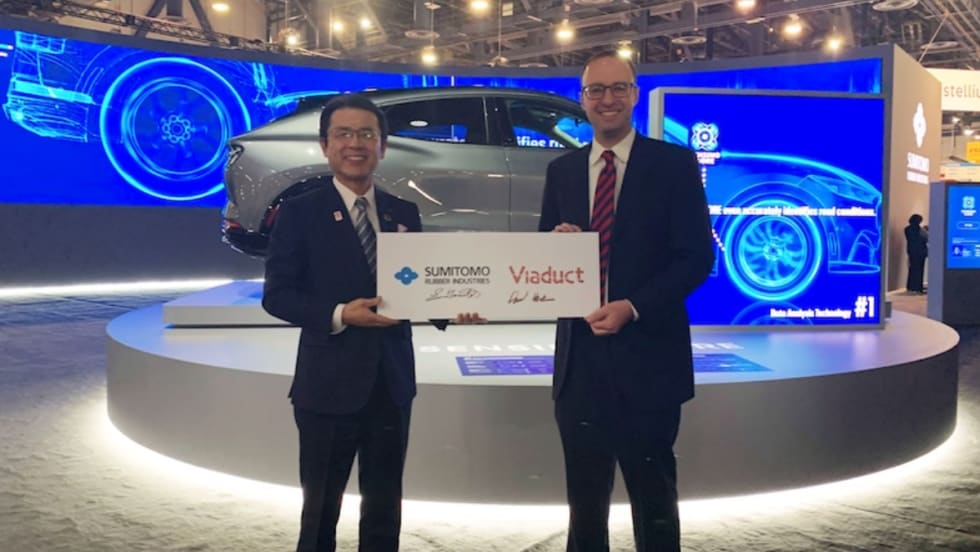
Sumitomo Rubber Industries to Acquire Viaduct
Viaduct will join Sumitomo as an independent subsidiary. Partnership strengthens global reach and accelerates AI-driven innovation for fleets and manufacturing.
Read More →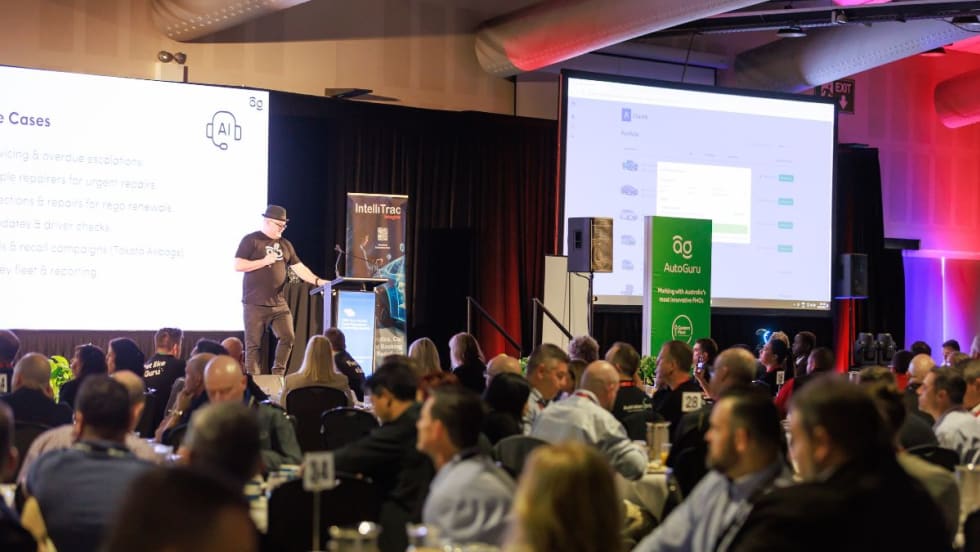
AfMA’s 2025 Education & Leadership Summit: 26 Years of Impactful Connection
Held in Sydney, the Australasian Fleet Management Association’s 2025 Summit marked ten years of growth as the event expanded its global reach and doubled down on practical, non-commercial fleet leadership programming.
Read More →