




Surviving In The 1990s
To survive in the '90s, lessors have to focus on certain principles, says Tom Slade, general manager of Interstate Auto Leasing. These principles are: establishing attainable goals, continuous education, and honesty.
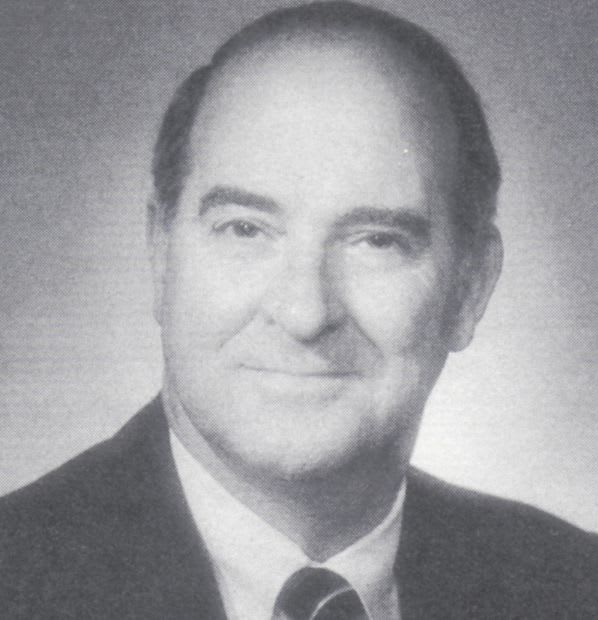
Tom Slade, general manager,Interstate Auto Leasing (circa 1990)
If you've been dashing around trying to find a secret method or magic formula to help you survive in the automotive leasing business during the last decade of this century, I suggest you give up the search.
Tom Slade, general manager,Interstate Auto Leasing (circa 1990)
Elbert Hubbard, the American writer, put it into perspective with a simple statement: "The great secret of success is that there are no secrets of success." And this is as undeniably true in the automotive leasing business as it is in all other activities.
Success does not automatically happen and it is not an accident. There are certain specific things winch have been tested and proven in the automotive leasing business that are still the principle cornerstones of our trade. Most of the recent innovations have proven unworkable and/or unethical.
As we enter 1990, we probably would be wise to focus on certain basic principles to help plot the course to our objective.
Establish Attainable Coals
If we aim too low, we underachieve, but if we aim high we may not hit the moon, but perhaps a mountain top. Whatever management style your company uses (with the exception of autocratic), all input is important in the goal setting stage.
Each personnel level at a company must participate in a master plan in order to have everyone's commitment to carry their share of responsibility. Many ideas will be discarded but the value of input from all personnel levels tends to unify workers, whether clerks or senior vice presidents.
An attitude of family can be one of the most valuable assets for a company. However, if upper management responds or behaves cynically toward lower level personnel, the "family attitude" is diminished and morale is immediately destroyed.
Management must be aware of responsibility to every employee, with respect and recognition being the two most important factors.
We must know where we want to go in order to plan the strategy which will get us there.
Continuous Education
Management must strive constantly to acquire the most highly qualified people available for every job. Then, every employee should be encouraged to learn additional skills and altitudes through seminars and workshops with professional trainers.
Educational materials should be available and employee progress should be constantly monitored so that the high achievers will not be overlooked and lost to competitors.
Creating leaders from within is more advantageous than constant reliance on headhunters. headers are not born; they become leaders because of their desire and willingness to look beyond their own egos in search of knowledge and wisdom about their environment.
When it becomes necessary to bring new hires on board, we must feel certain that they are educable, possess high personal values, and are skilled, or at least are teachable, in effective communications.
Honesty
If your company is not rooted to a solid foundation of impeccable honest, now is the time to implement your survival plan, and hope that it is not too late.
There is a new wave about the land which clearly reveals that where financing and leasing of cars are concerned, the consumers are now in command.
Many of them were "slam-dunked" during the yuppie frenzy, discovering much later that their leases were nothing more than disguised transactions which kept secret the true price they were paying for low payments.
Most of these indiscretions took place in dealerships where so-called leasing experts with little or no formal training in the leasing culture, were brokering deals which barely resembled leases to companies interested only in buying paper.
Not only have these people, at least the ones who were not repossessed, fled forever from leasing but as poetic justice quite often recites, the guilty dealers have also lost them as future customers.
Libraries are filled with volumes on ethics and honesty, however you only need to remember one thing if you care to move proudly and profitably through the '90s and that is the Golden Rule.
There is no other concept or philosophy which identifies with such simple clarity the easiest of all roads to success.
The blind quest for impersonal values such as money, power, and social gain causes many people to bypass honesty and responsibility. These people ultimately succeed in destroying themselves with their greatest losses being honor and respect.
If you are not doing so already, try practicing honesty in early terminations, lease cost disclosure, residual responsibility, gap loss potential, and resale income, just to name a few.
The author Napoleon Hill said, "No wealth or position of benefit can long endure unless built upon truth and justice," and Ralph Waldo Emerson said, "Guard your integrity as a sacred thing."
As the automobile industry begins to experience upheaval and bloodbaths during the '90s, the auto leasing industry will continue to change.
Mergers and acquisitions will most likely continue with the big getting bigger. Meanwhile, the small lessors who have positioned themselves well within their niches and have continued to do the correct things will prosper more than ever. The giants, operating on low profit margins and high volume, will not be able to deliver that magic ingredient which the small lessor, schooled in the trenches, knows how to deliver so well - service. Personal service and lots of it.
Quality and customer service appear to be the rallying cry for most organizations as they begin to focus on their strategies for the '90s.
Most lessors admit that their greatest and most critical challenge internally is corporate culture. The front offices are discovering that standards must be raised constantly in order to keep pace.
Cleaner, leaner, nicer, and smarter will be the popular buzzwords in 1990. Delivering high quality leasing services through people within predetermined budgets on a consistent basis will test the skills of management.
The battle cry of the '90s could well be "customers, quality, and the care of employees."
Incompetence leads the list of reasons why businesses go into bankruptcy at 55 percent, with inexperience following at 24 percent.
It is obvious that we need to know what we are doing and our personnel, at all levels, must be competent, experienced and/or well trained.
Training is absolutely essential if we hope to minimize turnover.
Enterprise, the 32-year-old St. Louis giant, gets the highest marks in the industry for its outstanding training programs. Automotive Fleet reported in its September 1989 issue that, "There has been virtually no turnover at the management level and, among staff members, almost none after an employee has been with the company for three years."
Recently, while consulting with a leasing company in Atlanta, GA, we uncovered a vehicle that had been traded to a sub-lease broker by the original lessee. Although the transaction had occurred several months earlier, it had not been detected by the leasing company.
To make matters worse, the person driving the vehicle had made a sizable down payment on the unit and was paying monthly notes to a local bank.
Fortunately, we recovered the car, an expensive European luxury model, and installed control systems to prevent similar events from remaining undetected for extended periods.
As always, the bottom line is people. These are people who are dedicated, have a sense of mission, are well trained, are well cared for, and are enthusiastic about achieving their maximum potential while striving to meet and exceed the company's objectives.
Automotive leasing in the '90s will most likely be full of fun and profit, but we must remain alert. It is essential that we continue to support the American Automotive Leasing Association, the National Vehicle Leasing Association, and the state associations since they play important roles in our behalf.
We must keep our houses in good order or someone else will step in to do it for and to us.
More Operations

90% Use Telematics. Are Fleets Getting Safer? | AF News Recap
This week, we're breaking down which industries have the highest rates, how Jamie McKay manages 2,400 vehicles, what's happening with the 2027 fleet awards, and why software-defined vehicles could introduce new costs.
Read More →
What's Best Handled by an FMC, and What's Better Done Directly?
Fleet managers continue to rely on FMCs for essential services but are taking a closer look at where working directly with suppliers can improve efficiency and responsiveness.
Read More →
Fleet Meets: Erin Gilchrist
Meet Erin Gilchrist, the inaugural Mike Antich Spirit of Fleet Award winner, as she shares insights on leadership, mentorship, the power of industry connections, and why people remain at the heart of fleet's future.
Read More →

How 2026 Fleet Visionary Jamie McKay Manages 2,400 Vehicles Across 37 States
How do you keep 2,400 vehicles running across 37 states? Fleet Visionary Award winner Jamie McKay shares how collaboration, flexibility, and a few simple strategies help her tackle fleet management challenges at Aptive Pest Control.
Read More →
Managing Fleet Costs in an Era of Permanent Volatility
Fleet operating costs have risen more than 20% since 2020, raising a key question: When does extending a vehicle's service life stop making financial sense?
Read More →
The Next Evolution of Fleet Management: Autonomous Operations
This opening keynote session at the Fleet Forward Conference highlights the future of autonomous driving for fleets.
Read More →
How to Reduce the Total Cost of Risk From Catalytic Converter Theft
A stolen catalytic converter can cost fleets far more in downtime and lost productivity than in repairs. A total-cost-of-risk approach can help fleet managers quantify their exposure and prioritize theft prevention.
Read More →
Personal-Use Charges Rise as Vehicle Values Fall | AF News Recap
Personal-use charges are climbing, wholesale used-vehicle values are declining, and commercial fleet sales growth is slowing. This week, we're breaking down the latest fleet data, plus how Element Fleet Management is helping Waymo prepare for its first Canadian robotaxi market.
Read More →
Here's When You Should Make an Exception to Fleet Policy
Fleet policies are designed to create consistency, but not every driver or situation fits neatly within standard rules.
Read More →
AI-Native or AI-Acquired: What Should Fleet Managers Look for in an AI Platform?
Six questions can help fleet managers look beyond AI marketing claims to evaluate integration, data access, and real-world operational performance.
Read More →