





Miss This? Drivers Being Overworked at Ports
Slip Seating: Can it Benefit Your Fleet?
Slip seating means rotating drivers through trucks as vehicles are available, rather than assigning a specific driver to a specific unit. In some cases, it can be a public relations as well as financial advantage.
May 1, 2008
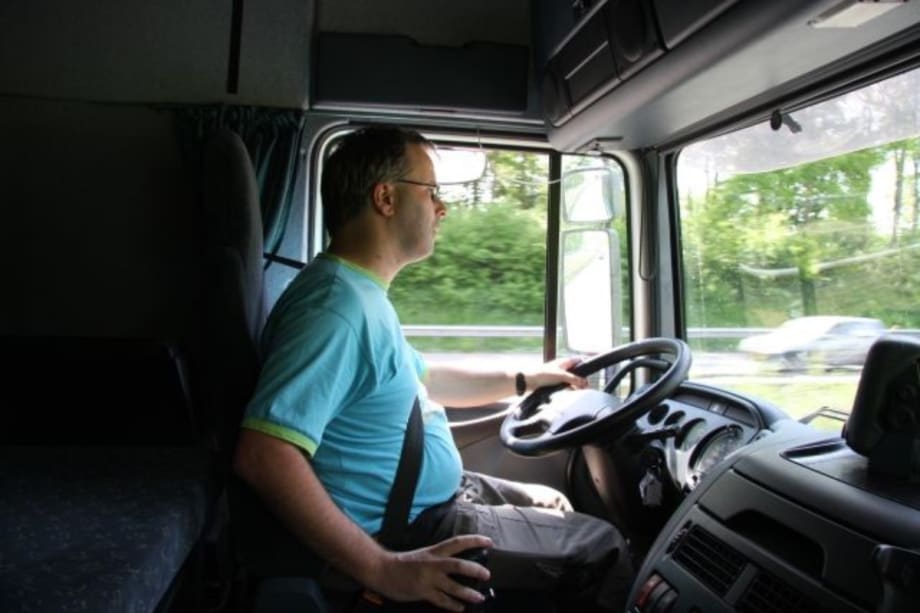
One reason companies, especially private fleets, are taking advantage of slip seating is that it allows greater equipment utilization.
Photo: Wikimedia Commons
3 min to read
- Slip seating involves rotating drivers through available trucks instead of assigning them permanently to one vehicle.
- This practice can lead to cost savings and operational flexibility within a fleet.
- Slip seating may also offer public relations benefits by optimizing vehicle utilization.
*Summarized by AI
Running a fleet these days is even more of a juggling act than in the past. Fleet managers have to balance between scarce new driver hires and an aging driver roster, maximizing the use of vehicles while keeping them in service longer.
National Private Truck Council (NPTC) conducts an annual survey to maintain data on and track privately-owned truck fleets focusing on driver issues, fuel costs, and equipment issues. According to the survey, these three problems are the biggest confronting fleet operators. The survey found almost three-quarters of companies that operate private fleets say they utilize slip seating to provide better service to customers.
Slip-Seating Advantages
Tom Moore, executive director of NPTC, commented about the survey, particularly about the organization and member use of slip seating.
“Many private fleet operations conduct business in a 24/7 environment, where customer service reigns supreme. The overall aspect is to make sure those goods or services get to market in a timely, efficient, and proper fashion. That’s the chief reason why many fleets are moving towards slip seating,” said Moore.
He added it is possible to find good, well-run companies on both sides of the philosophical debate: to slip seat or not.
“The primary reason many companies, especially private fleets, are taking advantage of slip seating is that it allows greater utilization of the equipment. Regardless of your environment, your trucks don’t make money when they’re sitting.”
The Meaning of 'Truck Driver'
“Within our marketplace,” Moore said, “the term ‘truck driver’ is almost a misnomer.”
The survey showed the average driver works about 55 hours a week, but 15 of those hours are spent doing tasks other than driving.
In many cases, the driver is the only representative of the company the customer sees. “I think you’ll find the customer service aspect is the most important thing within the culture of most private fleets,” Moore said.
He added that while equipment is an important part of a business operation, it doesn’t add as much to retention as the way drivers are treated and the role they play within their companies.
Moore noted one of the challenges of slip seating is that drivers must treat the equipment with respect, because they’re basically treating the next driver of the equipment with the same respect — not leaving the truck dirty, creating an environment in which the next driver feels at home.
The survey also found the question “Do you use slip seating?” does not always get a hard and fast answer.
“If someone in our survey said, ‘Yes, we slip seat,’ ” according to Moore, “it may be only for a portion of their fleet, where it makes sense to keep those units in continuous service rotation.Even in a company that does slip seat, there may be an advantage for certain equipment to be assigned to a specific load or operator.
It allows a fleet to be more customer-service sensitive in the sense that instead of having routes and equipment that are necessarily assigned, the first available unit goes out on the most urgent, most pressing customer service need. It allows you to optimize your customer service stance.”
Moore concluded the logic within the private fleet community is that slip seating is the most effective, most efficient way to provide service for their customers.
Quick Answers
Slip seating involves rotating drivers through available trucks rather than assigning a specific driver to a specific vehicle.
*Summarized by AI
Originally posted on Work Truck Online
Subscribe to Our Newsletter
More Global Fleet
GeoFencing Adds to Your Truck Security Arsenal
Geofencing is a familiar fleet tool today, but its early adoption marked a major shift in vehicle tracking, route monitoring, and the debate over employee privacy.
Read More →
Holman Takes Full Ownership of ARIZA in Mexico
Holman is bringing its Mexican fleet management operation fully under its own brand after more than 30 years as a joint venture. The change gives multinational fleet customers a single Holman operation across the U.S., Canada, and Mexico.
Read More →
5 Tire Maintenance Tips to Help Prevent Work Truck Downtime
Regular tire checks can do more than extend tread life. These five maintenance practices can help work truck fleets catch problems early, reduce costs, and prevent downtime.
Read More →

Proven Ways to Reduce Work Truck Downtime
The age-old problem of downtime will always be a reality, but with new strategies at hand, fleets have more ways to keep trucks on the road longer.
Read More →


Cameras, Safety and Insurance: From Reactive Claims to Real-Time Prevention (Part 2 of 2)
Part Two: Commercial auto remains one of the most challenging and costly lines of coverage for fleet operators and insurers alike. Continue learning more about how to effectively address these issues from Onur Aksan, Enterprise Business Development Executive, Geotab
Read More →
Cameras, Safety and Insurance: From Reactive Claims to Real-time Prevention
Commercial auto remains one of the most challenging and costly lines of coverage for fleet operators and insurers alike. Learn more about how to effectively address these issues from Onur Aksan, Enterprise Business Development Executive, Geotab.
Read More →
Fleet Costs Are Rising: Here’s How Leaders Are Responding
Fleet leaders are under pressure to reduce costs, adapt to economic uncertainty, and make smarter decisions. See how peers across North America are responding with real data, proven strategies, and forward-looking insights. Download the 2026 Market Pulse Report to benchmark your strategy and uncover where you can gain an edge.
Read More →
Enterprise Fleet Management Surpasses 900,000 Vehicles in U.S. & Canada
Enterprise Mobility connects with mobility solutions around the globe
Read More →