




Senior Management Role Critical in Reducing Preventable Crashes
To effectively cut the rate of preventable accidents, fleet safety efforts require senior executive engagement in program development, funding allocation, communication, and leadership.

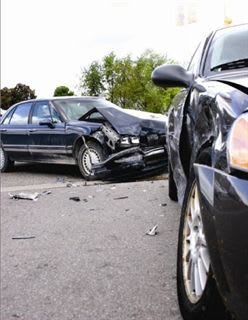
Where the head turns, the body will follow." Fleet safety experts point to this adage in describing the critical element of senior management support in developing and maintaining a driver safety program effective in reducing the incidence preventable accidents.
"Where senior management goes, the employee will follow," emphasized Jack Hanley, executive director, Network of Employers for Traffic Safety (NETS), a nonprofit organization of member companies dedicated to promoting traffic safety on highways around the world. "If senior management doesn't practice safety, no amount of training or incentives will motivate employees who are quick to pick up on the sincerity and authenticity of the corporate commitment to safety."
According to the experts, such management leadership engages senior executives directly in fleet safety program development and participation, adequate fund allocation, and communication.
"Senior management must be involved and committed to the success of the program. They must be part of the committee to help organize the safety program and champion it to the highest levels for funding and other support," said Lou Mene, president of ITC Safety, a fleet driver safety services and training provider.
These senior executives must "understand and communicate the program's value to the company. The safety program is a profit center in returning value to the company's bottom line — money saved in crash avoidance," Mene further stressed.
Effective safety programs also require full management participation, said Mene. "Drivers must believe management is behind the safety effort 100 percent. Any other actions that prove otherwise will undermine the program's success," Mene explained. "If a driver must participate in an ongoing safety program, so should all other employees, including management. The risk and liabilities of driving on company time are the same no matter what the status in an organization."
Safety 'Always Top of Mind'
Safety is "always top of mind" among AmeriFleet senior management, according to Juan Perez, VP operations at the vehicle logistics services company.
AmeriFleet's senior management team meets weekly "to talk through safety-critical areas," said Perez. A core company value is continuous process improvement, which includes "continually looking at how to avoid crashes and safety issues."
The Alpharetta, Ga.-based AmeriFleet deploys more than 800 "service delivery professionals" who drive more than 55,000 vehicles, 12 million miles per year, said Perez.
Company employees move a variety of vehicles from typical passenger vehicles to work trucks 10,000 lbs. or more and covered by DOT regulations, throughout the U.S. and Canada and Puerto Rico, Perez explained.
Key to AmeriFleet's safety measures is "hiring the right person," said Perez. New hires undergo background and motor vehicle record (MVR) checks, drug tests, and references confirmation - leading indicators of the type of employee a candidate might be, Perez noted.
[PAGEBREAK]
Providing the required resources is an essential element of AmeriFleet's safety program.
"Safety is not a priority if it's your second thought," said Perez. "You must have dedicated resources in place versus assigning safety as an additional duty." The company has a dedicated staff that assures Department of Transportation regulation compliance.
In addition to safety program funding and organizational support, top AmeriFleet executives "lead by example," said Perez. "We practice what they preach."
Leadership Commitment Visible
At the global pharmaceutical company, Eli Lilly and Co., "leadership support and visible commitment is critical to the success of our motor vehicle safety programs because employees care about what their leadership cares about," said Beth Ann Stamer, director of health, safety, and environment — affiliates. "It is leadership's responsibility to make it clear in words and deeds that they care about every employee's safety."
Headquartered in Indianapolis, Lilly's sales fleet comprises passenger cars, SUVs, and vans. The company's motor vehicle safety (MVS) program, "mobileDirections," is "a part of 'hseDirections,' a global marketing and sales strategy for injury reduction and environmental improvement," Stamer explained.
Approved by the VP of global sales and marketing and implemented in 46 affiliates around the world, the program's goal is to provide for a safer field force and greener earth, she noted. The "mobileDirections" requirements include:
Management commitment.
Driver safety training.
High-risk driver identification and interventions.
Commentary drives.
Safe vehicle selection and maintenance.
Collision data metrics review.
Lilly senior management plays a "very important role in the communication of expectations that all employees drive safely and distribution of appropriate resources (funding, time, and staff) for full implementation of our MVS programs," said Stamer.
Executives demonstrate "visible commitment" to Lilly's MVS programs by "modeling the behaviors, discussing MVS metrics quarterly, and holding general managers accountable for improving collision rates," said Stamer.
"Leaders must remember to periodically incorporate safety messages into their discussions about job performance, expectations, and priority," Stamer continued. "Having separate fleet safety messages is a start, but incorporating fleet safety into the fabric of how the sales organization thinks about their work on a daily basis leads to reduction in collisions and increased productivity."
Thinking 'Outside the Box'
A senior management challenge to "think and act outside the box" led to a comprehensive incentive-based fleet vehicle safety and maintenance program at Chesapeake Energy, according to Anthony Foster, fleet operations manager.
"We were told to start at the beginning and build a program," said Foster.
The company's Fleet Award Program and DOT (Department of Transportation) Fleet Award Program reward "eligible drivers who make an effort to maximize company assets, uphold safety consciousness, and maintain compliance with local and federal regulations and company fleet policies."
Headquartered in Oklahoma City, Chesapeake Energy operations focus on discovering and developing "unconventional" natural gas and oil fields onshore in the U.S. The company's 3,500 light-duty vehicles, including ¾-ton pickups, are deployed in the field in 12 states, traveling 82 million miles annually, said Foster.
Foster and Nathan Pumphrey, Chesapeake Energy's compliance and safety supervisor, launched the awards program April 2009. Company drivers are measured for performance and participation within four parameter (five for drivers required to hold a CDL).
Up to four points can be earned in each parameter, which include:
No accidents,
No vehicle damage.
MVR review.
Vehicle maintenance.
Driver training.
At-fault DOT violations (CDL drivers).
[PAGEBREAK]
Drivers can earn up to $750 ($1,500 for CDL drivers) in annual incentives. In addition, drivers who accumulate 100 percent of total available annual points enter a raffle to win a retired company vehicle worth $12,000-$14,000, said Foster.
Employees track their progress throughout the year on the company's Intranet site.
In the program's first year, "98 percent of our drivers have had no points on their MVRs," reported Pumphrey. At-fault accidents total just 150 per year.
The awards program's incentive payout signals the support of top company executives, said Foster, who provides senior management a quarterly update on the program's status.
"[Management] believes the awards program approach adds value to the company. The dollars spent to prevent accidents is well worth the expense," he explained. "Training alone isn't enough because training simply doesn't remain top of mind as incentives do. Drivers remember the incentives every time they get into their vehicles."
Chesapeake Energy's top management "is very engaged in employee issues such as safety. Their stamp of approval is on the program and the employees know it," said Foster.
Metrics & Data Analysis Important
The information necessary to examine the problem of preventable accidents and make "intelligent decisions" about how to avoid them is available to senior management, according to Bob Martines, president of Corporate Claims Management, a accident management, maintenance, subrogation, and remarketing services company headquartered in Ivyland, Pa.
"Through telematics, crash incidents can be quantified and patterns of crash types can be identified," Martines said. In addition, data analysis can quantify safety program results, assess changes to an established program, and benchmark against industry peers.
Tracking fleet crash records can also help quantify the true cost of preventable accidents, which go beyond "sheet metal costs" to dramatically more costly liability expenses when injuries or fatalities occur, Martines pointed out.
Funding & Communication Essential
Senior management support of safety programs must be sustained by adequate funding, NETS' Hanley stressed. "To reduce its crash rate, a company must have a comprehensive, integrated, and funded fleet safety program," he recommended.
Funding must be available for "serious driver training programs" and "a staff person directly responsible for safety, dedicated 100 percent to the job, with an infrastructure that goes out in the field to managers and supervisors," Hanley explained.
Senior management commitment "must be communicated and reinforced throughout the organization, at town hall meetings, in newsletters, and communications, all of which demonstrates to employees, ' "Here's how we're doing in fleet safety,' " said Hanley.
What's the Cost of Accidents that Don't Happen?
Putting a price tag on accidents that don't happen can help determine the value of a fleet safety program focused on preventing crashes. Vincent Brigidi, director of commercial operations at The CEI Group, Inc., offers the following formula.
Determine total annual costs of collisions, including "bent metal" and the "hidden" expenses of Workers' Comp, third-party liability costs, legal and administrative expenses, lost revenue, and reduced productivity.
Divide the total expense associated with fleet accidents by the company's operating profit margin. The result is the total additional sales revenue the company must generate to replace lost profits due to fleet accidents.
For example, says Brigidi, a company with an operating profit margin of 10 percent and annual accident-related expenses of $500,000 requires an additional $5 million in sales revenue to recoup the cost of accidents.
In contrast, a new fleet safety program with the potential to reduce accidents by 20 percent preserves $100,000 in profits or $1 million in additional sales, Brigidi points out.
More Operations

A buyer's guide to fleet management software in 2027
Buying fleet management software in 2027 means looking beyond features and price. As fleet operations, technology and expectations evolve, this guide explores what today’s fleet professionals should consider when choosing a system that can deliver value now and adapt to what comes next.
Read More →
What Will Shape the Next Era of Fleet Management?
EVs, AI, and autonomous vehicles are reshaping fleet management. Discover what’s ahead—and how fleet leaders can prepare for the next era.
Read More →
How Fleets Can Recruit and Train Veterans for Technician Roles
Here's how the technician shortage has affected uptime for fleets, and what to do about it.
Read More →

Avis Budget Group Deploys Neology Toll Management Technology Across Major Brands
Neology’s neoFleet platform will manage toll transactions and toll-authority operations for vehicles across Avis, Budget, Payless, Budget Truck and Zipcar.
Read More →
Fleet Personal-Use Charges Edge Higher in 2026
Nearly eight in 10 surveyed fleets allow personal use of company vehicles, while just over half of respondents report charging employees for the privilege.
Read More →
The Future of Fleet + What’s Changing Right Now | AF News Recap
Could developments overseas offer a preview of what’s coming for U.S. fleets? This week, we’re looking at the future of AI, autonomy, and electrification, plus Ford Pro’s new certified pre-owned program, smarter vehicle offboarding, and a new way for fleets to manage toll expenses.
Read More →
How to Handle Vehicle Offboarding
What do fleet managers need to do when a driver leaves?
Read More →
Fleet Manager’s Ultimate Playbook: Navigating the New Standard in OEM Connectivity
Rising operating costs, driver safety concerns, and unplanned downtime are putting unprecedented pressure on modern fleets. Discover how fleet managers use embedded OEM connectivity and real-time vehicle data to cut TCO, prevent downtime, and protect drivers without aftermarket telematics hardware.
Read More →
U.S. Bank Adds Verra Mobility Toll Management to Voyager Fleet Platform
The integration allows U.S. Bank Voyager fleet customers to manage toll payments and violations alongside fuel, EV charging and maintenance expenses.
Read More →
ADAS Prevents Crashes. But Repairs Cost More | AF News Recap
ADAS-equipped vehicles may crash less often, but they can cost more when they do. This week, we’re breaking down what that tradeoff means for fleets, plus Subaru’s first Forester Wilderness Hybrid, Nissan’s new e-POWER Rogue, and why Calstart has become Catalyst Mobility.
Read More →