




Salaries Have Increased 4% With 30% Earning More Than $60k
The greatest percentage of fleet managers earn more than $50,000. They have more than six years experience in fleet management. Most have a college degree of some sort.
Most fleet managers feel they are compensated fairly. That is according to Automotive Fleet's biennial survey of more than 400 commercial fleet managers. One Eastern fleet manager, running 500 vehicles, said, "A large percentage of my pay is based on company profits and fleet incentives I have control of." He indicated that his salary increased over 7 percent since 1997. But a number of fleet managers who returned the survey expressed displeasure at their level of compensation. As you might expect, the larger the salary, as a rule, the greater the satisfaction. Fleet managers with fleets of 500 or more vehicles who earn more than $60,000 are satisfied, while fleet managers running the same size fleets who earn less than $50,000 are not satisfied. Another manager does much of the grunt work of running a large fleet in the West. He feels underpaid, and said, "I'd like to be in the $60,000-$65,000 salary range. The company appreciates my work more now than it did in the past six to eight months. I've been with them for a little over 10 years now." A female fleet manager from the Midwest, running 500 vehicles full-time and making less than $25,000, commented, "I feel I should make over $30,000 like other fleet administrators." Finally, an Eastern fleet administrator who just saw her staff cut in half due to downsizing and doesn't know how secure her position is, commented, "Right now, I'm not really sure about how management feels about what I'm doing. It's a little bit 'iffy.'"
Women's Salaries Increased
Women continue to make gains in terms of the dollars they are paid since our last survey, published in the April 1997 issue of AF. A higher percentage of women than men earn less than $25,000, and none of the women surveyed earned over $90,000. On the other hand, 3 percent of the men surveyed earned between $90,000 and $100,000 and another 4.5 percent earn more than $100,000.
Education Pays
Overall levels of education have not changed significantly since the last survey. An interesting result was that fleet managers who are certified as Certified Automotive Fleet Managers (CAFM) are the highest paid, with an average salary of $83,000. Also, the number of fleet managers with post-graduate or MBA degrees has increased significantly. In terms of total numbers, however, these people represent fewer than 10 percent of the total number of fleet managers responding.
Advantages in Geography, Size
Fleet managers in the West have higher average salaries than those in other areas of the country, with those in the Southwest being at the low end of the scale. Size of the fleet department in terms of both personnel and number of vehicles has an effect on salary, with those supervising more than five subordinates and those running more than 500 vehicles coming out in the top categories. An unexpected finding was that people managing fewer than 50 vehicles were more highly paid than those with fleets up to 500 vehicles in size. This may be because with that small number of vehicles, they are mainly in some other management position and fleet is just one of many other responsibilities. Fleet managers who report to the sales or transportation departments tend to be the most highly paid, while those who report to finance or purchasing tend to earn lower salaries. The survey also showed that most fleet administrators report to general administration or management. The next largest group reports to finance or treasury. The most highly paid groups are the smallest in numbers. Perhaps as a result of the tight labor market and overall favorable economy, almost none of our respondents saw a decrease in salary in the past year. The number reporting a decrease was statistically insignificant. Also, if you as a fleet manager get to use one of the vehicles you manage, you are in a shrinking minority.
Fleet Managers Speak Out About Their Compensation
Many of the fleet managers who responded to AF's survey made comments about how they are compensated for their efforts. Here is a sampling of their replies:
A male administrator from New England, who has been in the industry for over six years, commented that he is doing "fleet management coupled with total property and telecommunications management," and would like to be compensated about 20 percent higher.
In the Southeast, a fleet manager running over 300 cars for a $1-billion company and earning less than $40,000 remarked that "for all the responsibilities of the job and the amount of details involved, I should be more highly compensated."
In the East, a female manager running the fleet for a $500-million company for more than six years and making under $40,000 commented that she does "two full-time jobs as executive travel manager and fleet administrator. I work an average 10-hour day."
A Southeastern fleet administrator, who controls over 1,000 vehicles and makes between $50,000 and $60,000 per year, put it succinctly that "responsibility and time are not equal to dollars paid."
An administrator in New England who runs over 500 vehicles, and has worked at it full-time for more than six years, noted that "financial analysis and reporting are not given their true weight in fleet management."
Finally, a female fleet manager in the Southwest who manages over 1,000 vehicles full-time, commented, "I feel I am 15 percent to 20 percent below average (in salary) for the number of vehicles with no other staff."
More Operations
How to Manage Conflict for Your Fleet Operations
Conflict management is becoming a core leadership skill. Here are five strategies fleet leaders should know.
Read More →
Turning Connected Vehicle Data Into Decisions That Matter
Fleet leaders have more data than ever, but turning that data into clear, actionable decisions remains a challenge. This white paper shows how leading organizations are using connected vehicle data to improve safety, reduce costs, and optimize fleet performance. Learn how to turn insight into action across your fleet.
Read More →
Cameras, Safety and Insurance: From Reactive Claims to Real-time Prevention
Commercial auto remains one of the most challenging and costly lines of coverage for fleet operators and insurers alike. Learn more about how to effectively address these issues from Onur Aksan, Enterprise Business Development Executive, Geotab.
Read More →

Are You Tracking Your Fleet's True Total Cost of Ownership?
Bobit Business Media surveyed 190 fleet professionals and found that while most fleets are tracking costs, fragmented systems and data gaps are keeping true TCO visibility out of reach. With rising pressure to control spend in an increasingly volatile environment, the gap between what fleets think they know and what the data actually shows is wider than you might expect. See how your peers are managing costs today and where the industry still has room to improve.
Read More →
Turn Fleet Data Into Smarter Decisions
Fleet leaders have access to more operational data than ever, but disconnected systems and unclear metrics often slow decision-making instead of improving it. This article outlines five practical steps fleets can take to transform fragmented data into actionable insights that improve planning, safety, utilization, and long-term performance.
Read More →
Hybrids: Electrification Without the Challenges
For fleet managers, fuel is one of the biggest line items in the budget — and it's one hybrids can shrink without changing how your people work. Download the eBook to see the numbers, understand the technology, and get a step-by-step guide to making the switch.
Read More →
How NOV Uses Telematics to Improve Fleet Safety Across 160 Locations
James Victory of NOV discusses how the company manages fleet safety, maintenance, and telematics across more than 150 locations supporting oilfield operations throughout the U.S.
Read More →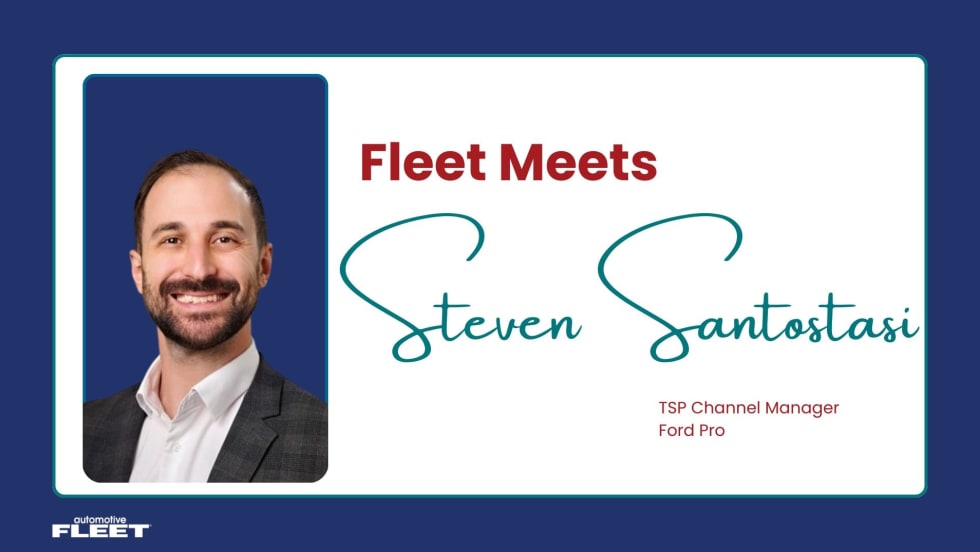
Fleet Meets: Steven Santostasi
This edition of the Fleet Meets series features Steven Santostasi, the current TSP channel manager for Ford Pro.
Read More →
Why Fleet Managers Are Replacing Departmental Vehicles with Shared Motor Pools
Departmentally assigned vehicles often create hidden costs through underutilization, poor visibility, and increased administrative burden. This white paper explores how shared motor pool strategies help fleets reduce costs, improve accountability, and optimize vehicle utilization.
Read More →
Soap Box Derby Challenge: Assembling the Crew
Meet Gabriel, Matthew, and Angel — the team helping bring this soap box derby build to life.
Read More →