




More Reading: Vehicle Wraps: Eye Candy for Your Brand
Rev Up Your Brand by Investing in Your Fleet’s Visual Identity
Your corporate fleet vehicles can communicate a lot about your company’s brand, especially when used to create a recognizable visual identity. Here are a few ways a corporate fleet can create and reinforce strong brand recognition.
by Frans Mahieu, LeasePlan USA
May 6, 2022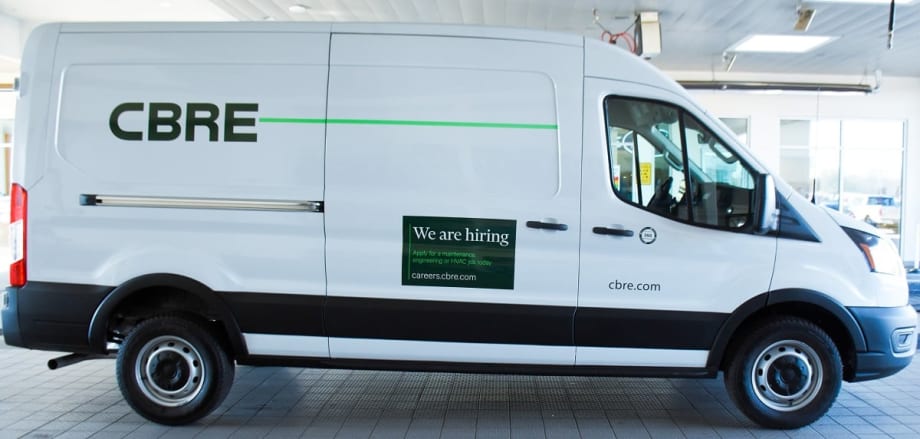
This is just one example of consistent vehicle branding by real estate company CBRE.
Photo by Natalie Vidal
3 min to read
Just as clothes express personality, corporate fleets can communicate a lot about a company’s brand. A study by 3M and the American Trucking Association revealed that 91% of people notice words and graphics on trucks, and 75% of those people form impressions of the product or company advertised. That’s a lot of impressions – between 1 and 4 million per month on local routes, according to a study by the Traffic Audit Bureau. But the question is, what kind of impressions are you making?
The obvious part of the answer has to do with how vehicles reflect a recognizable visual identity. Think of the blue vans with Amazon’s distinctive smile logo, Home Depot’s orange delivery trucks, and Napa Auto Parts’ blue cars with yellow hats. Beyond visual imagery, the vehicles themselves also tell a story. For instance, Best Buy’s Geek Squad drives Volkswagen Beetles.
They’re cheerful, friendly, and small-yet-mighty – precisely the image you want to give consumers who need help with their technology.
Does your fleet convey these essential brand identity components?
Put it all together, and it’s easy to see how your fleet can reinforce important qualities that comprise your company’s consumer and employer brands, including:
Stability and availability. During the COVID-19 pandemic, Amazon grew its brand presence with delivery vans on virtually every street corner, consistently portraying its brand colors and logo. Get on the highway, and that same image is reinforced by Prime delivery trucks. When a company seems to be everywhere, it also communicates a sense of solid reliability.
Sustainability. After manufacturing and commercial facilities, fossil fuel-powered corporate fleets are responsible for a significant part of the United States’ carbon footprint. It’s no surprise that companies are turning to electric vehicles (EVs) to help them achieve carbon emission reduction goals. Equally important, EVs can also provide a visible demonstration of environmental responsibility – a key lever for attracting, recruiting, and retaining people who want to work for and do business with companies who care about the planet.
Innovation. Electric vehicles have led the way with innovative automotive technologies that go beyond sustainability. Sophisticated, interactive displays, lower maintenance requirements, software-distributed updates, and other innovations either originated or advanced with the expanded development of EVs. So, it's no wonder that Tesla, Ford Mach, Chevy Bolt, Volvo Recharge, and other electric vehicles project the image of a forward-looking, innovative organization – the kind with which lots of people want to do business.
Style. Looks may not be everything – but a vehicle that attracts attention might also help you attract talent and customers. Just as a clean, modern lobby with bold artwork creates an environment that’s exciting and progressive, so can new (and new looking) vehicles with eye-catching design touches. Your sales representatives’ cars can set experiential expectations for clients before they even walk in the door. Likewise, when sales representatives choose jobs, the company car they drive will contribute to their decision. Your ability to offer vehicles that fit the needs, image, and style of employees who may be trendy Gen Zers, practical Millennial parents, or GenX executives.
Care. People want to work for companies that genuinely care for their people and buy from organizations that can be trusted to look after their products and customers. A clean, well-maintained fleet underscores a sense of thoughtfulness and attention that many people crave, especially in today’s times.
Subscribe to Our Newsletter
More Operations
Sponsored•October 14, 2026
A buyer's guide to fleet management software in 2027
Buying fleet management software in 2027 means looking beyond features and price. As fleet operations, technology and expectations evolve, this guide explores what today’s fleet professionals should consider when choosing a system that can deliver value now and adapt to what comes next.
Read More →
What Will Shape the Next Era of Fleet Management?
EVs, AI, and autonomous vehicles are reshaping fleet management. Discover what’s ahead—and how fleet leaders can prepare for the next era.
Read More →
How Fleets Can Recruit and Train Veterans for Technician Roles
Here's how the technician shortage has affected uptime for fleets, and what to do about it.
Read More →

Avis Budget Group Deploys Neology Toll Management Technology Across Major Brands
Neology’s neoFleet platform will manage toll transactions and toll-authority operations for vehicles across Avis, Budget, Payless, Budget Truck and Zipcar.
Read More →
Fleet Personal-Use Charges Edge Higher in 2026
Nearly eight in 10 surveyed fleets allow personal use of company vehicles, while just over half of respondents report charging employees for the privilege.
Read More →
The Future of Fleet + What’s Changing Right Now | AF News Recap
Could developments overseas offer a preview of what’s coming for U.S. fleets? This week, we’re looking at the future of AI, autonomy, and electrification, plus Ford Pro’s new certified pre-owned program, smarter vehicle offboarding, and a new way for fleets to manage toll expenses.
Read More →
How to Handle Vehicle Offboarding
What do fleet managers need to do when a driver leaves?
Read More →
Sponsored•October 1, 2026
Fleet Manager’s Ultimate Playbook: Navigating the New Standard in OEM Connectivity
Rising operating costs, driver safety concerns, and unplanned downtime are putting unprecedented pressure on modern fleets. Discover how fleet managers use embedded OEM connectivity and real-time vehicle data to cut TCO, prevent downtime, and protect drivers without aftermarket telematics hardware.
Read More →
U.S. Bank Adds Verra Mobility Toll Management to Voyager Fleet Platform
The integration allows U.S. Bank Voyager fleet customers to manage toll payments and violations alongside fuel, EV charging and maintenance expenses.
Read More →
ADAS Prevents Crashes. But Repairs Cost More | AF News Recap
ADAS-equipped vehicles may crash less often, but they can cost more when they do. This week, we’re breaking down what that tradeoff means for fleets, plus Subaru’s first Forester Wilderness Hybrid, Nissan’s new e-POWER Rogue, and why Calstart has become Catalyst Mobility.
Read More →